Our experts share in-depth analyses and practical classifications on EUDR, CSRD, HinSchG, CSDDD and sustainability.

The Omnibus EU Regulation marks an important turning point in European sustainability regulation: less bureaucracy, more planning security - but without compromising the ambitious goals of the Green Deal. For companies, this means a noticeable reduction in thresholds, deadlines and detailed obligations. At the same time, the mandate remains clear: ESG issues must be managed in a structured, resilient and audit-proof manner. This is precisely where this article comes in. It explains what changes the Omnibus Regulation really brings to CSRD, EU taxonomy, CSDDD and CBAM, what this means in concrete terms for corporations and SMEs and how companies can use the new scope to efficiently set up their reporting architecture. We will also show how EMAS, the DNK platform and the Sustainability Reporting Navigator (SRN) help companies to obtain reliable data and make better decisions more quickly. Anyone who wants to know how obligations and opportunities are being reorganized in the ESG environment will find a well-founded overview for practical use here.
Read now
Whether in the supermarket, online store or service provider - we all expect the quality to be right. But what is behind it when a company reliably delivers this? The answer: professional quality management. It ensures that products are flawless, customers remain satisfied and processes run smoothly, often making the difference between success and failure.

The new EU regulation on packaging and packaging waste (PPWR) fundamentally changes the way packaging is handled. It applies directly in all EU member states, replaces special national regulations and sets binding targets for waste prevention, reuse and recycling. For companies, this is not just about packaging design. Those who understand their own company's role in the supply chain at an early stage can avoid risks, manage costs better and make targeted use of the new requirements.

Compliance is no longer a "nice-to-have". Laws, reporting obligations and the expectations of customers, investors and employees are increasing and violations become expensive more quickly, both legally and reputationally. Those who set up compliance systematically protect themselves against risks and at the same time create clear orientation in everyday life. In this article, you will find out what compliance means for companies, which topics are involved and how you can introduce effective compliance management step by step.

Is bamboo wood? Does cardboard fall under the EUDR? Such questions sound simple but are anything but trivial in practice. This article clarifies the classification of both materials and provides concrete guidance for compliance, purchasing and supply chain management.
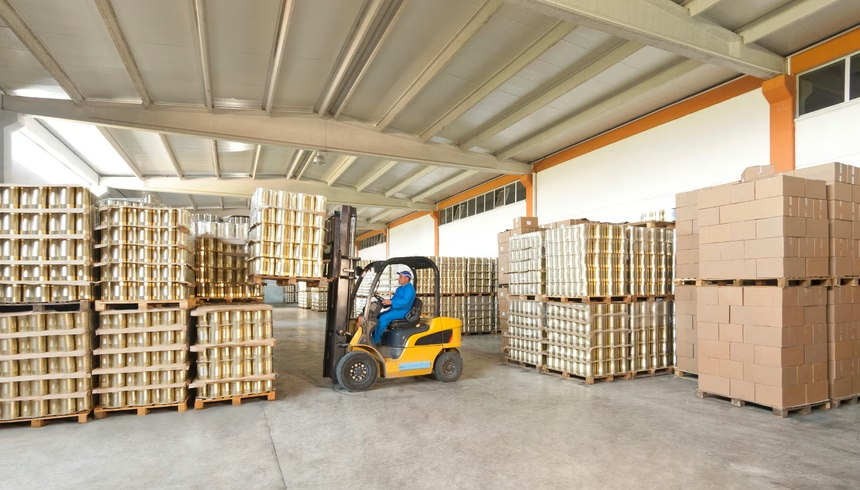
Cocoa mass, flour, chipboard, vegetable oil - the EUDR also requires full traceability back to the origin of the raw material for intermediate products. This article shows what this means in practice and when a new duty of care begins.
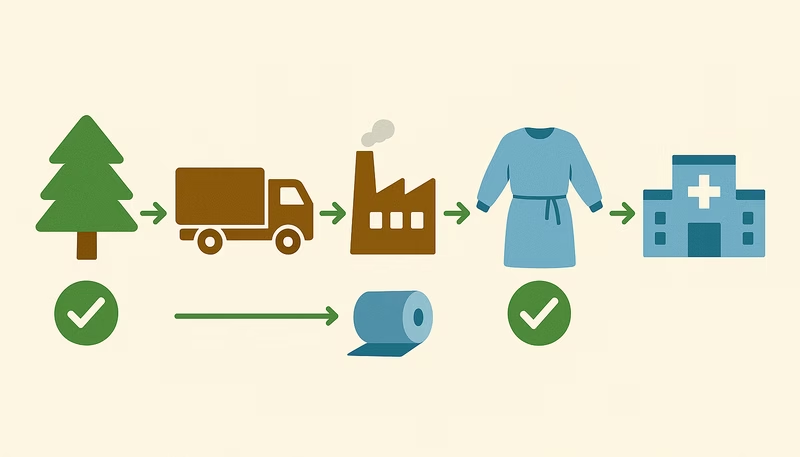
Are paper products and disposable aprons subject to notification under EUDR? A question that is currently on the minds of many compliance and supply chain managers. This article provides answers and specific recommendations for action.

Do used truck tires or wooden pallets have to comply with EUDR regulations? What applies to new products is far less clear for second-hand goods. This article provides clarity.

From the end of 2026, companies will have to provide precise geodata on the cultivation areas for EUDR-relevant raw materials right back to the origin. This article shows what this means in technical, legal and organizational terms and how companies are dealing with it.

What happens to goods in stock that were produced before the EUDR deadline - do they still have to comply with all due diligence obligations? This article clarifies the legal requirements and provides practical recommendations for companies with stockpiles.

Does a flyer count as correspondence or as a reportable paper product under EUDR? The distinction is crucial and often unclear in practice. This article explains the correspondence exemption and shows where the boundaries lie.

Does the EUDR also apply to own imports, for example for the canteen or production? Yes, because the regulation goes further than many people think. This article clarifies when EUDR obligations arise and where there is room for interpretation.

What actually counts as a "forest" under the EUDR and when does it include agricultural land? The answer surprises many: The EUDR forest definition is broader than expected. This article clarifies how forests, agricultural land and various forms of use are to be classified.
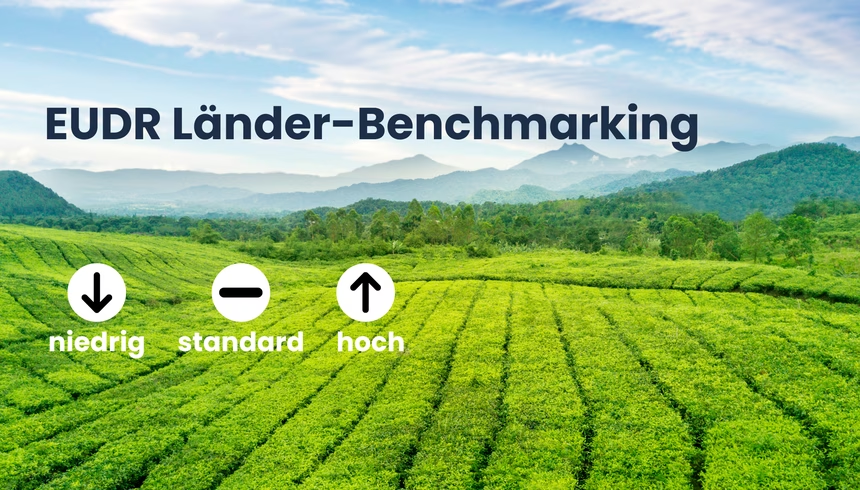
In future, the EUDR country benchmarking system will classify countries of origin according to their deforestation risk, with direct implications for companies' due diligence obligations. This article explains how the system works and how companies can start preparing today.

SAI360 acquires German-based Lawcode GmbH, bringing one of Europe's most advanced whistleblower platforms, Hintbox, to the US market. The acquisition is more than a strategic expansion: it marks the beginning of a new era for digital whistleblowing systems in the US, which must meet the highest standards of security, data protection and user-friendliness.

When is a composite product subject to EUDR and how far back in the supply chain must it be traced? This often remains unclear, especially with mixtures of raw materials and complex product groups. This article provides guidance.

Are packaging, POS displays and labels covered by the EUDR - or not? Since the clarification of the FAQs and the exclusion of classic printed products (HS 49), the answer is more differentiated than ever. This article provides clarity and shows what is important when it comes to implementation.
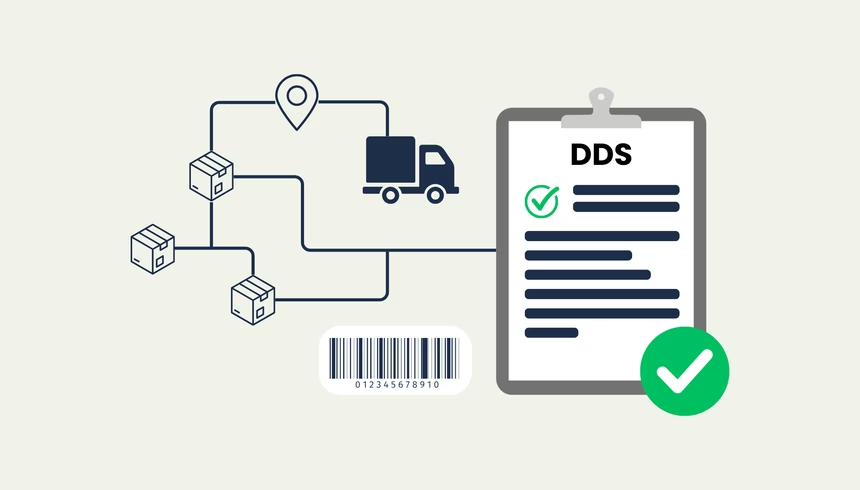
From the end of 2026, companies will have to submit full due diligence declarations (DDS) for EUDR-relevant products. But when do you need your own DDS, how do you deal with collective batches and how is the link between batch and DDS correctly established? This article provides answers.
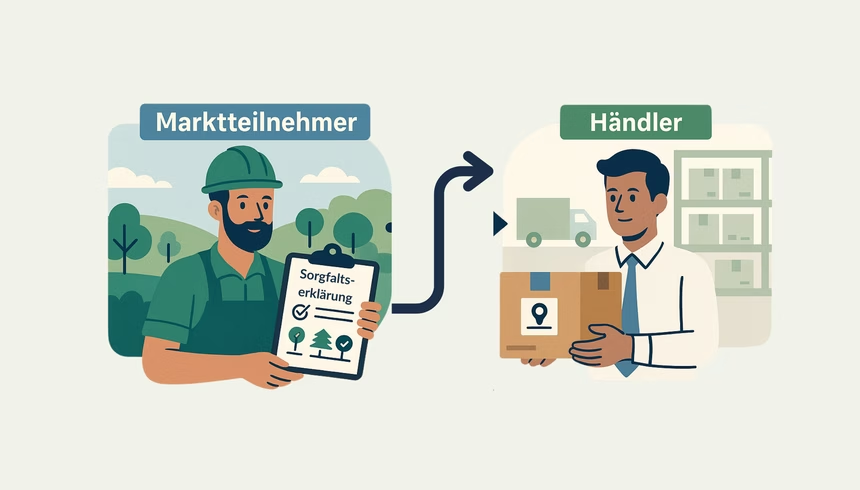
The EUDR not only affects importers of raw materials, as it applies along the entire supply chain, including for traders and downstream market participants. Who is affected, what obligations apply and how can you determine your own role with legal certainty? This article provides answers.

Does your rubber product fall under the EUDR or not? The answer depends on a key distinction: Natural rubber from Hevea trees is subject to strict verification requirements from December 30, 2026, whereas synthetic rubber is not. This article shows you how to classify your products with legal certainty.

The EUDR does not only apply to large corporations. SMEs and complex groups of companies are also affected. There is particular uncertainty when it comes to the delimitation of responsibilities within group structures. This article clarifies which thresholds apply and what this means in practice.

The EU Deforestation Regulation (EUDR) obliges companies to procure and trade goods transparently. Correct classification using HS and TARIC codes is essential, as it forms the basis for traceability and regulatory compliance. This article provides an overview of the significance of these codes and practical tips for correct classification.

The Whistleblower Protection Act (HinSchG) strengthens transparency and integrity in companies by protecting employees who report violations from reprisals. Companies benefit from functioning whistleblowing systems as they can identify risks at an early stage and prevent legal and reputational damage. Key requirements include the establishment of internal reporting offices and staff training.

The EU Deforestation Regulation (EUDR) represents a challenge for sustainability managers in companies. At the same time, it is an important step forward as it emphasizes the importance of avoiding deforestation and degradation in supply chains. This regulation obliges companies to critically review their supply chain processes and ensure that their practices are in line with European sustainability goals.

The Corporate Sustainability Reporting Directive (CSRD) poses considerable bureaucratic challenges for small and medium-sized enterprises. The omnibus draft presented in February 2025 is intended to simplify implementation and therefore focuses on the VSME standard (Voluntary Standard for SMEs). In this article, you will find out how SMEs can benefit from more efficient sustainability reporting through VSME, what the main differences are to the ESRS and how to implement it successfully.
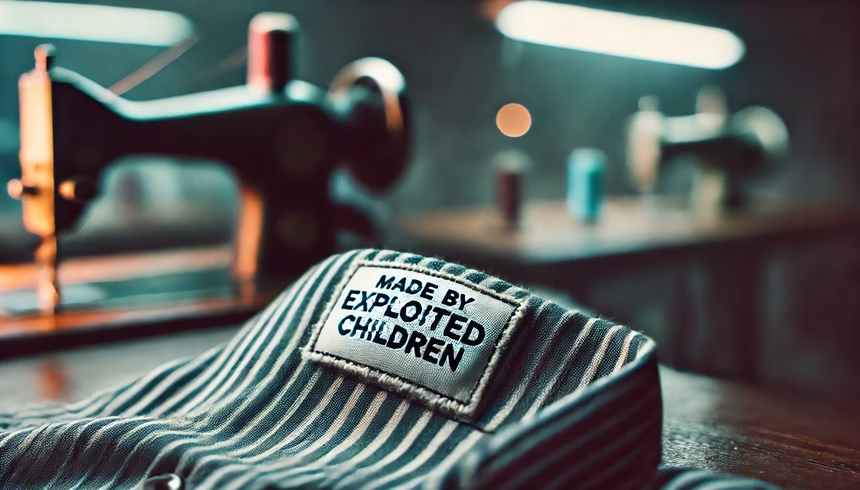
Child labor is not a marginal issue. It is part of many global supply chains - often where raw materials are mined or agricultural products are grown - and therefore also affects products that we use every day. According to an ILO report (June 2025), around 138 million children work worldwide, around 61% of them in agriculture. At the same time, the global community has pledged to end child labor by 2025 as part of the 2030 Agenda. This article looks at why child labor occurs, where it is particularly widespread and what companies need to do specifically to avoid risks in their supply chains.
The circular economy has long been more than just a sustainability trend. It is a fundamentally new economic model that combines resource efficiency, waste avoidance and economic growth. For companies, this not only means ecological responsibility, but also economic opportunities.

Climate change presents companies with growing regulatory, economic and social challenges. If you don't know your greenhouse gas emissions, you can't reduce them. The GHG Protocol provides the internationally recognized framework for this and divides emissions into Scopes 1, 2 and 3. This article explains what is behind this and how your company can use emissions measurement as the basis for an effective climate strategy.

The Carbon Border Adjustment Mechanism (CBAM) is a central element of the EU Green Deal and regulates CO₂ emissions from imported goods. The aim is to prevent carbon leakage and create fair competitive conditions for European companies. In this article, we shed light on how the mechanism works, which sectors are affected and what role it plays for a sustainable future.

Imagine a world in which environmental crimes such as ecocide no longer go unpunished. The new Environmental Crime Directive could do just that. It creates binding international standards for the protection of our planet and designates environmental crimes as serious offenses. In this blog post, you will gain in-depth insights into the topic of ecocide, the associated directive and the role that companies play in this context.

ESG investments are becoming increasingly important in the financial world. But what is behind the term? ESG stands for environment, social and governance and describes sustainable investment strategies that not only take into account returns, but also social and ecological aspects. In this article, you will learn everything you need to know about ESG investments, ratings and scores.

NIS-2 brings significantly stricter requirements for cyber security in many industries and makes the topic mandatory, not optional. The supply chain is particularly important here: cloud providers, IT service providers and software partners must also be integrated into the security processes. This article shows who is affected and what companies should implement now.

The NFRD was the EU starting point for mandatory non-financial reporting. Today, it is primarily relevant as the predecessor to the CSRD. For many companies, the CSRD/ESRS already applies or is imminent (depending on the wave and national implementation). This article therefore provides an overview of what the NFRD required, to whom it applied and what the transition to the CSRD looks like in practice.

In the middle of a dense forest of rules and regulations under EU law: the EUDR. With the EU Deforestation Regulation (Regulation 2023/1115), companies will in future have to prove that their supply chains, from wood to cocoa to palm oil, are deforestation-free and legally compliant. Find out what this means in concrete terms and how you can prepare yourself here.
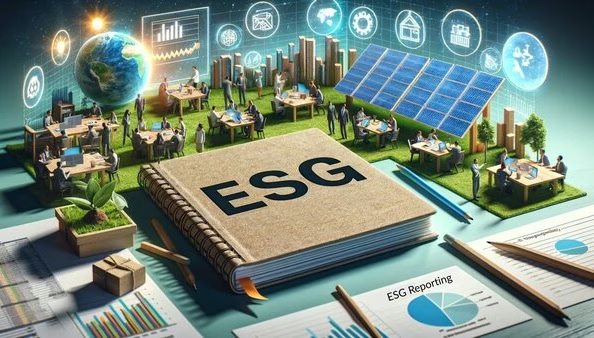
ESG reporting refers to structured reporting on a company's environmental, social and governance performance. It has been legally binding for many companies in the EU since 2024. In this article, you will find out what an ESG report must contain, which standards apply and how to proceed in a structured manner.

Dual materiality is a key concept in sustainability reporting. It helps companies to evaluate sustainability issues from two perspectives: the impact on the environment and society and the financial risks and opportunities for their own business. In this article, we explain the principle, show the role of internal and external materiality and how companies can use it to make their reporting more structured, transparent and meaningful.

Sustainability has long been a purchasing criterion and therefore also a marketing lever. More and more companies are advertising themselves as "green", "climate-neutral" or "sustainable", but many claims are difficult for consumers to verify and, according to EU studies, are often vague, misleading or unsubstantiated. This is where greenwashing begins. In this article, you will learn what greenwashing means, the typical patterns behind it and how to distinguish real sustainability from fake sustainability.

Modern slavery is a dark underbelly of the global economy: millions of people around the world are exploited and forced to work - not only in distant countries, but also in Europe. This is particularly visible in the textile industry, for example, but sectors such as agriculture, construction and services are also affected. Because those affected often remain invisible, clear rules are needed: The EU Forced Labor Regulation aims to exclude products from forced labor from the market. In the following, we explain what modern slavery means, why it occurs and how the regulation works.

Successful business management depends to a large extent on the right choice of supplier - it influences quality, reliability, costs and long-term partnerships. At the same time, requirements are increasing: dynamic markets, complex supply chains and stricter regulations make structured supplier evaluation more important than ever. In this article, we show how companies can evaluate and select suppliers in a targeted manner, with practical tips on how to reduce risks, ensure quality and promote sustainable growth.

Sustainability has long been a key issue for companies. But what does the term actually mean - and what principles are behind it? This article shows how sustainability has developed from its roots in 18th century forestry to the UN Sustainable Development Goals and why resource-conserving, responsible action is strategically important today. Those who take sustainability seriously not only strengthen the environment and social standards, but also trust, future viability and competitiveness.

Sustainable procurement is becoming increasingly important for companies - it helps to reduce their own environmental footprint while promoting fair, responsible supply chains. In this article, we show you how you can improve environmental and social standards, strengthen your brand and implement environmentally conscious procurement step by step through the targeted selection of suppliers and materials. It is also about recognizing typical challenges and finding sensible solutions.

The German Sustainability Code (DNK) is a framework for companies to transparently present their sustainability performance. It was introduced in 2011 and supports comparable reporting, but is voluntary in Germany. Nevertheless, it can help companies to communicate their sustainability activities credibly and prepare strategically for growing requirements. In this article, we explain the structure, content and benefits of the Sustainability Code.
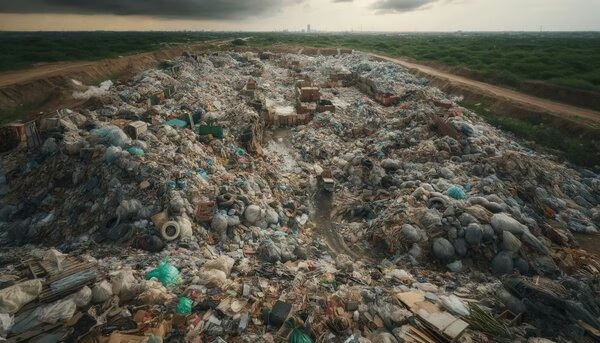
In a world full of global crises, the right to a healthy environment is becoming increasingly important. Our livelihoods and the future of coming generations depend on intact ecosystems. Yet air, soil and marine pollution continue to pose a massive threat to people and nature - exacerbated by climate change and global warming. The loss of biodiversity and the destruction of natural habitats clearly show that a rethink is urgently needed. This article sheds light on the forms and consequences of environmental pollution and shows what role climate lawsuits and other measures play in enforcing environmental protection and reducing pollution.

The ESRS create greater transparency and comparability in sustainability reporting: standardized criteria and indicators make it easier for investors and stakeholders to assess the ESG performance of companies. At the same time, the standards support more strategic sustainability management by making risks and opportunities visible at an earlier stage. Since the 2024 reporting year, the sector-independent ESRS (Set 1) have formed the binding basis for the first CSRD reporting wave.

Sustainability is more important today than ever before: companies and private individuals are increasingly recognizing the extent to which their actions impact the environment. A key measure of this is the carbon footprint. It shows how many emissions are generated by certain activities. In this article, we explain what the term means, why it is relevant and how the carbon footprint can be effectively reduced in everyday life and in companies.

The SFDR (Disclosure Regulation) will make transparency on sustainability in the financial market more binding. As part of the EU Sustainable Finance Framework, it is intended to link private investments more closely to sustainability goals and provide investors with reliable ESG information for decision-making. This supports the EU's goal of a climate-neutral Europe by 2050 and aims to effectively curb greenwashing. In this guide, we explain the most important requirements, terms, opportunities and challenges of the SFDR in practice.
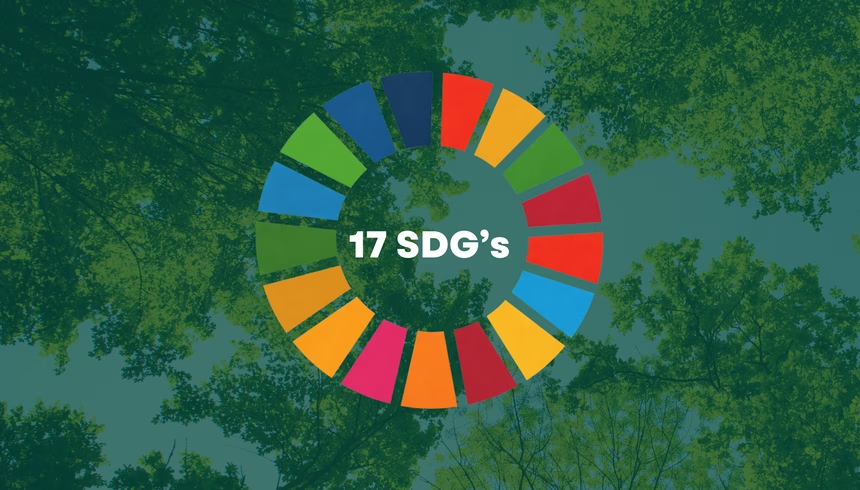
The United Nations Sustainable Development Goals (SDGs) are 17 goals for a sustainable future. They range from poverty reduction and education to climate and environmental protection and show what is possible when states, companies and society act together. In this article, we briefly present all 17 goals and explain why they are so important for sustainable development.

The EU taxonomy defines which economic activities are considered environmentally sustainable and thus creates uniform standards for "green" investments. The aim is greater transparency and a stronger focus of capital flows on environmental and climate protection. Taxonomy reporting will be mandatory for many companies - it is therefore worth understanding and preparing for the requirements at an early stage. In this article, we provide a compact overview of the regulation and show which companies are affected and when.

The Corporate Sustainability Reporting Directive (CSRD) is a key milestone for European sustainability reporting. It creates uniform standards and expands reporting obligations to make environmental, social and governance (ESG) issues more transparent and comparable. In this article, you will find out what the CSRD means, who it affects and how you can implement the requirements in practice.

Supply chain management is the smart organization of all the steps that are necessary for a company's supply chain to function optimally. From product manufacturing to transportation to customer satisfaction, supply chain management is critical to a company's success. Learn how modern supply chain management not only improves supply chain operations, but also contributes to the long-term success of the company and customer satisfaction.
Corporate Social Responsibility (CSR) describes the responsibility of companies for their impact on society and the environment. In Germany, CSR is supported by guidelines and initiatives from the federal government. The Supply Chain Duty of Care Act (LkSG) also plays an important role here: it obliges companies to pay greater attention to human rights and environmental standards in their supply chains. Those who understand CSR can systematically anchor responsibility in their strategy and everyday life.

Ethical behavior and social responsibility are becoming increasingly important for companies. A code of conduct is a central component of this: It sets out the standards that apply within the company and in cooperation with suppliers, for example on fair working conditions, integrity and the environment. In this article, we show why a code of conduct is so important and how it can be effectively anchored in practice.

The Supply Chain Due Diligence Act (LkSG) for companies came into force in Germany on January 1, 2023. Since January 1, 2024, it has already applied to companies with at least 1,000 employees. The law on corporate due diligence obligations in supply chains obliges companies to take human rights and environmental standards within their value chain into account. The due diligence obligations defined in the law apply to both the business activities of companies and their suppliers.
The Corporate Sustainability Due Diligence Directive (CSDDD) is an EU directive on human rights and environmental due diligence obligations along the entire value chain. It obliges companies to systematically identify, prevent and minimize risks in the supply chain and to demonstrably manage their implementation. This overview shows who is affected by the CSDDD, what obligations apply, how monitoring works and what deadlines, opportunities and risks arise from this.

ESG stands for Environmental, Social and Governance. For companies, these criteria have long been more than just a trend: they help to strategically implement sustainability and strengthen trust in the market.

 DE
DE