
 DE
DE
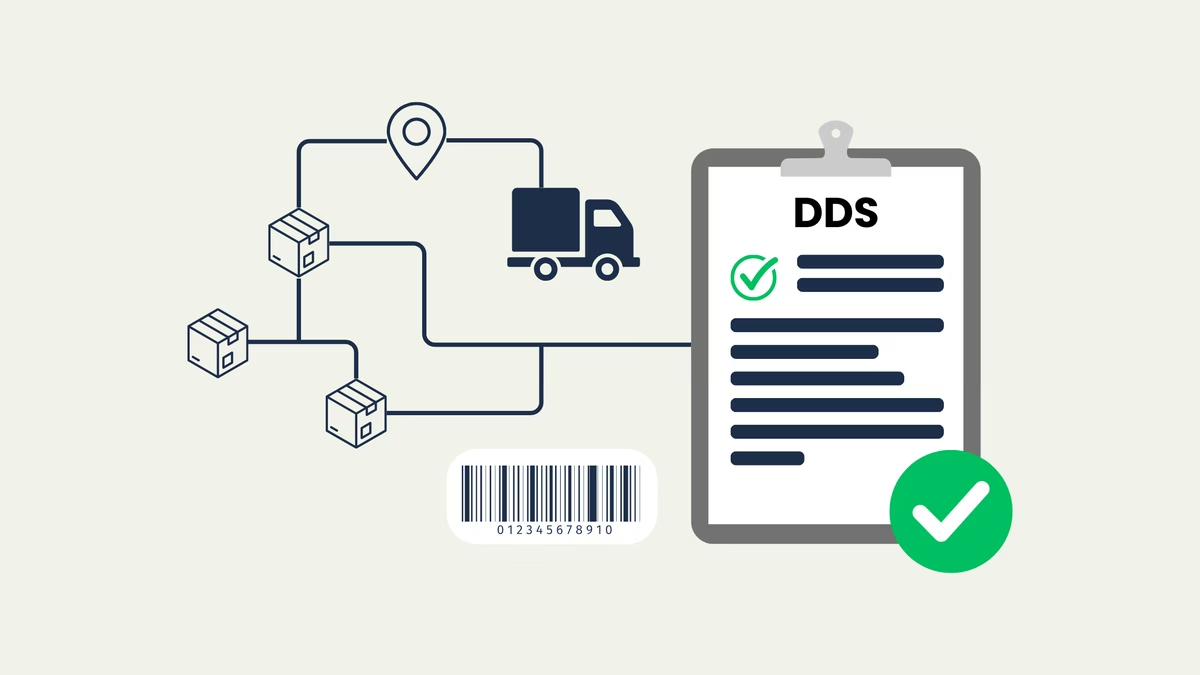
Important facts
- What is a due diligence statement (DDS)?
- A DDS is a declaration of compliance. It demonstrates that a product has not contributed to deforestation. The declaration always refers to a specific product batch. It contains all relevant information: where the product comes from, how much is being shipped, and what risks exist.
- How does the practical implementation of a DDS work?
- All information about a batch, such as the parcel of origin, quantities, processing steps and transportation routes, is collected, checked and submitted digitally as a due diligence declaration.
- What does the duty of care relate to - the batch or the delivery?
- The DDS refers to a defined quantity of goods, usually a batch in operational practice. Deliveries are only the physical movement of goods.
- What needs to be documented?
- The following must be documented: the parcel of origin, geographic data, HS codes, quantities, the supply chain, transportation and processing steps, and risk assessments, including blending or repackaging.
- What happens if the DDS documentation is incorrect or incomplete?
- Missing or incorrect information can lead to sanctions, fines or exclusion from the EU market.
Executive Summary
Starting December 30, 2026, a new requirement will take effect: Companies that place EUDR-relevant products on the market in the EU or export them must submit a DDS to the EU information system. This declaration applies to a specific quantity of goods and may also cover multiple partial shipments over a period of up to twelve months. It is important to note that the DDS must be in place before the first shipment is made.
Even in the case of consolidated warehouses and blends, traceability must not be lost. Each origin must be clearly identifiable; a so-called “mass balance” approach—that is, simply offsetting quantities without specifying their exact origin—is not permitted. For this to work in practice, three things are particularly important: clear batch assignment, the consistent use of reference numbers, and well-trained employees in all departments involved.
Never miss an update on the EUDR again.
New specialist articles, regulatory updates and practical tips, straight to your inbox. Once a week, no spam.
What is the Due Diligence Statement (DDS) and why is it important?
Overview of the DDS obligations of the EUDR
The DDS is the central instrument of the EUDR (EU Deforestation Regulation, EU Regulation 2023/1115). Depending on the size of the company, the obligations apply starting at the end of 2026 or mid-2027 (June 2027) to all companies that place deforestation-related raw materials such as wood, cocoa, coffee, rubber, palm oil, beef, or soy for the first time on the EU market or export them. Learn everything about the Deforestation Regulation, the obligations, and the deadlines here.
This requires a robust due diligence system. It must identify, assess, and document risks throughout the supply chain. The most important point here is that the goods must be fully traceable back to the specific production plot. To achieve this, companies must precisely record where the goods come from (geolocation data), how much is being delivered, the route they take, and who is involved.
In addition, the goods must not have contributed to deforestation as of the effective date of December 31, 2020. They must also comply with the legal requirements of the country in which they were manufactured.
The final step is the electronic submission of the DDS: formal confirmation that information is available, a risk analysis has been carried out and, if necessary, risk reduction measures have been implemented. Without a valid DDS, a product may neither be sold in the EU nor exported.
Important: Not every role in the supply chain is automatically subject to the same level of obligation. Simplifications are provided for downstream market participants and many SMEs in particular, but the obligation to keep information in a traceable manner, pass on references and organize your own supply chain in such a way that the DDS logic works reliably in practice remains.
DDS and the reference to batch and delivery - how is this regulated?
Clearly distinguish batch and delivery
For the successful implementation of the EUDR, it is important to use key terms consistently. It is important to distinguish between the legal logic and the practical implementation within the company. The terms “batch” and “delivery” are examples of this: Both are important, but they do not mean the same thing.
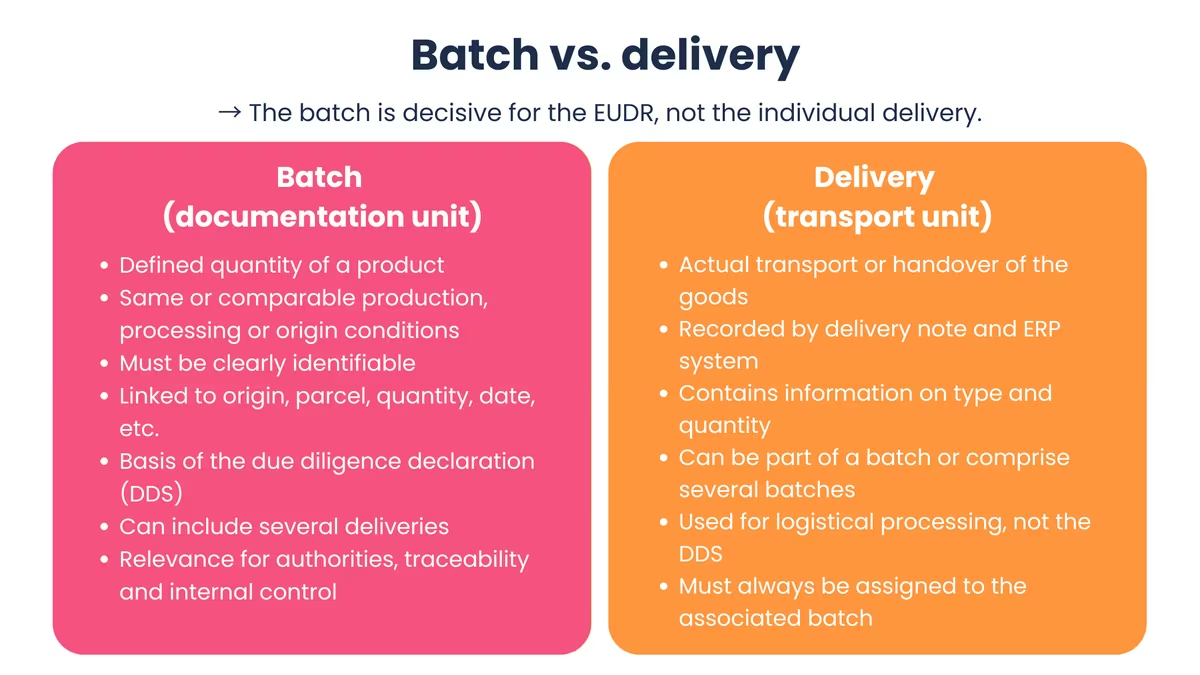
In practice,the term “batch” usually refers to an internally defined quantity of goods that can be clearly distinguished, similar to a batch or lot number. Companies use it to group products that were manufactured, processed, or procured under comparable conditions. A “batch” is therefore primarily an operational management term. It helps organize the flow of goods in such a way that key information can be reliably traced: origin, production area or geolocation, the parties involved, quantities, processing steps, and the corresponding documentation.
This is to be distinguished from "delivery": it describes the actual transportation or physical handover of goods to the next actor in the supply chain. The decisive factor is that a batch can extend over several deliveries and, conversely, a single delivery can contain several batches. This flexibility is normal and is common practice in many industries.
Batch = internally defined, definable quantity of goods for the structured allocation of origin, quantities and proofs.
Delivery = physical movement of goods to the next actor. A batch can comprise several deliveries, and vice versa.
Examples from practice:
- One batch, several deliveries: A company imports 10,000 kg of EUDR-relevant goods with a DDS. This batch (e.g. CH-2026-001) is linked to the DDS reference. Subsequently, partial quantities are shipped to different customers (3,000 kg to customer A, 4,000 kg to customer B, 3,000 kg to customer C). All three deliveries refer to the same batch and DDS, whereby the system posts the quantities down cleanly. As soon as the quantity covered by the DDS is exhausted, a new DDS must be available for further quantities.
- A shipment contains multiple batches: If a shipment consists of multiple batches—for example, 2,000 kg from Batch A and 3,000 kg from Batch B, each with its own DDS reference—this must be clearly documented. This means that delivery notes, invoices, and ERP entries must clearly identify both batch components.
Basic rule of the regulation: DDS refers to a defined quantity of goods
The logic of the EUDR-DDS is not linked to individual delivery bills, but to a clearly defined quantity of relevant products. For this defined quantity, market participants must collect all necessary information and evidence, carry out a risk analysis and, if necessary, implement risk mitigation measures. A DDS can cover several partial deliveries, but must be submitted before the first delivery. Once the quantity specified in the DDS has been fully placed on the market or exported, a new DDS is required for additional quantities.
A special case of practical relevance: If the final market destination of a product quantity, remaining in the EU or export, is still uncertain at the time of DDS submission, all products may be declared with an "export" DDS. The prerequisite is documentation that verifies the actual quantities and their respective destination. In addition, no destination country needs to be specified for the export DDS.
Important update: Increased inspection risk for DDS for multiple partial deliveries
A DDS may not cover consignments or batches for a period of more than one year from submission. This flexibility increases the complexity and thus the non-compliance risk for the market participant, which can lead to more intensive inspections by the authorities. In the event of non-compliance, interim measures or sanctions may apply to all products covered by this DDS, even if they are included in separate partial shipments.
Recommendation: Weigh up the range of a single DDS carefully and ensure complete traceability for each partial quantity.
A practical example: An importer brings 20 tons of cocoa into the EU. All origin data (including geolocation), proofs and risk assessments are collected for this defined quantity and combined in a DDS. Whether the 20 tons arrive in one shipment or in several partial shipments is of secondary importance for the DDS logic. The decisive factor is that the DDS is available before the first partial delivery and that the quantities actually placed can be clearly traced back to the quantity declared in the DDS at any time.
Use reference number and verification number correctly
One thing is particularly important for a functioning DDS system: the consistent use of reference numbers from the EU’s TRACES information system. These numbers make it possible to uniquely identify DDS items throughout the entire supply chain. Internally, they can also be neatly linked to batch or lot IDs, as well as to delivery or shipment numbers.
It is important to distinguish between two things: The reference number must be provided to the first downstream party; this is mandatory. The verification number, on the other hand, is merely an additional layer of security. It does not have to be provided automatically, but may be requested if there are valid concerns.
In practice, these links should be consistently maintained throughout the ERP system and in the documentation—that is, on delivery slips, invoices, and for goods received and shipped. This helps prevent data inconsistencies and allocation errors. While uniform product and packaging labeling—such as via barcode, QR code, or RFID—is not required, it can simplify data entry, reduce errors, and significantly speed up inspections and audits.
Less Effort, Greater Security in EUDR Implementation
Our platform automates key EUDR processes—such as geodata, risk analysis, and documentation—thereby significantly reducing the manual workload for your team.
How do you deal with collective batches and stock items?
Problem: Lack of separation or mixing in the warehouse
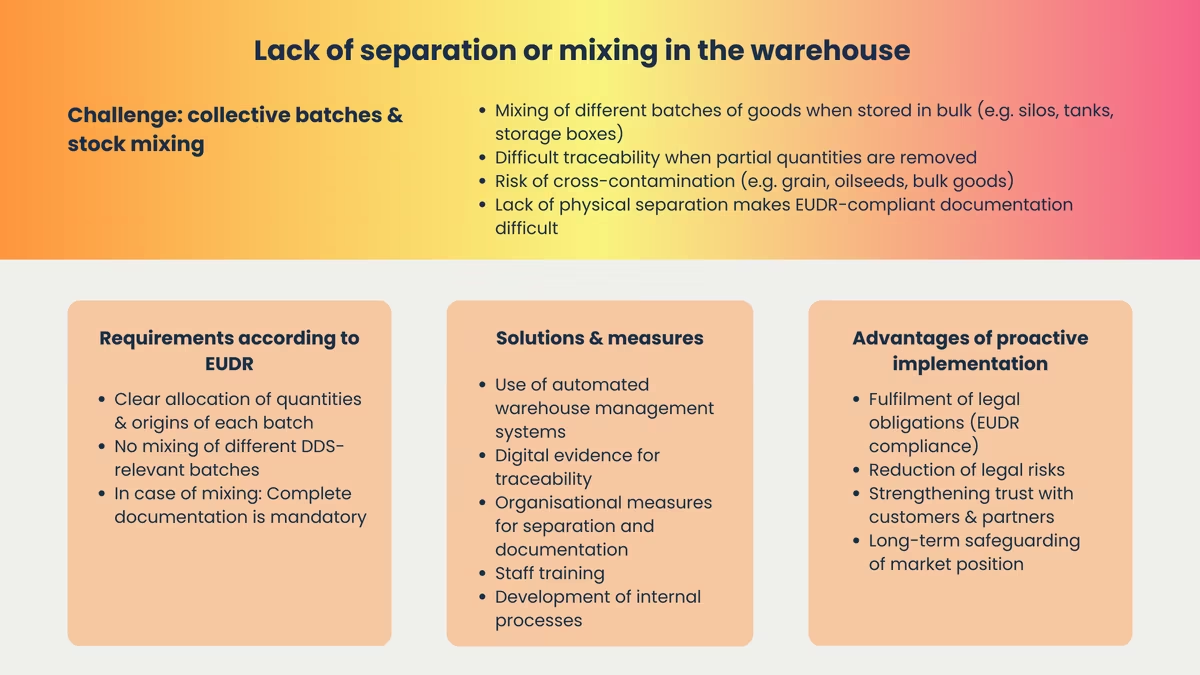
In practice, companies often face organizational and technical challenges when it comes to warehousing, especially when goods are kept as collective stocks or in bulk in silos, tanks or storage boxes. Typical examples are import and storage processes for grain or oilseeds, where harvests from different regions are brought together. Without a clear separation logic, there is a risk that origin information, quantity references and proofs can no longer be clearly assigned.
The EUDR sets high standards for traceability and traceability. The decisive factor is not that physical mixing is excluded in every case, but that mixing does not result in the relevant quantities losing their clear assignment to origin and geolocation.
Mixed batches: What must be documented?
If multiple batches are physically combined into a composite or mixed batch, the new batch must be carefully documented. This ensures that, even after mixing, it is still possible to trace the origins and DDS references contained within it.
The following information must be retained:
- Outgoing batches (with batch numbers)
- Quantity shares per initial batch
- respective DDS reference numbers
- Information on origin (country of production, geolocalization)
- Date and place of mixing
- Responsible process step
- New batch number for the mixed batch
This obligation applies regardless of whether the initial batches come from the same or different suppliers. The central test question is: Can we show which DDS references form the basis of which quantity share in the new batch at any time after blending? According to FAQ 1.4, mass balance logic alone, which only maintains balances of incoming and outgoing quantities without assigning specific origins, is expressly not permitted. Conforming goods may not be mathematically "mixed" with goods of unknown origin.
Do separate DDS documents have to be created for each batch?
The EUDR does not require a blanket due diligence declaration "for the entire warehouse", but a DDS for clearly defined relevant goods before they are placed on the market, made available or exported in the EU. A key technical challenge here is the file size limit of 25 MB per DDS. This limit can quickly be reached or exceeded for collective batches that bundle the origins of hundreds or thousands of production lots, such as coffee blends or bulk cocoa.
Practical example: Loose stored material with individual delivery A retailer stores rubber in several silos, some from different origins and each with assigned certificates. The material is delivered to the processing industry in partial quantities or as mixtures, depending on customer requirements. A DDS must be created for each quantity delivered, mapping all origins in GeoJSON format. The following strategies help to ensure that the 25 MB limit is not exceeded:
- For plots of less than 4 hectares or for cattle farms, the specification of a single longitude and latitude point is sufficient, an efficient method to reduce the amount of data.
- The resolution can be optimized for larger plots that require polygons: Instead of a high number of vertices, the essential vertices are sufficient to describe the perimeter. Software tools can help with the compression of GeoJSON files.
In practice, this means that the DDS must always refer to a clearly defined consignment or lot. If a single product is brought together from different origins (e.g. a coffee blend from several regions), a new relevant item is created for which a corresponding DDS must be submitted, including the geolocation data of all underlying production areas. For a new DDS, information from previously submitted DDSs can be referenced upstream so that data does not have to be entered twice.
Special cases and common pitfalls
Different suppliers for the same products
It becomes particularly challenging in one scenario: when a business sources the same product from multiple suppliers. One example is soybeans from different sources. In such cases, the workload increases significantly. For each source, the origin, production areas, quantities, and supporting documentation must be accurately recorded.
The EUDR does not require that there be “one DDS per supplier” or “one DDS per shipment.” What is important is something else: All products and quantities placed on the market or exported must be fully covered by a DDS. And due diligence must demonstrably have been carried out for these quantities. If blending takes place in the warehouse, this does not alter this obligation: even then, it must remain clear which origins and quantities are contained in the respective batch of goods.
Repackaging or order picking in the warehouse
In logistics practice, goods are often repacked or picked for individual customers. This raises the question of how the DDS documentation must be kept if the flow of goods no longer corresponds to the original layout of the stock. It is crucial that the chain of evidence and traceability is maintained even after repackaging, partial removal or reassembly: The definable quantities must still be able to be clearly traced back to the underlying origins and the corresponding DDS references.
Many companies address this by establishing clear rules in their ERP and WMS systems. They incorporate the reference numbers from the EU information system as a fixed “anchor” in their inventory and transaction data. Serialized identification, such as QR codes, barcodes, or RFID, is not required for this purpose. However, it can help prevent data discontinuities and speed up inspections.
Practical implementation: three levels and technical requirements
A practicable EUDR system should distinguish between three levels:
- DDS level: The due diligence declaration, reference number, verification number, origin data, risk assessment and validity logic are managed here.
- Batch level: This documents which specific quantity of goods has which origin, which properties and which DDS reference.
- Delivery level: This records which quantity from which batch was delivered to which recipient.
This separation is the structural basis for traceability. Without it, batches and deliveries run into each other in practice and the DDS assignment becomes blurred.
What an ERP or traceability system should do
To ensure that the linking of batches, deliveries and DDS references functions reliably, the ERP or traceability system should cover the following functions:
- Creation and management of DDS references including verification numbers and validity period
- Unique assignment of each batch to one or more DDS references
- Ongoing booking of quantity consumption per DDS (received, used, delivered, exported, remaining quantity)
- Mapping of partial deliveries and mixed batches with receipt of all original purchases
- Audit trail for repackaging and order picking
- Blocking logic that blocks goods receipts, deliveries or exports or issues a warning if no valid DDS is stored, the DDS has expired or the originally covered quantity has already been exhausted
- Integration of sensor and measurement data (weighing, fill level, scan data) for automatic stock changes
- Audit-proof archiving of all processes including change history for at least five years
The blocking logic is particularly important here. It ensures that quantities are not accidentally used twice, that no shipments are sent without sufficient stock, and that no DDS references are passed on whose quantity quota has already been exhausted. These are precisely the types of errors that tend to come to light later during government inspections or audits.
A practical note regarding the correction window: Submitted due diligence declarations or simplified declarations (SD) can be amended or withdrawn within 72 hours after the reference number is assigned in the DDS information system, provided that the reference number has not yet been used in a customs declaration, the product has not yet been made available or exported, and the authorities have not indicated their intention to conduct an audit.
How DDS references are passed on in practice
The legal obligation to pass on the DDS reference number to the first downstream actor leaves open how this should be done technically. In practice, several transmission channels have been established:
- Delivery bills with DDS reference number per item or per batch
- Invoices with reference to the corresponding DDS reference
- Separate EUDR accompanying documents as PDF or structured data sheet
- EDI interfaces for automated data exchange between ERP systems
- Customer portals where customers can call up their DDS references
- Structured data records directly from the ERP system (e.g. via API)
The method by which the information is transmitted is not what matters. What matters is something else: The customer must be able to clearly identify which goods, quantity, and shipment a DDS reference refers to. If this association with the batch and quantity share is missing, the reference number is practically useless to the recipient. This then leads to gaps in the recipient’s own compliance documentation.
Recommendations for action in practice
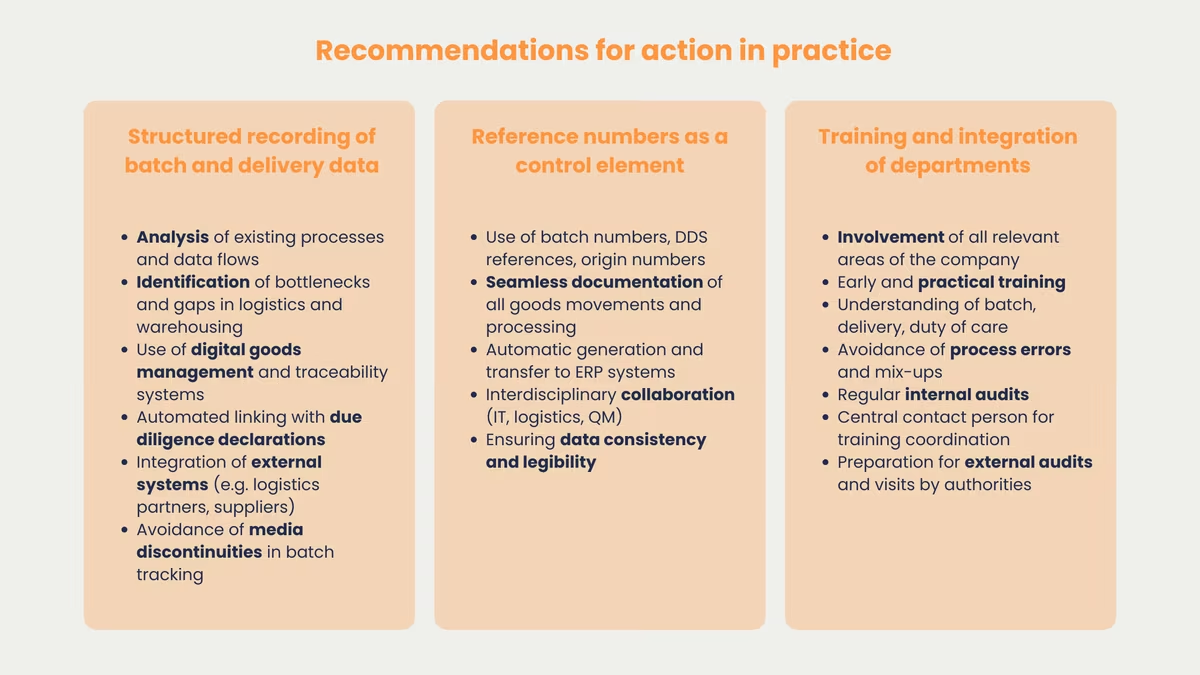
Establishment of a structured recording of batch and delivery data
The most important foundation is a structured system for capturing all data relevant to batches and shipments. To this end, companies should review their existing processes early on, identify bottlenecks in the data flow, and close gaps in warehouse or production logistics. Third-party systems from external logistics partners or suppliers should also be integrated into the company’s own database at an early stage. This helps prevent data discontinuities in batch tracking.
Mandatory GeoJSON format and file size limit
All geolocation data must be recorded in GeoJSON format (WGS-84/EPSG-4326 coordinate system) and uploaded to the EU information system. Note that a single DDS file may not exceed 25 MB in size. Companies’ IT systems must be capable of processing this format and should also offer several optimization features, such as using individual points instead of area measurements for areas under 4 hectares or in cattle farming, reducing the polygon resolution to the most important vertices, and automatically verifying that the coordinates are specified to six decimal places.
Training and involvement of relevant departments
Due diligence obligations affect many areas of the company, from procurement to production and warehousing to sales and the legal department. That is why it is crucial to provide training to all affected employees early on and on a regular basis.
Only those who understand how batches, shipments, and declarations of due diligence are interconnected can avoid errors in the process, unauthorized mixing, or gaps in documentation. Three things are particularly helpful in this regard: practical training based on typical business processes, regular internal audits, and a central point of contact for questions.
Practical implementation: basic rules and pitfalls
A practicable EUDR system should distinguish between three levels:
- The DDS level: The due diligence declaration, reference number, verification number, origin data, risk assessment and validity logic are managed here.
- The batch level: This is where you document which specific quantity of goods has which origin, which properties and which DDS reference.
- The delivery level: This is where you record which quantity from which batch was delivered to which recipient.
This separation is crucial to ensure traceability.
Conclusion
The EUDR Due Diligence Statement refers to a defined quantity of goods—in operational practice, this is usually a batch—while the physical delivery is merely a subsequent event. The clear separation of the DDS, batch, and delivery levels is therefore the backbone of EUDR compliance. Organizations that maintain accurate quantity records, document blending operations, systematically assign reference numbers, and use an ERP system with blocking logic can avoid typical sources of error: double-counted quantities, uncovered shipments, and lost traceability of origin following blending operations. With its strict requirements, the EUDR entails significant effort. The benefits—legal certainty, greater customer trust, and sustainable positioning—pay off in the end.
If you would like to delve deeper into the technical implementation of batch tracing, you will find the most important components in the previous section. It is also worth taking a look at the EU Commission's official guidelines.
Frequently asked questions
An EUDR lot is a clearly defined quantity of a product. It was harvested, processed, or manufactured under the same conditions. It can be uniquely identified based on specific characteristics, such as the date, the plot of origin, or the production unit. Under the EUDR, each batch is assigned its own due diligence statement. This allows for precise verification of its origin and risk profile.
The EUDR declaration of due diligence is drawn up for each relevant batch. It contains detailed information on the country of origin, the parcel, the harvest date, the delivery route and all processed quantities. The declaration is passed on to the responsible authorities and business partners in digital form and forms the basis for inspections by the authorities and internal audits. In most cases, the due diligence declaration is integrated into the company's ERP system and maintained automatically.
Yes, several deliveries can reference a single batch. It is crucial that the declaration of due diligence always remains batch-specific. Partial deliveries, distribution in several portions or internal stock transfers must be documented in the systems in such a way that the reference to the original batch DDS remains visible at all times.
As soon as different batches are mixed together in the warehouse, the company must create a new batch, known as a composite batch. This new batch must have its own DDS. The proportions and origins of the individual components must be clearly and verifiably documented. It is not permitted to simply update existing declarations of due diligence.
Incomplete documentation or incorrect batch assignment can lead to serious consequences: fines and, in the worst case, even exclusion from the EU market. Added to this are reputational damage and the additional effort required for retroactive investigations and corrections. Therefore, early and careful preparation is crucial for the long-term successful implementation of the EUDR.
The EUDR due diligence statement is prepared for each relevant batch and uploaded digitally to the EU information system. The following applies: The geolocation data for the parcels of origin must be in GeoJSON format (WGS-84/EPSG-4326 coordinate system). The declaration also contains detailed information, such as the country of origin, the parcel, the harvest date, the delivery route, and all processed quantities.

Matthias Klein
LinkedInESG compliance expert - lawcode GmbH
Matthias Klein advises companies on the implementation of supply chain laws such as the CSDDD and supports the implementation of digital solutions for legally compliant supply chains. His specialist articles on the lawcode blog combine regulatory depth with practical recommendations for action.