 DE
DE
Important facts
- Who is considered a market participant and who is considered a trader?
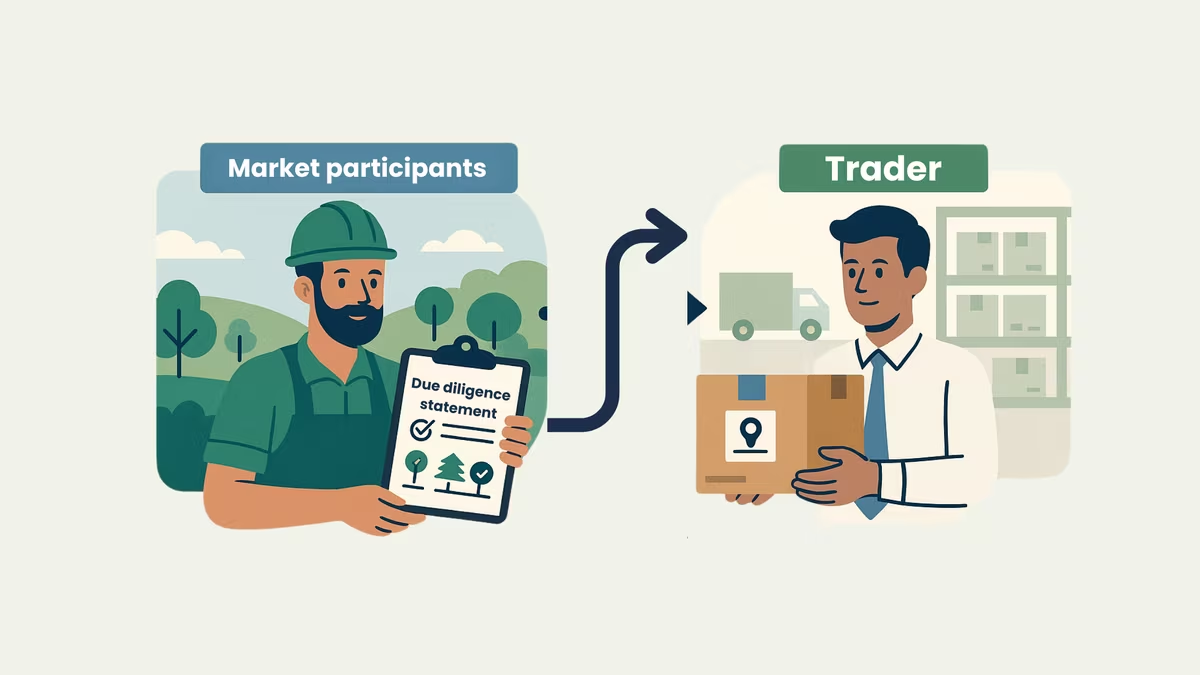
- Market participants place relevant products on the EU market for the first time or export them. Distributors continue to trade in products that have already been placed on the market without being the first distributor.
- What obligations do market participants have?
- Anyone supplying or exporting a relevant product in the EU for the first time must carry out due diligence, including origin and geodata, risk analysis and submission of the due diligence declaration in the EU information system.
- What obligations do retailers have?
- Since the end of 2025, downstream actors do not generally have to submit their own risk analysis or due diligence declaration; only the first downstream actor must collect and retain reference numbers.
- Is a supplier's declaration sufficient?
- Yes, provided it is complete, plausible and relates to the specific batch. In case of ambiguities or high-risk regions, a separate check is required.
- When must a declaration of due diligence be submitted again?
- A new DDS is particularly necessary if a company acts as the first distributor, the inputs are not covered by an existing DDS or substantiated concerns require a separate review.
Executive Summary
The EUDR obliges companies to ensure that certain raw materials and products made from them are deforestation-free, legally produced and traceable back to the area of origin. The role logic of the regulation remains crucial: anyone supplying or exporting relevant goods to the EU market for the first time must set up a robust due diligence system, assess risks and submit the due diligence declaration in the EU information system. In many cases, downstream actors continue to work on this basis and use references to avoid double reporting along the chain, without losing responsibility for clean processes.
In practice, this applies: The more stable traceability, data quality and internal approvals are organized, the easier it is to pass on obligations efficiently. However, as soon as goods are mixed, further processed or traceability becomes fragile, the need for testing and documentation increases again and additional obligations can be triggered. Although the current timetable provides more lead time, it is not a break: large companies must apply the requirements from December 30, 2026, small and micro-enterprises from June 30, 2027.
Never miss an update on the EUDR again.
New specialist articles, regulatory updates and practical tips, straight to your inbox. Once a week, no spam.
Understanding EUDR roles: Market participant vs. trader
Who is a market participant within the meaning of the EUDR?
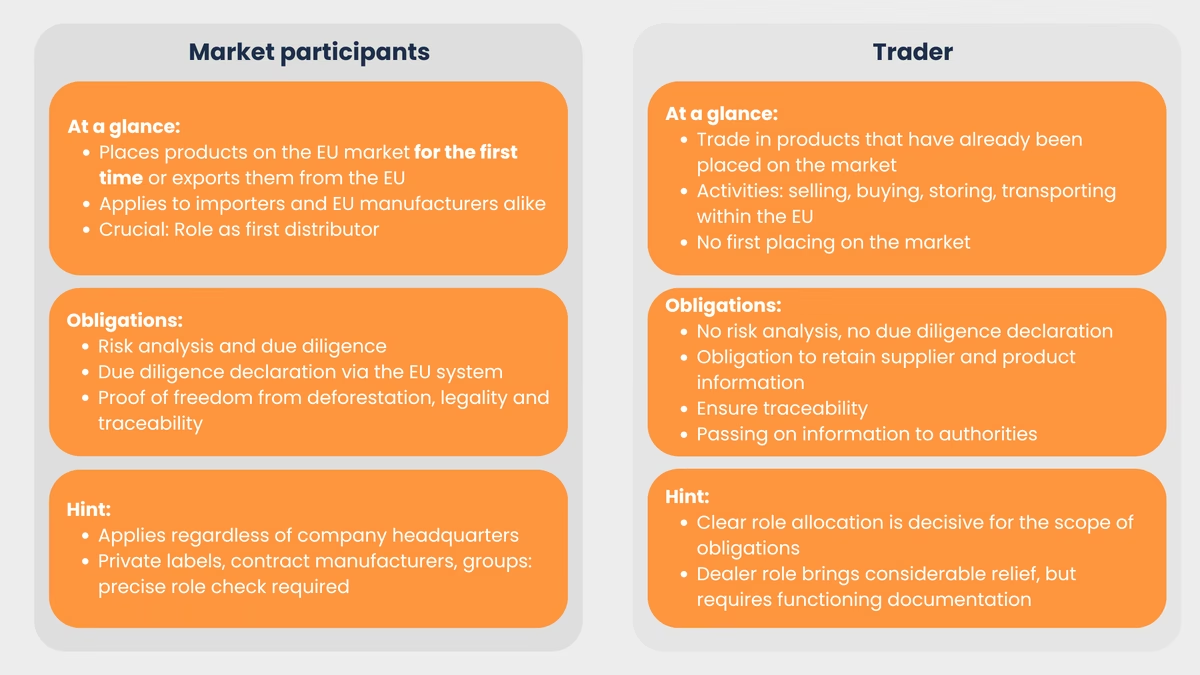
At the heart of the EUDR is the distinction between market participants and traders. Any natural or legal person who makes relevant raw materials (e.g. soy, palm oil, wood, beef, cocoa, coffee, rubber) or products made from them available on the EU internal market for the first time or exports them from the EU is considered a market participant. The role of the first distributor is therefore decisive, regardless of whether it is an importer from a third country or a manufacturer based in the EU.
Market participants have the most comprehensive obligations under the EUDR. These include in particular the following legal requirements:
- Carrying out due diligence, including in-depth risk analysis along the supply chain
- Submission of a due diligence declaration via the EU information system
- Proof that the products are deforestation-free, legally produced and traceable - right back to the parcel of origin
These obligations apply regardless of where the company is based, provided that the product is placed on the EU market.
It is important to look at the supply chain after the simplifications at the end of 2025. In principle, the formal submission of the due diligence declaration will be bundled with the first distributor. Downstream actors will be relieved and the obligation to collect and retain reference numbers will only apply to the first downstream actor. This reduces duplication of work, but does not change the fact that the first distributor must set up and document its checks properly.
For internationally operating companies, a precise classification of the market participant role is therefore essential, particularly with regard to group structures, supplier contracts and trade channels. So-called "private label" constellations or contract manufacturers should also carefully examine whether they are actually acting as market participants.
Who is a trader within the meaning of the EUDR?
Distributors within the meaning of the EUDR are companies that resell or supply relevant products within the EU after they have already been placed on the market for the first time. The decisive factor is therefore not "storage/transport", but whether a company acts economically as a supplier in the flow of goods.
Examples of traders within the meaning of the EUDR are
- Wholesalers who purchase and resell products from an EU producer
- Retailers who buy and sell affected goods
- Logistics companies only if they provide/sell products themselves as economic actors
Since the most recent amendments, the size of the company is particularly important when it comes to obligations. For SME traders, the requirements are leaner in many constellations, but by no means "zero" in practice: they must reliably carry, pass on and archive information and references to existing due diligence declarations. Non-SME retailers, on the other hand, have a much greater responsibility and, depending on the case, may have to do a lot more due diligence themselves.
The public reporting obligation primarily affects non-SME players. Even if SMEs are often exempt from this, it remains crucial for them that references, supplier data and internal evidence are maintained in such a way that they are immediately available in a reliable form in the event of queries from the authorities or customer requirements.
Retailers do not place products on the market for the first time, but they are still obliged to do so. SMEs must reliably carry and pass on references and evidence, while non-SMEs bear significantly more extensive responsibility.
Differences in duties at a glance
The EUDR continues to make a clear distinction in terms of obligations according to the role in the flow of goods. Those who make products available on the EU market for the first time or export them from the EU bear the main responsibility. These companies must set up a functioning due diligence process, compile the relevant information on the product and its origin, assess the deforestation and legality risk and submit the due diligence declaration via the EU information system before placing the product on the market or exporting it. This documents that the product is deforestation-free, that the relevant laws of the country of origin have been complied with and that traceability back to the area is ensured.
Downstream actors, on the other hand, operate more in a reference and verification logic. They do not automatically have to roll up every upstream check "again", but typically continue to work with existing information and references from the chain. The decisive factor here is that the internal processes are clean: References must correctly match the product, batch and, if applicable, processing step; information must be passed on and archived in such a way that it can be found quickly in the event of an audit. However, as soon as there are specific anomalies or data is inconclusive, simply "passing it on" is no longer sufficient and additional clarification is required.
Downstream actors do not have to carry out their own risk analysis, but they must ensure that references are correctly assigned, information is passed on and any anomalies are actively followed up.
In principle, distributors are less deeply involved in the actual risk assessment than first distributors. Their main duty is to ensure transparency along the chain, i.e. to document supplier and customer relationships in a comprehensible manner and to reliably carry and pass on the relevant evidence and references. It is important not to think too broadly: requirements can be stricter depending on the size of the company and the constellation. In practice, it is therefore always worthwhile to properly classify your own role, as this will determine whether a separate due diligence declaration is required or whether the work along the chain is primarily carried out via reliable references and a clean documentation system.
Retailers do not have to submit their own due diligence declaration. Their core obligation lies in the reliable provision of references and traceable documentation along the supply chain.
Practical examples of role allocation
In order to make the sometimes abstract concepts of the EU Deforestation Regulation more tangible, it is worth taking a look at typical constellations from everyday business life. After all, it is only through concrete examples that it becomes clear how the roles of market participants and traders differ in practice - and which due diligence obligations result from this.
A classic case is direct import. A German company imports soybeans from Brazil, processes them into animal feed and sells them on within the EU. In this case, the importing company is the first distributor and must implement full due diligence. This includes the collection of the necessary information, the risk-based assessment and, prior to placing on the market, the submission of the due diligence declaration via the EU system.
In the next step, a feed wholesaler takes over, purchasing the goods from the importer and selling them on. Here, the focus is no longer on a separate "re-inspection" as with the first distributor, but on clean traceability and reliable record keeping. Since the simplifications, the formal declaration is basically bundled with the first distributor; downstream actors work more with references and consistent goods and documentation processes instead of repeatedly rebuilding the same information along the chain.
Another example shows why processors within the EU should take a closer look. A furniture manufacturer sources tropical wood from a European supplier who has previously imported the material. Depending on the constellation, the furniture manufacturer is not "automatically" the first distributor of the wood, but a downstream player who can build on upstream declarations. It is then crucial that the internal processes keep traceability and allocation clean. As soon as timber from different sources is mixed or the clear allocation at batch level is lost, the inspection and declaration path can become more complex again.
Clarifying roles is not a formality: if you clearly classify whether you are the first distributor or a downstream player, you can tailor your obligations correctly and avoid liability risks and blockages in the flow of goods.
Subsequent market participants and EUDR compliance
What are subsequent market participants?
In the context of the EUDR, the question often arises as to what is meant by "downstream operators". According to the definition, this refers to companies that purchase relevant raw materials or products that have already been placed on the market from another market participant and in turn either process, package or place them on the market again. In practice, these downstream players are often part of complex value chains, such as industrial processors, packers or re-exporters within the EU.
Principle: No double reporting obligation
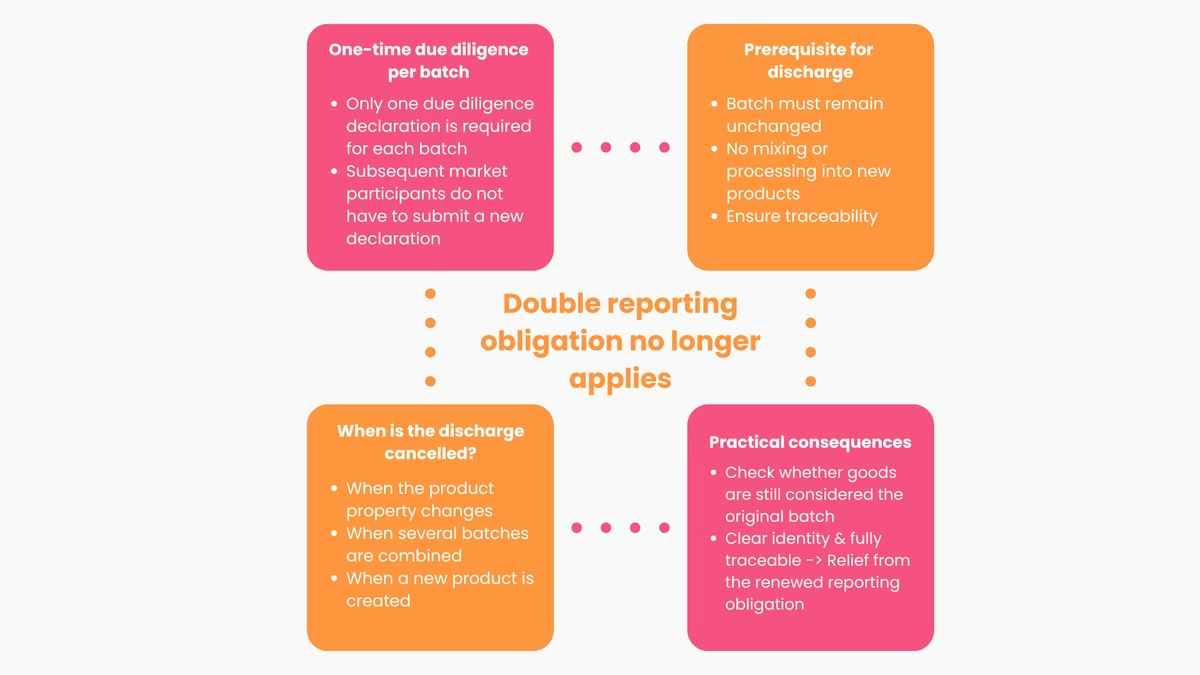
A key point for relieving the burden on companies is the principle that a due diligence declaration does not have to be submitted more than once for the same batch of a product. This means that if a market participant has already provided a product with a full due diligence declaration in the past and imported it into the EU market, subsequent market participants do not have to submit a new declaration for this batch.
This principle is often referred to as "single due diligence" and is intended to prevent the need to carry out complex risk analyses and reports several times for the same goods.
This significantly increases the efficiency and feasibility of the EUDR, especially for long supply chains or supply chains with a division of labor. This approach has also been confirmed by guidance and interpretations from the European Commission. Under certain conditions, companies that process, trade or resell products can rely on the due diligence declaration already made by an upstream market participant.
However, this principle does not apply without restriction. It is important that the batch in question remains a clear, unaltered unit. As soon as the goods are subsequently mixed, reworked or further processed to such an extent that a new product characteristic or a new product is created, a new due diligence obligation may arise. Even if individual batches are combined without their traceability being guaranteed, the exonerating effect of the original declaration no longer applies.
In practice, this means that companies must carefully check whether the goods they process or pass on are still considered the same "batch" within the meaning of the EUDR or whether further processing or mixing creates a new product unit. Only if the identity and traceability of the original goods are retained does the relief provided by the one-off notification obligation apply.
Special cases and exceptions
Even if the principle of a single due diligence declaration applies, there are certain cases in which a new or supplementary declaration may be required. This mainly concerns situations in which a subsequent market participant mixes, recombines or further processes an already notified product, resulting in a new relevant product. In such cases, the original due diligence declaration may no longer be sufficient, as the composition or traceability of the goods has changed. Re-exports to third countries are another special case: If a product leaves the EU internal market again, this may require a new due diligence declaration - depending on how the product was previously processed or repackaged.
Constellations with mixed goods, i.e. products that consist of different raw materials or components with different origins, are particularly complex. This applies, for example, to pre-packaged foodstuffs, processed wood products or chemical products. In such cases, the EUDR generally requires that each individual component of origin remains clearly traceable. This poses a considerable challenge, both technically and organizationally, especially for sectors such as the food and chemical industries. Collection points, transshipment points or central warehouses should also carefully check whether they may be the first distributor. If different goods are newly combined or split up there, a separate reporting obligation may arise - especially if the batch loses its original form or the data collected is no longer clearly traceable.
These special cases show: Despite the principle of relief through the one-off due diligence obligation, companies are well advised to check their processes carefully. As soon as changes are made to the goods, whether through mixing, processing or relocation, a new obligation to submit a due diligence declaration may arise.
Risk analysis: When is it necessary?
Risk analysis mandatory for first-time distributors
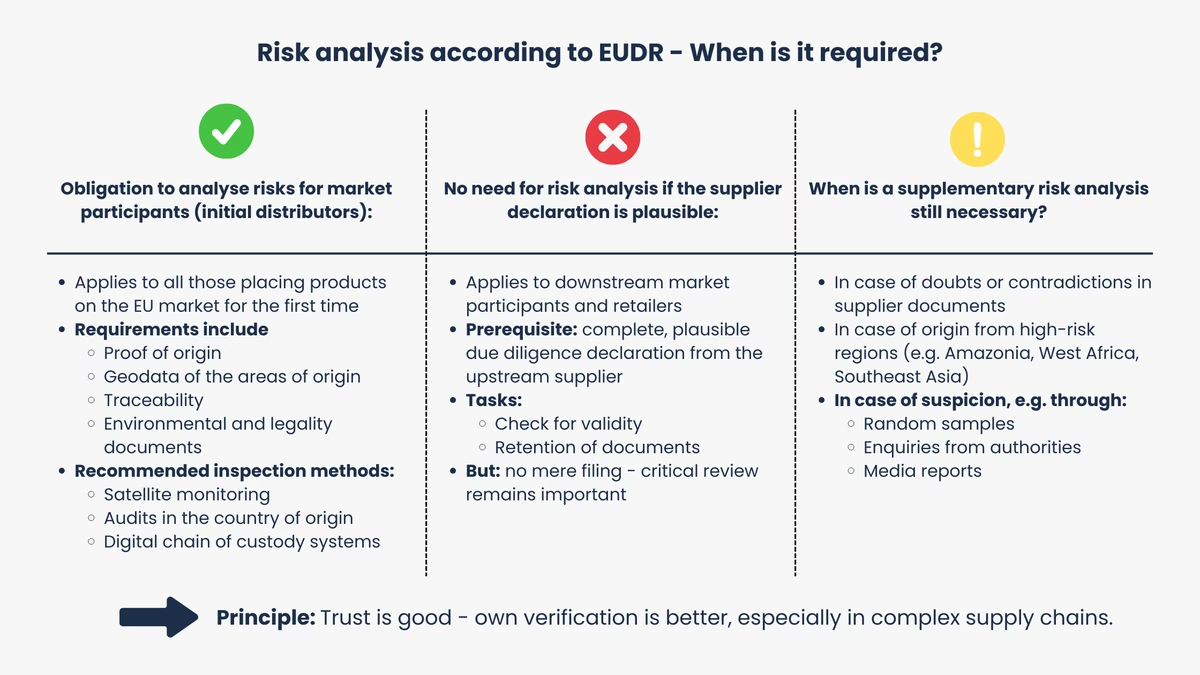
The EUDR obliges every market participant who places relevant products on the European market for the first time to carry out a comprehensive risk analysis. This analysis forms the core of the EUDR. The aim is to systematically and comprehensibly determine whether the exclusion of deforestation, forest degradation, forest degradation and legal violations is guaranteed along the entire supply chain. The risk analysis must take into account all available information: Proof of origin, geodata of the areas of origin, proof of traceability, environmental permits, legality documents and, where applicable, independent certificates are all part of this. In practice, this often means a considerable amount of documentation. Companies are required to use methods such as satellite monitoring, audits in the country of origin or digitalized chain-of-custody systems.
No need for risk analysis if supplier declaration is plausible
Not all actors along the supply chain have to carry out a full risk analysis on their own. If the immediate upstream supplier provides a legally binding due diligence declaration in accordance with EUDR and this is sufficiently plausible, the company can usually dispense with a new full risk analysis. In this case, it is often sufficient to validate the submitted declaration, check its validity and keep the documents in a traceable manner. The EUDR expressly stipulates that downstream traders and market participants are largely exempt from the detailed obligations of the risk analysis if they can rely on a trustworthy due diligence declaration from their upstream supplier. Nevertheless, in view of potential liability risks, it is advisable to critically check the quality and plausibility of the information provided instead of simply "filing it away". This is the only way to avoid the risk of fines and sanctions.
When a supplementary risk analysis may nevertheless be necessary
However, there are constellations in which a supplementary risk analysis may be required even if the upstream supplier has issued a due diligence declaration. This applies in particular if there are indications of inconsistencies, contradictions or non-transparent supply chains. It is also advisable to carry out further checks if products originate from countries or regions with an increased risk of deforestation or illegality - such as certain regions in South East Asia, West Africa or the Amazon.
Another practical case: If random checks, official enquiries or media research reveal a concrete suspicion of breaches of due diligence obligations, the company may be obliged to go beyond the usual supplier checks. The following principle therefore applies, particularly in the case of complex or convoluted supply structures: trust is good, but your own checks are better.
Concrete case studies
A supplier from Indonesia delivers palm oil to a European bottler and submits a due diligence declaration. However, the attached documents contain contradictory geocoordinates and independent reports warn of increasing illegal deforestation in the region. In such a case, it is not sufficient to rely solely on the supplier's declaration. Instead, an in-depth risk analysis is required, ideally supplemented by additional evidence or an external audit.
The situation is different when a German paper manufacturer purchases pulp from a certified supplier in Finland. The documents are complete and plausible and Finland is considered a country with a low deforestation risk. In such cases, no further assessment is usually necessary - provided there is no information to the contrary. These examples make it clear that companies must carefully consider in each individual case whether they can rely on the available documents or whether they need to carry out their own, more extensive checks.
Is the supplier due diligence declaration sufficient?
Principle: Yes, but only under certain conditions
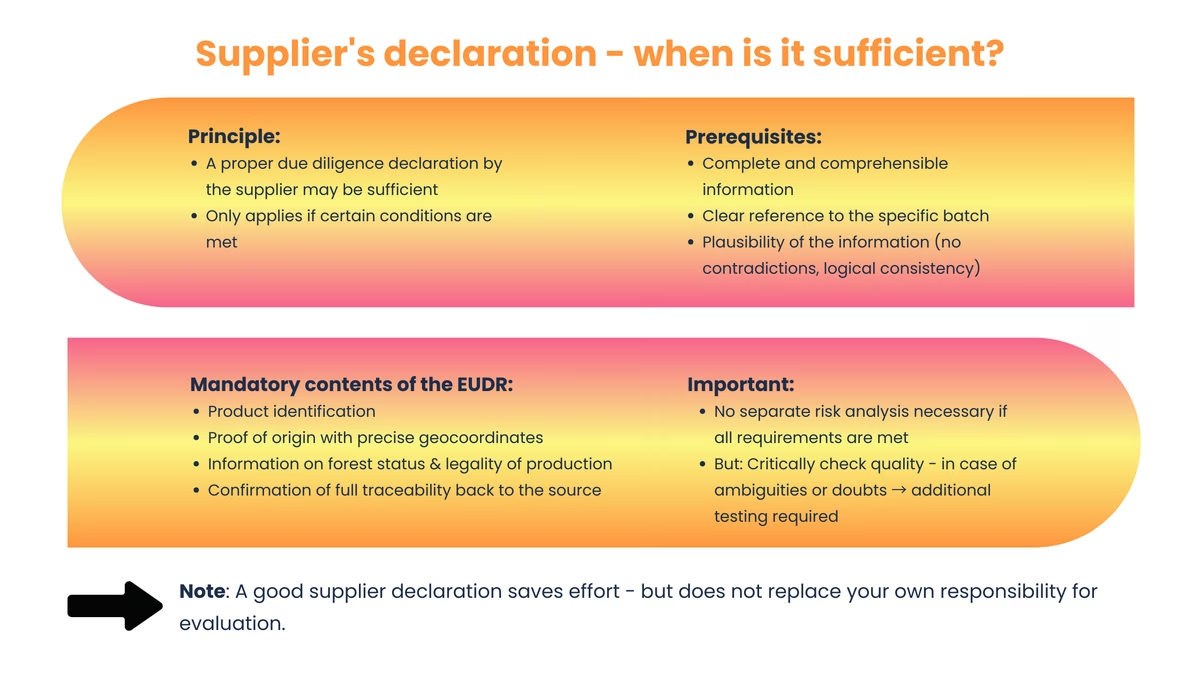
A supplier's declaration can be an important building block in practice, but it is not "the" EUDR proof per se. It is essential that a valid due diligence declaration for the goods is stored in the EU information system and that the associated information is maintained in such a way that it is conclusive, comprehensible and can be retrieved at any time in the event of an inspection. Suppliers typically provide the data and documents on which the formal declaration of due diligence of the first distributor is based.
For the downstream use of this information to be viable, the data must be complete and consistent and clearly match the specific goods. The decisive factor here is not just "a piece of paper", but the combination of reference logic, data quality and documentation.
The central minimum requirements include in particular
- clear identification of the product and the relevant delivery,
- reliable information on origin, including the necessary geodata on the production area,
- Proof of legality in the country of production (within the meaning of the relevant legislation),
- traceability that also plausibly depicts intermediate stations and processing steps.
If these points are met and the documents actually support the information, this can significantly reduce the audit effort downstream. At the same time, the responsibility remains to critically check the plausibility of the information. As soon as information is missing, contradictory or does not clearly relate to the specific goods, a supplier declaration alone is not sufficient. Subsequent requests, additional documents and, if necessary, in-depth checks are then required before goods are processed further or passed on.
It is also practically relevant that discharge only works as long as traceability and allocation remain stable. Where goods are mixed, repackaged or processed in such a way that references and batch logics are no longer clearly effective, formal verification quickly becomes an operational risk. This is precisely why the supplier declaration is helpful, but only if it is embedded in a clean, auditable due diligence setup.
What companies should look out for
Companies should not simply accept their suppliers' due diligence declarations without checking them.
It is important to check the documents systematically:
- Are all the necessary details complete?
- Does the information fit together logically?
Where possible, the information should be checked for plausibility using known data sources or satellite images. If anything is unclear, you should always ask the supplier for clarification.
Especially with a regulation such as the EUDR, where there is a risk of high fines and possible damage to your image, it is not enough to simply file documents. A formal review of the contents is absolutely necessary. It is particularly important that the declaration actually relates to a specific batch and does not serve as a blanket declaration for the entire product range. Such blanket declarations generally do not meet the requirements of the EUDR. According to current figures from the European Forest Institute, over 30 percent of supplier declarations on the market are not fully compliant with the law. Anyone who accepts such declarations without checking them risks legal and financial consequences in the event of an inspection.
When a supplementary audit is necessary
An additional check should always be carried out if the documentation is unclear, contradictions or atypical information appear or if the supplier comes from a high-risk region. Particular caution is also required if there is a suspicion of falsified certificates, a lack of traceability or the presence of mixed products of unknown origin.
Companies should check whether the supplier has recognized certification systems, such as FSC or PEFC, and whether independent third parties have audited the supply chain. In addition, a specific risk assessment along the entire value chain is recommended, for example using IT-based tracking systems such as blockchain or specially developed inspection algorithms. In practice, pioneering companies often rely on a combination of document review, risk-based spot checks and systemic supplier assessment to fulfill their own EUDR obligations.
Is simple proof sufficient for retailers?
For retailers, the obligations towards initial distributors are much more streamlined. Essentially, it is a matter of ensuring that the required evidence is available in a verifiable form and can be properly documented throughout the transaction. In practical terms, this means that traders must be able to allocate and store the relevant information from the EU information system, in particular reference and verification numbers, and present it when required.
Since the simplifications at the end of 2025, the focus has been less on a separate review of the content of upstream due diligence and more on stable processes, reliable documentation and the ability to react when specific indications of discrepancies arise.
From a risk perspective, it can nevertheless be useful to plan plausibility checks depending on the goods, origin profile and process complexity in order to identify obvious errors, gaps or data breaches at an early stage.
Conclusion
The regulatory requirements of the EUDR bring new, comprehensive due diligence obligations for companies in the EU. Unlike previous regulations, it not only affects importers or manufacturers, but the entire supply chain, from the raw material to the finished product. Traders and downstream market participants must also fulfill certain documentation and verification obligations.
The principle of shared responsibility along the supply chain offers opportunities, for example through the relief provided by audited suppliers, but also harbors risks. Those who blindly rely on supplier declarations risk fines, damage to their image and liability. A good balance of trust, control and transparency is crucial.
Companies should therefore first clarify their status under the EUDR (market participant or dealer). Supplier assessment, risk analysis and documentation can then be built up in a targeted manner on this basis. Digital tools such as geo-tracking, blockchain or certificate databases help to manage evidence efficiently. In addition, training for specialist departments increases awareness of obligations and risks and strengthens compliance in everyday life.
Frequently asked questions
A market participant is any natural or legal person who imports relevant raw materials or relevant products made from them onto the EU market for the first time or exports them from the EU. This applies both to importers from third countries and to EU companies selling goods within the EU for the first time. Distributors, on the other hand, are actors who resell, store or transport goods that have already been placed on the market within the EU without being the initial distributor themselves. They are subject to fewer obligations, in particular no risk analysis obligation.
Yes - in principle, a separate due diligence declaration is required for each batch before the goods are marketed or exported in the EU. This principle ensures traceability and legal compliance. Exception: If a product has already been correctly declared by a market participant and the batch remains unchanged, subsequent market participants do not have to submit a new declaration. However, if the goods are mixed, processed or recombined, this exemption does not apply.
A separate risk analysis is mandatory if the company acts as a market participant and places the goods on the market for the first time. In other cases, e.g. as a trader or downstream market participant, the due diligence declaration of the upstream supplier may be sufficient if it is complete, plausible and relates to the specific batch. Important: In the event of ambiguities, contradictory information or high-risk countries, it is advisable to carry out your own additional checks.
The declaration must contain certain minimum contents:
- A clear product description
- Acquisition of geocoordinates of the original area
- Information on forest status (deforestation-free)
- Proof of legal conformity of production
- Confirmation of traceability back to the source
- Information about suppliers and intermediaries
Only if these points are fulfilled and verifiable does the declaration meet the requirements of the EUDR.
Although retailers do not have to carry out their own risk analysis, they are obliged to cooperate. They must keep due diligence declarations and relevant evidence from their suppliers, present them if required and be able to pass them on to customers. They are also obliged to document the origin and whereabouts of the goods in a traceable manner. If there are doubts about the accuracy of the information or indications of violations, retailers must take action. Anyone who ignores these obligations can be held jointly liable in an emergency.
Companies should systematically check supplier declarations: Are all details complete and comprehensible? Does the geodata match the specified region of origin? Are there any known risks in the region of origin? In addition, publicly accessible databases, satellite images or certificates can be consulted. Good practice also includes enquiries to the supplier and spot checks.
A new declaration is required if one or more of the following information changes. This includes, for example, the origin of the goods, supplier or producer, transportation route or means, as well as significantly changed circumstances in the supply chain that influence the assessment of freedom from deforestation or legality.

Alexander Hilmar
LinkedInESG compliance expert - lawcode GmbH
Alexander Hilmar advises companies on the implementation of ESG compliance, sustainable reporting and supports the implementation of digital solutions for legally compliant supply chains. His specialist articles on the lawcode blog combine regulatory depth with practical recommendations for action.