 DE
DE

Important facts
- Where is environmental protection enshrined in law?
- Since 1994, environmental protection has been a national objective under the Basic Law (Art. 20a GG). The specific obligations for companies are set forth in sector-specific laws such as the Federal Immission Control Act (BImSchG), the Water Resources Act (WHG), and the Nuclear Waste Management Act (KrWG), as well as in EU law.
- Which companies are required to comply with environmental regulations?
- Essentially, every company. The obligations are particularly extensive for operators of facilities requiring a permit, waste generators, and businesses that handle hazardous substances.
- Under Omnibus I, who is still required to report under the CSRD?
- Only companies with more than 1,000 employees and net revenue exceeding 450 million euros. The LkSG reporting requirement is completely waived.
- What changes does the new EU Directive on Environmental Criminal Law bring?
- It expands the scope of criminal offenses and significantly increases penalties for companies and executives. Fewer reports, therefore, do not mean less responsibility.
- Why is time of the essence when it comes to climate protection?
- According to the IPCC, global greenhouse gas emissions must be reduced by 43 percent by 2030 and by 60 percent by 2035 compared to 2019 levels in order to achieve the 1.5-degree target.
Abstract
The term “environmental protection” encompassesall measures that protect soil, water, air, and the climate—as well as animals and plants—from harmful effects and remedy damage that has already occurred. For companies, environmental protection in the workplace is primarily a matter of legal compliance: permit requirements, limit values, waste management and water protection obligations, as well as the appointment of environmental officers, are mandatory and subject to regulatory oversight.
The regulatory framework is currently shifting in two directions. The EU is easing reporting requirements: Under the Omnibus I package, the CSRD now applies only to companies with more than 1,000 employees and revenue exceeding 450 million euros; the LkSG reporting requirement no longer applies. In the area of environmental criminal law, however, the regulations are becoming stricter: Directive (EU) 2024/1203 expands the scope of criminal offenses, shifts the focus of criminal liability to the pre-offense phase, and increases penalties for companies and executives.
For management, this means: Fewer reports do not mean less responsibility. Organizations that systematically identify environmental risks, clearly define responsibilities, use an environmental management system, and receive early warnings of violations through a whistleblower system reduce their liability risks. This also lays the foundation for providing solid evidence to regulatory authorities, customers, and investors.
Never miss an update on ESG & sustainability again.
New specialist articles, regulatory updates and practical tips, straight to your inbox. Once a week, no spam.
What Is Environmental Protection? Definition, Concept, and Fundamentals
Environmental protection refers to the totality of all measures taken to identify, prevent, or reduce environmental hazards and to remedy environmental damage that has already occurred.
The natural resources essential to human life—soil, water, air, climate, animals, and plants—are protected. The goal is to ensure a healthy and dignified life for present and future generations. The term “environmental protection” is a combination of “environment” and “protection” and was first coined in a political context in Germany in the early 1970s. It describes not only individual actions but also a cross-cutting responsibility shared by the government, the private sector, and society.
Environmental protection focuses on three areas:
- Prevention: The goal is to prevent damage from occurring in the first place. This is ensured, for example, by permitting procedures and threshold limits.
- Mitigation: Existing pollution is reduced, for example, through filtration systems or wastewater treatment.
- Remediation: Damage that has already occurred is repaired. Examples include the remediation of contaminated sites and the restoration of rivers and lakes.
Subfields and Delimitation
Environmental protection is an umbrella term that encompasses many subfields. Protecting the air and climate involves climate protection and pollution control—that is, clean air, less noise, and fewer vibrations. Water and soil are protected through water protection, soil conservation, and the remediation of contaminated sites. Nature conservation, species protection, and landscape management help preserve animals, plants, and habitats. Also particularly important for businesses are the circular economy—including waste management laws—as well as regulations governing chemicals and hazardous substances, and radiation protection.
The terms “environmental protection,” “nature conservation,” “climate protection,” and “sustainability” are often used interchangeably, but they describe areas of varying scope. Climate protection aims to reduce greenhouse gases, while nature conservation focuses on protecting animals, plants, habitats, and landscapes—both are subcategories of environmental protection. Environmental protection is broader and also encompasses air, water, soil, waste, chemicals, and noise. Sustainability goes even further: it combines ecological, social, and economic goals, as described, for example, by the 17 UN Sustainable Development Goals (SDGs). Environmental protection is thus one of the three pillars of sustainability, but it is not synonymous with it.
Environmental Protection in the Basic Law: Article 20a of the Basic Law and Its History
Under Article 20a of the Basic Law, the state protects the natural foundations of life—and, since 2002, animals as well—out of a sense of responsibility toward future generations. As a provision establishing a state objective, this provision is binding on the legislature, the executive, and the judiciary. The climate ruling by the Federal Constitutional Court in March 2021 demonstrated the power this provision can wield: The Court concluded, based on Article 20a of the Basic Law in conjunction with the rights to liberty, that the legislature may not unilaterally shift the burden of reducing emissions onto future generations. As a result, the Climate Protection Act had to be strengthened.
Since 1994, environmental protection has been enshrined as a state objective in Article 20a of the Basic Law. However, no individual fundamental right to environmental protection can be derived from this provision.
The most important milestones in environmental protection in Germany:
- 1971: The federal government's first environmental program. Environmental protection becomes a public priority on par with other issues.
- 1974: The Federal Clean Air Act goes into effect, and the Federal Environment Agency is established.
- 1986: In the wake of the Chernobyl disaster, the Federal Ministry for the Environment is established.
- 1994: Environmental protection becomes a national objective under the Constitution.
- 2015: The Paris Climate Agreement sets the goal of keeping global warming well below 2 degrees.
- 2019: The European Commission unveils the European Green Deal.
- 2024: The EU adopts the Environmental Criminal Law Directive (EU) 2024/1203.
- 2026: The Omnibus I Package significantly restricts the CSRD and CSDDD, and environmental criminal law is tightened.
What are the principles of environmental law?
German environmental law is based on three fundamental principles: the precautionary principle, the polluter-pays principle, and the principle of cooperation. At the EU level, Article 191(2) of the TFEU additionally refers to the principles of prevention and origin. These principles determine how authorities grant permits, formulate conditions, and allocate costs.
- According to the precautionary principle, environmental damage should not occur in the first place; authorities may take action even if a risk has not yet been conclusively proven scientifically. One example is the waste hierarchy under Section 6 of the Waste Management Act (KrWG): prevention takes precedence over reuse, recycling, other forms of recovery, and disposal.
- The polluter-pays principle states that whoever causes environmental damage must bear the costs of prevention, remediation, and compensation—as is evident, for example, in the remediation obligations under the Federal Soil Protection Act or in CO₂ pricing.
- The principle of cooperation views environmental protection as a shared responsibility of the government, the private sector, and society—for example, when companies voluntarily demonstrate through EMAS that they are reducing their environmental impact and receive incentives in return.
- Finally, the "pollutant at the source" principle requires that environmental impacts be addressed at the source whenever possible, for example, by setting emission limits directly at the facility.
For companies, the “polluter pays” principle is particularly crucial: It explains why operators are liable for damage caused by their facilities—and, in the case of certain facilities, even regardless of whether they acted negligently.
Why is environmental protection so important? The biggest environmental problems
Environmental protection is important because climate change, species extinction, and pollution directly threaten the economic and health foundations of society. For businesses, these issues pose physical risks to their facilities and supply chains, rising costs, and stricter regulations.
Climate Change
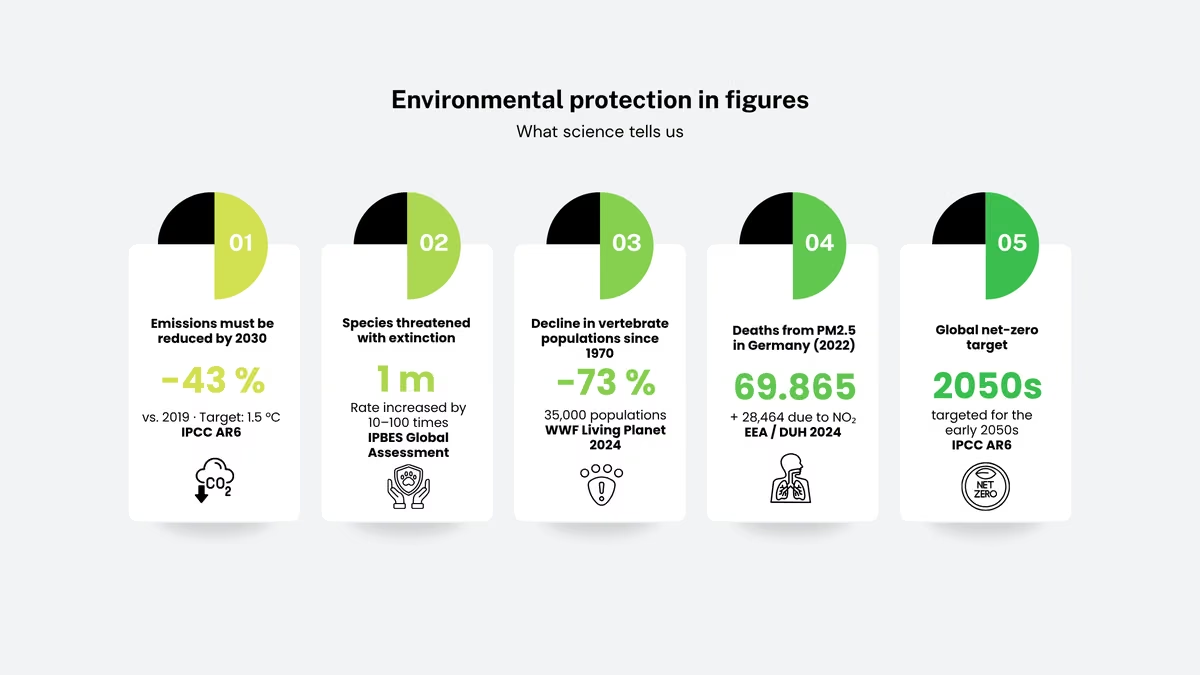
According to the World Meteorological Organization (WMO), 2024 was the first calendar year in which the global average temperature was approximately 1.55 degrees above pre-industrial levels. Although the Paris Agreement target refers to a long-term average—which currently stands at about 1.3 to 1.4 degrees—it is considered to be at serious risk.
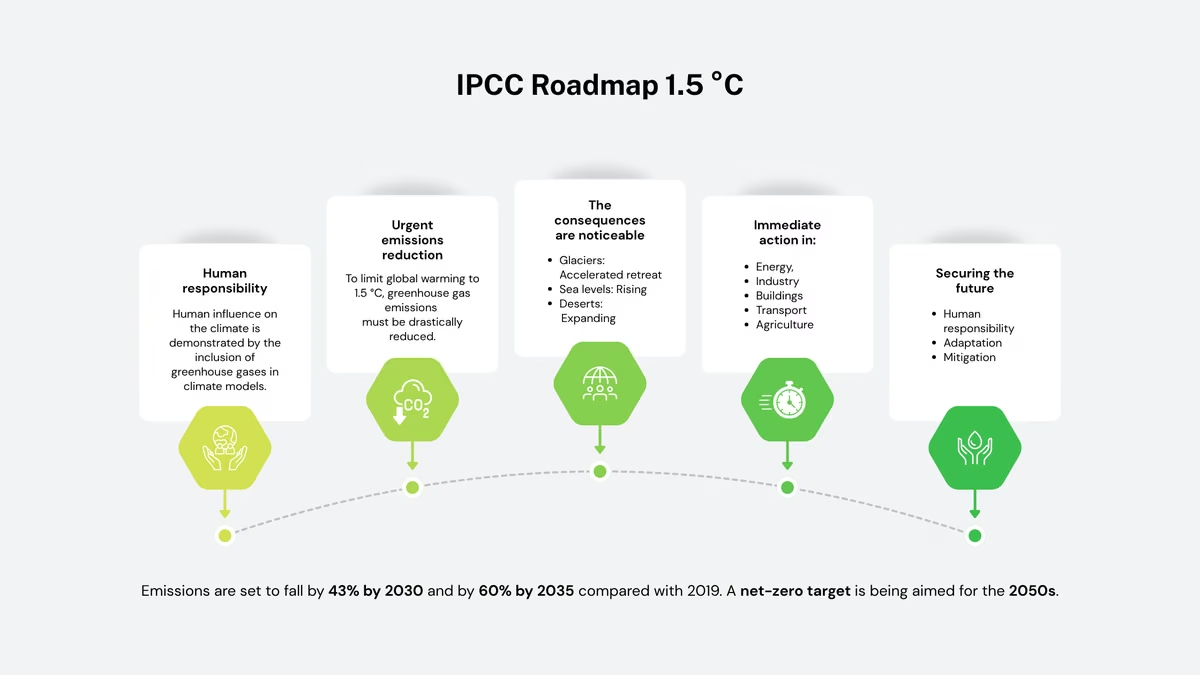
The IPCC clearly outlines the action needed: a 43 percent reduction in greenhouse gas emissions by 2030 and a 60 percent reduction by 2035 compared to 2019, with net-zero emissions by the early 2050s.
Key Messages from the IPCC Reports
The Intergovernmental Panel on Climate Change (IPCC) assessment reports summarize the current state of scientific knowledge on climate change. Their key findings are:
- Human Responsibility: Climate change is clearly caused by human activities. This is demonstrated, among other things, by climate models that take human-caused greenhouse gases into account.
- Urgent Emissions Reductions: To meet the 1.5-degree target, emissions must be reduced by 43 percent by 2030 and by 60 percent by 2035 compared to 2019 levels.
- Comprehensive measures: Immediate emissions reductions are needed in all economic sectors.
- Tangible consequences: Melting glaciers, rising sea levels, water shortages, and the spread of deserts are already a reality.
- Adaptation and Mitigation: Only the combination of reducing greenhouse gas emissions and adapting to their impacts can address the risks.
Climate Protection and Climate Adaptation
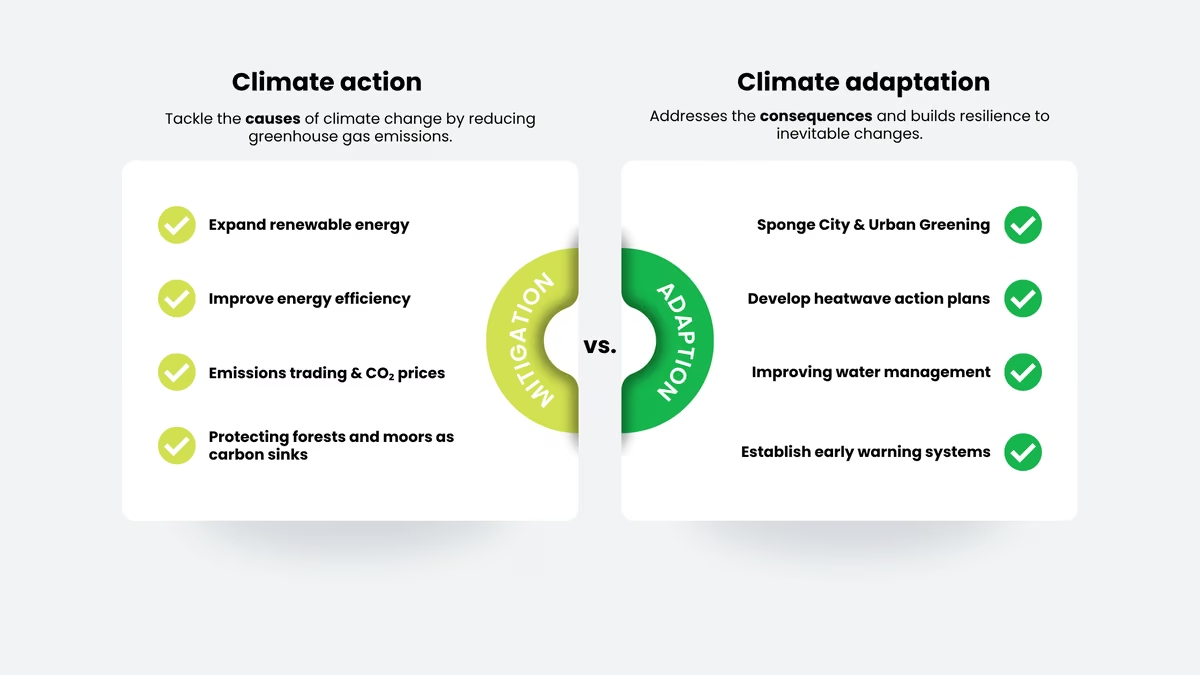
The IPCC distinguishes between two complementary approaches. Climate mitigation addresses the causes of climate change. The goal is to reduce greenhouse gas emissions, for example through renewable energy, more efficient energy use, or climate-friendly process heat. Climate adaptation addresses the consequences that can no longer be avoided. More green spaces in cities, “sponge city” concepts, improved water management, heat action plans, and warning systems help limit the damage caused by heat, drought, and heavy rainfall.
For businesses, both aspects are important. Climate protection reduces emissions and CO₂ costs, while climate adaptation protects locations, facilities, and supply chains from extreme weather.
Climate action prevents climate change, while climate adaptation protects against it. Both approaches are necessary to build a climate-resilient future.
Loss of Biodiversity
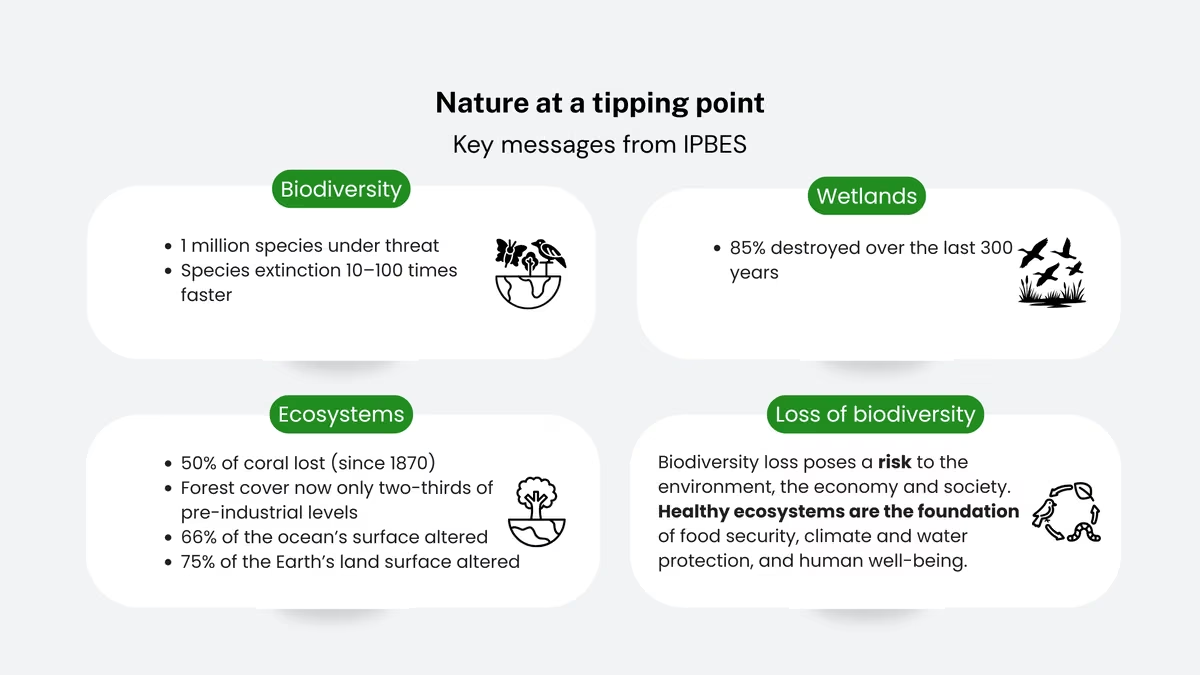
According to the Global Assessment by the Intergovernmental Science-Policy Platform on Biodiversity and Ecosystem Services (IPBES), up to one million species are threatened with extinction. More than 85 percent of wetlands have been lost over the past 300 years. The WWF’s Living Planet Report 2024 documents an average decline of 73 percent in the vertebrate populations studied since 1970. Intact ecosystems ensure pollination, drinking water, and climate stability. Their loss therefore also poses an economic risk.
Key Findings of the IPBES Global Assessment
The Global Assessment by the Intergovernmental Science-Policy Platform on Biodiversity and Ecosystem Services (IPBES), adopted in 2019 at the seventh plenary meeting (IPBES-7), is the most comprehensive assessment of the state of nature. It reveals the extent of the biodiversity crisis: The extinction rate today is at least ten to one hundred times higher than the average over the past ten million years.
Ecosystems themselves are also shrinking. Since 1870, half of all living coral has disappeared, and global forest cover is now only about two-thirds of its pre-industrial level. 75 percent of the Earth’s land surface and two-thirds of its ocean surface have been drastically altered by human activities. The loss of biodiversity is therefore not only an ecological risk, but also an economic and social one.
Air, Water, and Soil Pollution
According to the Lancet Commission on Environmental Pollution, poor air quality causes approximately 6.7 million premature deaths worldwide each year, water pollution causes approximately 1.4 million, and lead exposure causes approximately 900,000. For Germany, the European Environment Agency (EEA) estimates that in 2022, there will be approximately 69,900 deaths due to fine particulate matter (PM2.5) and approximately 28,500 due to nitrogen dioxide. Added to this are microplastics, pesticides, and pharmaceutical residues in water bodies, as well as heavy metals and soil sealing.
Waste and Plastic
Every year, millions of metric tons of plastic end up in rivers and oceans worldwide. Microplastics have now been detected in human blood, the placenta, and breast milk. In the EU, only about one-eighth of the materials used come from recycled sources. This shows how far the EU still is from a true circular economy: at this rate, its goal of doubling the circularity rate by 2030 is hardly achievable.
What laws govern environmental protection?
There is no single, unified environmental code in Germany. Environmental law is spread across numerous federal and state laws, regulations, EU directives and regulations, as well as technical standards such as the TA Luft. It is therefore crucial for companies to keep their own legal records up to date.
International Environmental Agreements
The 2015 Paris Agreement sets the global framework. It limits global warming to well below 2 degrees, and ideally to 1.5 degrees. In 2024, the COP29 World Climate Conference in Baku also adopted a new financing target: Starting in 2035, developing countries are to receive at least 300 billion U.S. dollars each year.
In addition to climate protection, other international agreements help protect the environment. The Montreal Protocol protects the ozone layer. The Convention on Biological Diversity and the Kunming-Montreal Framework, which builds upon it, safeguard biological diversity. The Basel Convention regulates how hazardous waste may be transported across borders. The Stockholm Convention and the Minamata Convention ban or restrict persistent organic pollutants (POPs) and mercury.
EU Environmental Law
The EU sets most of the environmental standards that apply in Germany; the legal basis for these is Articles 191 through 193 of the TFEU. Of particular relevance to businesses are the EU Emissions Trading System (EU ETS) and the Carbon Border Adjustment Mechanism (CBAM), the Industrial Emissions Directive (IED) for facilities requiring permits, the Water Framework Directive and the Waste Framework Directive, as well as the REACH Regulation on chemicals.
In addition, there are product- and supply chain-related regulations such as the Deforestation Regulation (EUDR), the Packaging Regulation (PPWR), and the Ecodesign Regulation (ESPR). The Environmental Criminal Law Directive (EU) 2024/1203 introduces a new dimension, which we will discuss in more detail in the section on penalties.
Sustainability Reporting Under Omnibus I: CSRD and CSDDD
With the Omnibus I Package, the EU has significantly limited the reporting requirements under the CSRD and the due diligence obligations under the CSDDD. The amending directive was published in the Official Journal of the EU in February 2026 and entered into force on March 18, 2026.
The CSRD now applies only to companies with more than 1,000 employees and net revenue exceeding 450 million euros. The due diligence requirements under the CSDDD apply only to companies with 5,000 or more employees and revenue of 1.5 billion euros or more.
Member states must implement the CSRD amendments by March 2027; the revised CSDDD must be transposed into national law in Germany by mid-2028. However, even companies below the thresholds are indirectly affected: major clients, banks, and investors continue to request environmental data. The voluntary VSME standard provides a streamlined framework for this.
German Environmental Law
In Germany, environmental law is governed by several specific statutes. The Federal Immission Control Act (BImSchG) regulates how facilities are approved and operated, and protects against air pollution and noise. The Water Resources Act (WHG) specifies how companies may use water bodies. Together with the Ordinance on Facilities for Handling Substances Hazardous to Water (AwSV), it also determines how such substances must be stored safely.
The Circular Economy Act (KrWG) applies to waste. It requires that waste be prevented, collected separately, and that its disposal be documented. The Federal Soil Protection Act (BBodSchG) protects the soil and regulates the remediation of contaminated sites. The Federal Nature Conservation Act (BNatSchG) applies to interventions in nature and the landscape and to species protection.
Anyone who sells packaging or electrical appliances must comply with the Packaging Act (VerpackG) and the Electrical and Electronic Equipment Act (ElektroG). The prices for CO₂ emissions are determined by the Fuel Emissions Trading Act (BEHG) and the Greenhouse Gas Emissions Trading Act (TEHG).
The Supply Chain Due Diligence Act (LkSG), on the other hand, contains only very limited environmental obligations: They pertain to mercury, persistent organic pollutants, and hazardous waste. The amendment to the LkSG eliminates the annual reporting requirement, retroactively effective as of 2023. The due diligence obligations themselves remain in place.
Environmental Protection in the Workplace: Obligations and Implementation in Companies
The specific obligations that apply depend on the industry, the facilities, and the substances used. A logistics company faces different requirements than a chemical plant, but virtually no company is exempt from environmental obligations.
Industrial environmental protection encompasses all organizational and technical measures that a company uses to limit the environmental impact of its operations and comply with environmental regulations.
Typical Environmental Responsibilities in a Company
The process usually begins with permits. Many facilities require a permit under the Federal Immission Control Act (BImSchG) or a water law permit under the Water Resources Act (WHG). The conditions set forth in these permits are binding, such as emission limits or requirements for regular measurements.
Clear rules also apply to waste. Companies must collect it separately and classify it properly. For hazardous waste, the electronic tracking system is mandatory. The Commercial Waste Ordinance also requires that separate collection be documented.
Anyone who stores water-polluting substances must comply with the AwSV’s requirements regarding storage facilities, spill containment pans, and inspection intervals. For hazardous substances, hazard inventories and safety data sheets are mandatory; under REACH, additional registration and information requirements apply. Anyone who places packaging, electrical appliances, or batteries on the market must register and participate in take-back systems. Operators of large facilities are also required to report emissions under the EU ETS or the PRTR pollutant registry.
Company Environmental Protection Officers: Who Needs Which Officer?
Once a facility reaches a certain size or poses a certain level of risk, companies must appoint a safety officer. This person advises management, monitors compliance with regulations, and submits an annual report. However, responsibility ultimately rests with company management.
- Emissions Control Officer (Sections 53 et seq. of the Federal Immission Control Act (BImSchG)): for certain facilities requiring a permit under the 5th Federal Immission Control Ordinance (BImSchV)
- Major Accident Officer (Section 58a of the Federal Immission Control Act (BImSchG)): for operational areas covered by the Major Accidents Ordinance
- Water Protection Officer (Sections 64 et seq. of the Water Resources Act (WHG)): for facilities authorized to discharge more than 750 cubic meters of wastewater per day
- Waste Management Officer (Sections 59 et seq. of the Waste Management Act (KrWG)): for operators of certain facilities and waste disposal companies in accordance with the Waste Management Officer Regulation
- Radiation Safety Officer (StrlSchG): when handling radioactive materials or radiation sources
Multiple roles can be combined in a single person, provided that the individual demonstrates the necessary expertise and reliability. Companies that are not legally required to appoint an environmental protection officer often do so voluntarily in order to clearly define responsibilities.
Management's Duty to Organize
Under Section 52b of the Federal Immission Control Act (BImSchG), operators of facilities requiring a permit must notify the authorities of who on the management team is responsible for environmental protection and how environmental obligations are organized. Regardless of this, the following applies to every company:
Management must organize operations in such a way as to prevent environmental violations. If such organizational measures are lacking, the company may face liability for breach of the duty of supervision under § 130 OWiG.
Implementing Environmental Protection in Your Company: Step by Step
Effective environmental protection within a company does not begin with individual measures, but with a clear understanding of obligations and risks. These steps have proven effective in practice:
- Create a legal registry: Document all environmental compliance requirements for your sites, facilities, and products—including approval notices and conditions—and keep the registry up to date at all times.
- Assess environmental aspects: Identify where emissions, waste, wastewater, or resource consumption occur and which of these are significant, including in upstream and downstream stages of the supply chain.
- Define Responsibilities: Appoint a member of management to be responsible for this area, designate the necessary operational representatives, and document delegations in writing.
- Define Goals and Actions: Establish measurable environmental goals—such as reducing energy consumption or waste—and set budgets and deadlines.
- Implement processes and controls: Incorporate inspection requirements, maintenance schedules, training, and emergency plans into your operational procedures.
- Enable reporting: Set up a secure reporting channel through which employees and third parties can report environmental violations.
- Monitor, audit, improve: Conduct regular internal audits to verify compliance with guidelines and correct any deviations.
ISO 14001 and EMAS provide a recognized framework for systematically implementing these steps; both follow the Plan-Do-Check-Act cycle. ISO 14001 is the international, sector-neutral standard for environmental management systems and is certified by accredited bodies. EMAS, as defined by Regulation (EC) No. 1221/2009, incorporates ISO 14001 but goes further: it additionally requires a public environmental statement validated by an environmental verifier and evidence of continuous improvement in environmental performance. In Germany, EMAS-registered organizations benefit from certain advantages, such as simplified monitoring procedures and reduced fees.
A ZEW study of 6,303 German companies shows that companies that implement environmental innovations achieve, on average, a return on sales that is 0.72 percentage points higher—especially small and medium-sized enterprises.
Real-World Example: Metal Fabricator with Electroplating Facilities
A medium-sized metal processing company with 400 employees operates an electroplating facility licensed under the Federal Immission Control Act (BImSchG). During a compliance check, it was discovered that the AwSV inspection of the chromic acid storage facility is over a year overdue and that complete disposal records for the electroplating sludge are missing. In addition, an employee had already verbally reported a leaking drip pan twice, but no action had been taken.
The company takes immediate action. It hires an expert, has the spill containment tray repaired, and completes the missing disposal records. It then implements preventive measures to ensure the problems do not recur: All inspection deadlines are entered into the legal registry with automatic reminders. In addition, the company appoints a waste management officer and implements a digital whistleblower system.
This allows management to demonstrate that it has fulfilled its organizational and supervisory duties. If damage does occur later, it is precisely this evidence that will be crucial.
Special Cases and Obstacles
Most environmental violations do not occur intentionally, but rather because the organization has gaps in its systems. A common mistake: Small and medium-sized enterprises underestimate their obligations. Even those not subject to the CSRD must fully comply with waste, water, and air pollution control laws. Businesses without their own environmental department, in particular, can easily overlook inspection deadlines or documentation requirements.
It is equally risky to delegate tasks and then fail to monitor them. Management may delegate tasks, but the responsibility remains with it. It must select suitable individuals, provide clear instructions, and monitor them regularly. If it fails to do so, it remains liable.
Responsibility does not end with external service providers either: Anyone who transfers waste to a disposal company remains jointly responsible for its proper disposal and should verify certificates and permits. Companies with multiple locations must bear in mind that environmental law is primarily enforced by state authorities; therefore, requirements and interpretations vary from state to state, and even more so abroad. A common misconception concerns the elimination of reporting requirements: The fact that LkSG reports—and, for many companies, CSRD reports as well—are no longer required does not alter the substantive obligations.
Special caution is required when making environmental claims. Under Directive (EU) 2024/825 on empowering consumers for the green transition, stricter rules will take effect on September 27, 2026: Broad advertising claims such as “environmentally friendly” or “climate-neutral” without reliable evidence will then be prohibited. Finally, this real-world example shows just how costly it can be to ignore such warnings—employees often notice problems long before regulatory authorities do.
What penalties apply for environmental violations?
In the event of environmental violations, companies and those responsible face criminal, administrative, and civil consequences. These can occur simultaneously: A single incident can lead to criminal proceedings against the managing director, an administrative fine against the company, and claims for damages.
Environmental Criminal Law Under the German Criminal Code (StGB)
The main environmental crimes are set forth in Sections 324 through 330d of the German Criminal Code (StGB). These include:
- Water Pollution (Section 324 of the German Criminal Code)
- Soil Contamination (Section 324a of the German Criminal Code)
- Air Pollution (Section 325 of the German Criminal Code) and Causing Noise (Section 325a of the German Criminal Code)
- Unauthorized Handling of Waste (Section 326 of the German Criminal Code)
- Unauthorized Operation of Facilities (Section 327 of the German Criminal Code)
- Endangering Vulnerable Areas (Section 329 of the German Criminal Code)
- Particularly Serious Cases (Section 330 of the German Criminal Code)
Many of these offenses are also punishable in cases of negligence. Natural persons—that is, managing directors, plant managers, or employees who commit the offense or fail to prevent it in breach of their duties—are liable to prosecution.
Association Fine and Breach of Supervisory Duty
Under Section 30 of the Administrative Offenses Act (OWiG), a fine may be imposed on the company itself if a senior executive commits a criminal offense or an administrative offense that results in a breach of business-related obligations. For criminal offenses, the upper limit is currently up to 10 million euros; in addition, any economic benefit derived from the offense may be forfeited. Section 130 of the OWiG penalizes a breach of the duty of supervision: Any owner or managing director who fails to implement adequate supervisory measures is liable even if an employee commits the violation.
Civil Liability: the Environmental Liability Act (UmweltHG) and the Act on Liability for Environmental Damage (USchadG)
In addition to penalties and fines, companies may also be liable for damages. The Environmental Liability Act (UmweltHG) applies to certain facilities listed in the Act’s annex. If such a facility causes personal injury or property damage due to environmental impacts, the operator is liable even if the operator is not at fault.
The Environmental Damage Act (USchadG) implements the EU Environmental Liability Directive. It applies to damage to protected species, habitats, water bodies, and soil. Whoever is responsible must prevent or remedy such damage. This obligation is owed to the authorities; affected parties cannot derive their own claims from it.
Managing directors and board members may also be held personally liable. Under Section 43 of the German Limited Liability Companies Act (GmbHG) and Section 93 of the German Stock Corporation Act (AktG), they must compensate the company for any damages if they breach their duty of care. This may be the case, for example, if there is no functioning compliance program in place.
Tighter Regulations Under the EU Environmental Criminal Law Directive
Directive (EU) 2024/1203 was to be implemented by May 21, 2026. On May 26, 2026, the Federal Government introduced a draft bill to the Bundestag (Parliamentary Document 21/6133), on which a hearing was held in the Committee on Legal Affairs in July 2026.
The draft expands existing offenses in the German Criminal Code (StGB) and in ancillary criminal law, such as the Federal Nature Conservation Act and the Chemicals Act. Among other things, it introduces a new offense for the unauthorized implementation of projects requiring a permit (Section 327a of the draft StGB), and for the first time, the term “ecosystem” is enshrined in criminal law. At the same time, the threshold for criminal liability is lowered: Actual damage no longer needs to have occurred in every case.
The directive requires that, for the most serious environmental crimes, maximum fines imposed on companies be at least 5 percent of their global annual revenue or 40 million euros.
The sectors most affected include manufacturing, chemicals, construction, agriculture, energy, waste management, and transportation. Check the current status of the legislative process and adjust your compliance management strategy early on.
Reporting Environmental Violations: Whistleblower Protection in Environmental Protection
The Whistleblower Protection Act (HinSchG) expressly applies to environmental violations as well. Section 2 of the HinSchG covers, on the one hand, environmental crimes. On the other hand, it applies to violations of environmental regulations based on EU law. Anyone who reports such a violation is protected: As a result, they may not be terminated, issued a warning, or otherwise disadvantaged.
For companies with 50 or more employees, an internal reporting office is mandatory and also serves as an early-warning system for environmental risks.
An internal reporting system offers more than just legal compliance. Reports of leaking storage facilities, misdeclared waste, or exceeded thresholds reach management before regulatory authorities or the press find out about them. A functioning whistleblower system is also a key component in demonstrating to regulatory agencies and courts that the company has a proper compliance organization in place. And employees who can voice their concerns without fear are more likely to use the internal channel than to go directly to regulatory agencies.
Conclusion
Environmental protection is at once a national objective, a legal obligation, and a business risk. Companies must comply with permit requirements, dispose of waste properly, store hazardous substances safely, and, depending on their operations, appoint environmental protection officers. These obligations apply regardless of whether a company falls under the CSRD.
The legal framework is currently undergoing significant changes. The EU is easing reporting requirements for companies, but at the same time is tightening environmental criminal law. As a result, what a company reports is becoming less and less important, while what it can prove—that it complies with its obligations, has clearly defined responsibilities, and detects violations early—is becoming increasingly important. A company that can demonstrate this protects itself and its management from liability.
A key component of this is a secure reporting channel. Employees often notice issues long before a government agency becomes aware of them. With lawcode’s Hintbox, such reports reach the right people in a timely manner, and your due diligence remains fully documented. In a personalized demo, we’ll show you how this works in your company.
Frequently asked questions
Industrial environmental protection refers to all measures a company takes to limit the environmental impact of its operations and comply with environmental regulations. These include permits and conditions, waste management and water protection obligations, the appointment of environmental officers, and, in many cases, an environmental management system.
Operators of certain facilities are required to appoint the following officers: pollution control officers under the Federal Immission Control Act (BImSchG), major accident officers for facilities subject to major accident regulations, water protection officers for wastewater discharges exceeding 750 cubic meters per day, and waste management officers under the Waste Management Act (KrWG). Other companies often appoint an environmental protection officer on a voluntary basis.
Climate protection aims to reduce greenhouse gas emissions and is a subset of environmental protection. Environmental protection is a broader concept and also encompasses the protection of water, soil, air, species, and habitats, as well as waste and chemical regulations.
ISO 14001 is an international standard for environmental management systems that is audited by certification bodies. EMAS is an EU regulation that incorporates ISO 14001 but also requires a validated, public environmental statement and demonstrable improvement in environmental performance.
Yes, that is possible. Managing directors may be subject to criminal prosecution under Sections 324 et seq. of the German Criminal Code (StGB), may be fined for a breach of supervisory duties under Section 130 of the German Administrative Offenses Act (OWiG), and may be liable to the company for damages under Section 43 of the German Limited Liability Companies Act (GmbHG).
The HinSchG does not require organizations to allow anonymous reports, but it does recommend that they be addressed. In practice, an anonymous reporting channel significantly increases the willingness to address misconduct early on.
Yes. The thresholds under the CSRD and CSDDD apply only to reporting and due diligence obligations. Laws governing waste, water, air pollution control, and hazardous substances apply regardless of a company’s size.
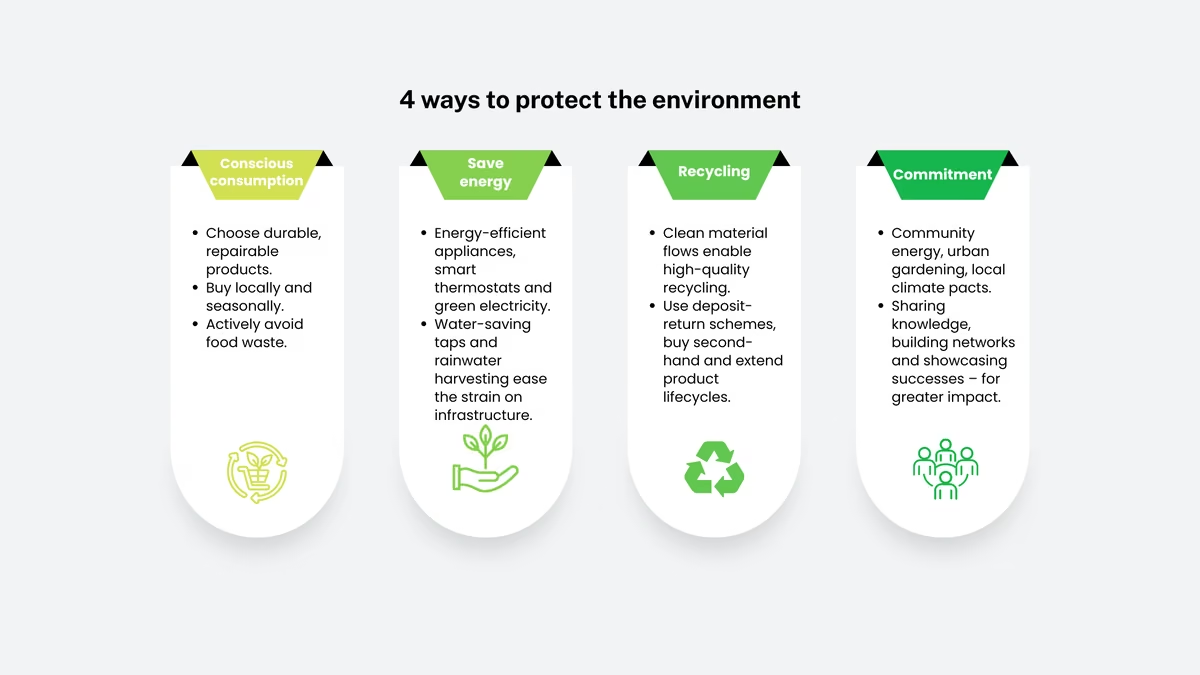
The greatest opportunities for impact lie in mobility, heating, electricity, and food: covering short distances on foot, by bike, or via public transportation; flying less often; switching to green electricity; heating only as needed; not leaving devices on standby; buying regional and seasonal produce; and avoiding food waste. Durable, repairable products, consistent waste sorting, and local engagement—such as in community energy projects or nature conservation initiatives—further amplify the effect.
In the workplace, video conferences can replace business trips; printing less on recycled paper; turning off lights, monitors, and air conditioning outside of working hours; and using reusable items instead of disposable ones in the kitchen and cafeteria. And anyone who notices leaks, defective pipes, or improperly disposed-of waste should report them immediately—if in doubt, through the whistleblower system.

Karim Boukaouche
LinkedInESG compliance expert - lawcode GmbH
Karim Boukaouche advises companies on the implementation of the EU Deforestation Regulation (EUDR) and supports the implementation of digital solutions for legally compliant supply chains. His specialist articles on the lawcode blog combine regulatory depth with practical recommendations for action.