 DE
DE
Important facts
- What is ISO 14001?
- An internationally recognized management standard that defines requirements for an environmental management system (EMS), focusing on processes rather than results.
- For whom is the standard relevant?
- For every business, regardless of industry or size—from large corporations to small and medium-sized enterprises (SMEs) to public institutions and service providers.
- How long is the certificate valid for?
- Three years, with annual surveillance audits. This is followed by re-certification with a new stage 2 audit.
- How widespread is the standard worldwide?
- According to ISO Survey, there are more than 420,000 ISO 14001 certificates in circulation, with strong growth in Europe and Asia.
- What is the basic principle of the standard?
- The PDCA cycle: systematically plan, implement, measure and improve. Supplemented by risk assessment, legal register and life cycle perspective.
Summary - ISO 14001 Explained Simply
ISO 14001 is the world’s leading standard for environmental management systems and has evolved from a set of technical regulations into a strategic tool for sustainable corporate governance. This article provides a structured explanation of what the standard entails and what is important during implementation, certification, and ongoing operations. The first part covers the definition, history, and strategic relevance of the standard, including its connection to ESG obligations, the CSRD, and sustainable corporate governance. The article demonstrates why ISO 14001 now functions as a governance tool that extends far beyond traditional environmental protection.
The content and requirements of the standard are then explained: the structure of an environmental management system based on the PDCA cycle, the role of environmental policy, objectives, and the register of environmental aspects, the requirements for legal compliance and risk management, and the guidelines for emergency preparedness. A separate section addresses the question of which companies ISO 14001 is suitable for, ranging from corporations with international locations to SMEs in supply chains, as well as public institutions and service providers.
The practical core of this article describes the process from implementation to certification: gap analysis, action plan, training and monitoring, the two-stage certification process, as well as ongoing monitoring and recertification after three years. The article then summarizes the benefits and challenges, ranging from cost savings, legal certainty, and competitive advantages to typical obstacles such as resource requirements and internal acceptance.
Never miss an update on compliance again.
New specialist articles, regulatory updates and practical tips, straight to your inbox. Once a week, no spam.
What is ISO 14001 and why is it important?
Definition and role in environmental management
ISO 14001 is an internationally recognized management standard that defines the requirements for an environmental management system (EMS). As DIN EN ISO 14001, it is the version of this standard applicable in Germany and Europe. Essentially, it is about:
- Identify, assess and manage environmental impacts along the entire life cycle of products and services
- comply with legal obligations
- set measurable environmental targets
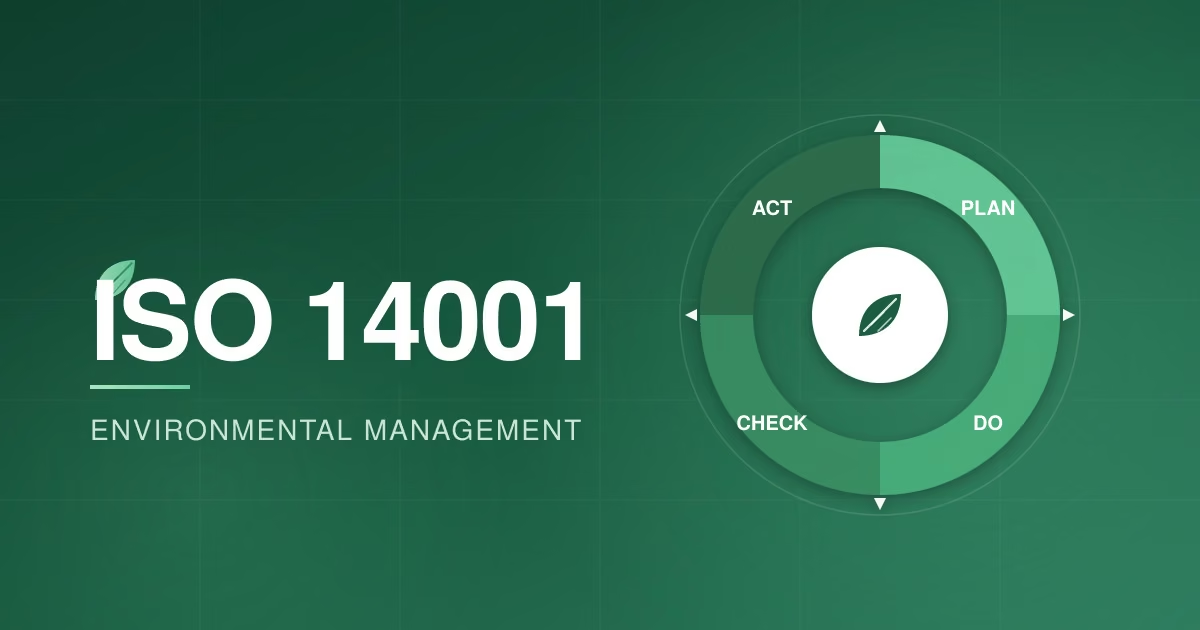
- to ensure continuous improvement according to the PDCA cycle (Plan-Do-Check-Act)
The standard does not specify absolute requirements for environmental performance, such as fixed emission limits. Instead, it specifies how an organization must structure its management system to continuously optimize its environmental performance as part of a process of continuous improvement. This process-oriented approach makes ISO 14001 applicable across a wide range of industries, from manufacturing to logistics and IT to public administration.
In conjunction with other standards such as ISO 9001(quality management) or ISO 45001 (occupational health and safety), an integrated management system can be set up that taps into synergies in audits, documentation and operational regulations.
Historical development and global significance
Since its first publication in the 1990s, ISO 14001 has continued to evolve. One milestone was the ISO 14001:2015 version with a stronger focus on:
- the context of the organization
- Interested parties
- Risk-based thinking
- a life cycle perspective
These aspects ensure that environmental management is not operated as an isolated environmental project, but is embedded in business strategy, product development and supply chains.
The global significance of the standard is underscored by figures from the International Organization for Standardization (ISO) itself: According to its official survey (“ISO Survey”), there are more than 420,000 ISO 14001 certificates in circulation worldwide, with strong growth in Europe and Asia. In industries with visible environmental impacts (metal processing, chemicals, construction, energy, transportation, food, and electronics), the standard is virtually the norm. But service companies also use it to reduce CO₂ emissions from buildings, travel, and IT infrastructure and to provide customers with credible evidence.
Connection with sustainable corporate governance
The relevance of ISO 14001 goes far beyond environmental protection. In times of increasing ESG transparency obligations, supply chain requirements and climate targets, the standard helps companies to firmly establish materiality and governance. It links environmental goals with strategies, budgets and responsibilities, involves managers and employees and establishes clear key performance indicators. This creates a robust management framework that not only reduces emissions and resource consumption, but also triggers innovation, mitigates risks such as supply chain disruptions or legal violations and increases resilience.
Companies regularly report that ISO 14001 certification acts as a catalyst for advancing sustainable procurement, eco-design, the circular economy, and climate-neutral operating models. In this way, the standard becomes a cornerstone of credible ESG positioning vis-à-vis customers, investors, and regulatory authorities.
ISO 14001 Compared to Other Environmental Management Standards
In addition to ISO 14001, there are other standards related to environmental management that are partly similar and partly complementary. Anyone deciding to implement an environmental management system should be familiar with the key options in order to make the right choice for their own company.
EMAS – the stricter European counterpart
EMAS (Eco-Management and Audit Scheme) is the European Union’s environmental management system and is based on the requirements of ISO 14001. Organizations that implement EMAS automatically meet the requirements of ISO 14001, but the reverse is not true. EMAS goes significantly further in several respects:
- Validated Environmental Statement: EMAS requires a publicly available environmental statement containing specific metrics on energy, materials, water, waste, emissions, and biodiversity. This statement must be externally validated. ISO 14001 does not require a comparable disclosure obligation.
- More Rigorous Initial Assessment: Under EMAS, a comprehensive environmental assessment of the entire organization is mandatory. ISO 14001 allows for more flexibility regarding the depth of the initial analysis.
- Legal Compliance as a Mandatory Component of Audits: While ISO 14001 requires a legal register and compliance assessments, EMAS actively verifies actual compliance during the audit, including input from the authorities.
- Employee involvement: EMAS makes active employee participation in environmental management a mandatory requirement.
In return, EMAS offers advantages in some EU countries: simplified permitting procedures, reduced reporting requirements to government agencies, incentive programs, or bonus points in public procurement.
When is the right time for what?
ISO 14001 is particularly well-suited for companies with an international focus, global supply chains, and customers who expect a globally recognized standard. EMAS, on the other hand, is the right choice for companies with a European focus, high standards for transparency and credibility, or a specific interest in regulatory relief and incentives. Many companies first obtain ISO 14001 certification and later expand to EMAS. This is one possible approach that lowers the barrier to entry.
Supplementary Standards for an Integrated Management System
In addition to EMAS, there are other standards that do not replace ISO 14001 but can usefully complement it:
- ISO 50001 (Energy Management): Provides a more in-depth focus on energy management and can also lead to tax breaks in Germany.
- ISO 9001 (Quality Management) and ISO 45001 (Occupational Health and Safety): Thanks to their harmonized structure, these standards can be efficiently combined with ISO 14001 to form an integrated management system.
Organizations that implement multiple standards simultaneously benefit from joint audits, standardized document control, and aligned key performance indicators, which reduces effort and enhances consistency in their management approach.
Contents and requirements of the standard
The environmental management system at a glance
ISO 14001 certification attests that a company has established and implements an effective environmental management system (EMS) in accordance with ISO 14001. Key components include:
- Scope of application and analysis of the organizational context
- Identification of interested parties, roles, responsibilities and competencies
- Identification of significant environmental aspects and assessment of risks and opportunities
- Derivation of goals and programs as well as control of operational processes
- Emergency preparedness and performance evaluation
- Internal audits and management review
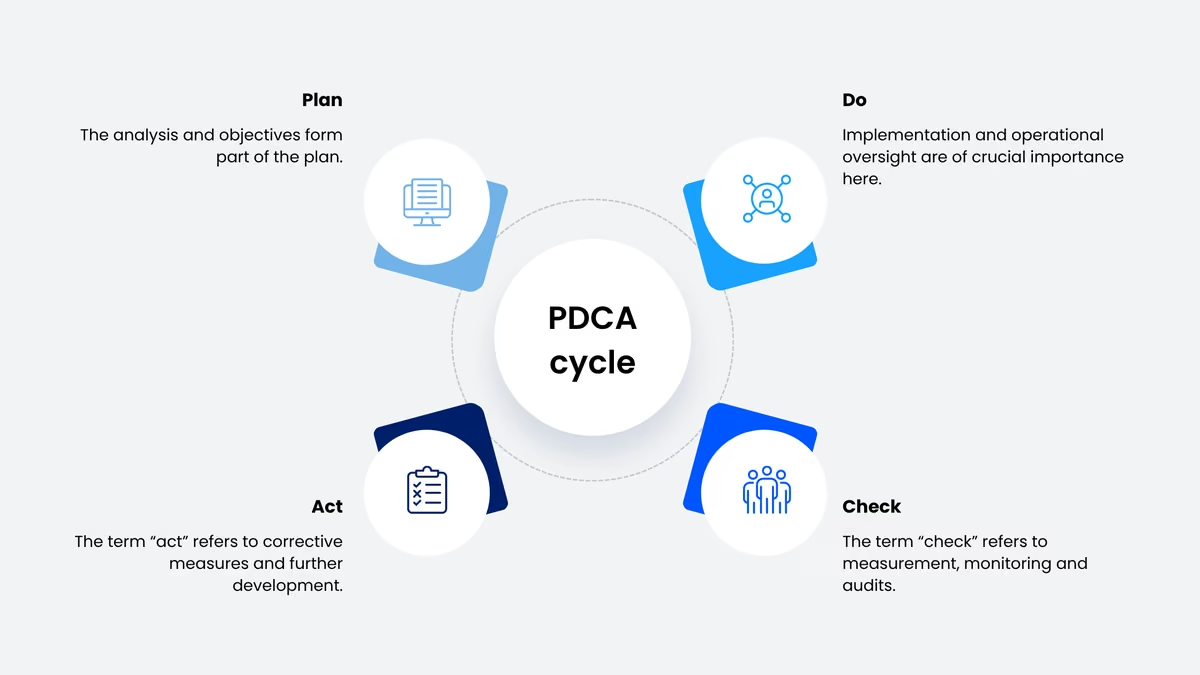
The PDCA cycle forms the basis: Plan for analysis and goal setting, Do for implementation and operational control, Check for measurement, monitoring and audits, Act for corrective measures and further development. Certification is issued by independent, accredited certification bodies, which audit the EMS in two stages and then monitor it annually.
Environmental policy, objectives and aspects
At the heart of the system is the organization’s environmental policy. This policy is approved by top management and establishes the strategic framework for all commitments to environmental protection, compliance, and continuous improvement. Building on this, the company sets specific, measurable environmental goals—ideally SMART (specific, measurable, achievable, relevant, and time-bound).
You can find more information on the topic of compliance in our detailed blog post.
Typical examples:
- Reduction of energy consumption by a defined percentage
- Reduction of waste or wastewater volumes
- Conversion to renewable energies
- Minimization of volatile organic compounds (VOC)
- Reduction in CO₂ intensity per product unit
At the same time, companies must systematically determine which activities, products and services have a relevant environmental impact. The assessment is based on comprehensible criteria such as scope, severity, frequency, degree of control, regulatory relevance or stakeholder perception. ISO 14001 requires a life cycle perspective: in addition to the company's own production, upstream products, transportation, use and disposal must also be taken into account, insofar as they can be reasonably influenced. The assessment results in an aspect register from which targets, programs and control measures are derived.
The standard requires documented information, but not a mountain of paper. The decisive factor is effectiveness: processes, procedural instructions, registers and records must be designed in such a way that employees understand and live them, audits can understand them and the database is reliable.
Modern companies are increasingly relying on digital solutions that integrate legal registers, environmental aspects, key figures, action plans and audit findings.
Legal requirements and risk management
A unique feature of ISO 14001 is the systematic management of risks and opportunities in an environmental context. Organizations must be aware of, evaluate and operationalize obligations arising from laws, permits and other mandatory requirements. Depending on the location, these may include
- Immission control, water and waste legislation
- Ordinances on hazardous substances and hazardous incidents
- Energy efficiency obligations
- REACH, RoHS, packaging law
- Emissions trading and municipal statutes
An up-to-date legal register that includes assigned responsibilities, audit cycles, and compliance assessments is mandatory. At the same time, risks and opportunities arising from environmental aspects are analyzed—ranging from soil and water contamination to air emissions, noise, and impacts on biodiversity, as well as climate-related physical and transitional risks. This results in control measures that are operationally translated into work instructions, technical protective measures, and monitoring plans.
Emergency preparedness
ISO 14001 requires potential environmental emergencies to be identified, their risks assessed and appropriate precautionary measures defined. Relevant scenarios include leaks, fires, wastewater outages and extreme weather events. The core measures include
- Technical protective measures and restraint systems
- Storage and handling rules for hazardous substances
- Alarm and reporting chains, personal protective equipment
- Regular training and realistic exercises
- Leak tests and 24/7 on-call service for initial measures
Lessons learned from exercises and incidents should be consistently reflected in procedures and technical solutions. A good example is the installation of containment facilities and seals in areas with water-polluting substances, combined with regular leak tests and a 24/7 standby service for initial measures.
For which companies is ISO 14001 suitable?
Large companies and groups
Corporations use ISO 14001 to bring diverse locations worldwide up to a uniform level of environmental management and to ensure effective governance. The standard allows for the efficient coordination of centrally defined minimum standards, global metrics, internal audit teams, and the sharing of best practices. In practice, this leads to significant economies of scale, for example in group-wide energy management, standardized emergency plans, procurement controls, or uniform requirements for suppliers.
In addition, ISO 14001 verifications facilitate reporting in accordance with the EU taxonomy or CSRD because processes, responsibilities and measurement systems are reliably documented.
Small and medium-sized enterprises (SMEs)
For SMEs, ISO 14001 is a means of systematically improving their environmental performance while also enhancing their market competitiveness. Many major customers require certified environmental management systems during supplier audits, particularly in the automotive, mechanical engineering, electronics, and construction industries. A lean approach focused on the essentials is possible if the scope of application and documented information are scaled appropriately. Real-world examples show that SMEs often achieve double-digit percentage savings through systematic energy and material flow analyses, for example by:
- Elimination of compressed air leaks
- Heat recovery in processes
- Optimized batch sizes
- Switch to lower-emission processes
It is crucial to clearly define responsibilities and involve the workforce at an early stage to ensure that the system works on a day-to-day basis.
Public institutions and service providers
Municipal utilities, universities, hospitals, and government agencies benefit from ISO 14001 because it allows them to demonstrate their environmental performance in a way that is transparent to the public. In the service sector, the focus is often on electricity and heat consumption, mobility, procurement, and waste separation. An IT service provider, for example, uses the standard to establish data center energy efficiency, cooling strategies, green electricity procurement, and end-of-life policies for hardware. Even though direct emissions are lower than in manufacturing, the indirect impacts along the value chain can be significant. ISO 14001 helps address these systematically.
From the introduction to the certificate
Inventory and action plan
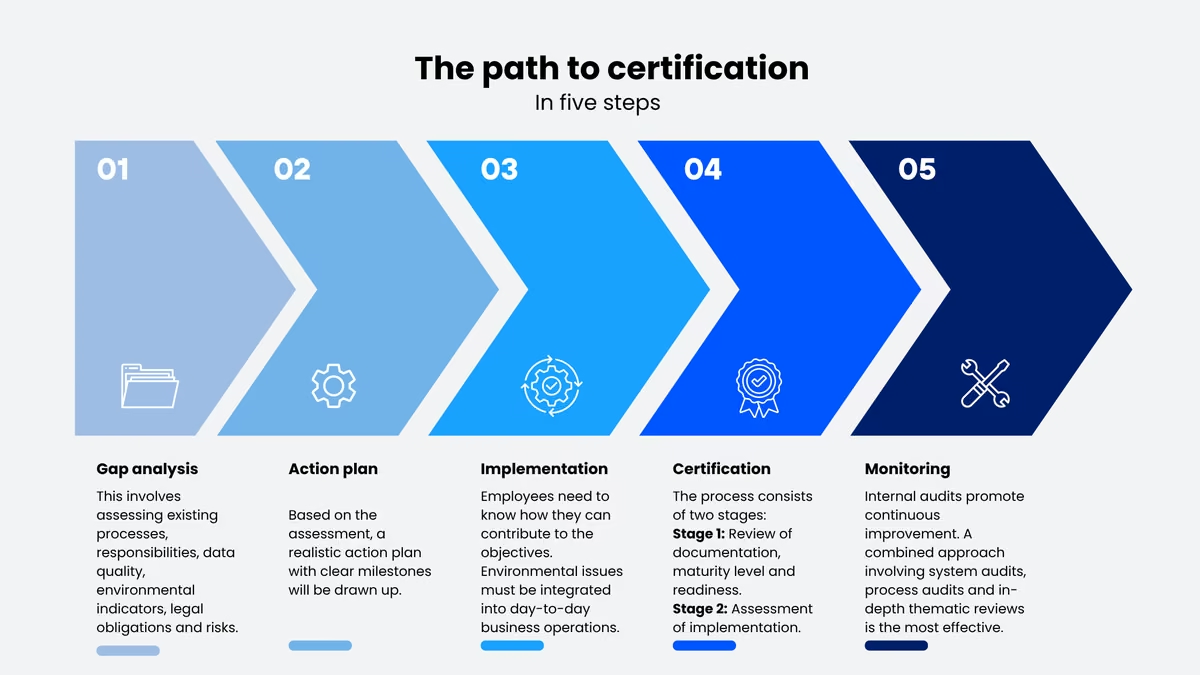
Ideally, the first step is a gap analysis against the requirements of ISO 14001, in which existing processes, responsibilities, data quality, environmental indicators, legal obligations and risks are recorded. Measurable baseline values are crucial in order to be able to demonstrate progress later on. Companies with existing management systems (e.g. ISO 9001) have advantages because structures for document control, internal audits and management assessments often already exist.
A realistic project plan with clear milestones is drawn up on the basis of the inventory:
- Completion of the environmental aspect assessment
- Structure of the legal register
- Definition of targets and operational controls
- Establishment of monitoring
- Conducting internal audits and management reviews
Roles such as environmental management officer, process owner, legal register owner and data owner are clearly designated. In international organizations, a network of local EHS managers with central specialist support is recommended. For SMEs, a compact steering team consisting of management, production, maintenance and purchasing is often sufficient, provided that decision-making paths remain short.
Training, responsibilities and monitoring
Without the right training and awareness among the workforce, ISO 14001 remains just theory. All relevant employees must know what environmental impacts their activities have, how they contribute to the goals, and what to do in an emergency. Programs that integrate environmental topics into daily routines—such as shift-start checks, shop-floor boards with environmental KPIs, or incentives for improvement ideas—are successful.
Monitoring is the core of any reliable control system. ISO 14001 requires the definition of relevant indicators, suitable measurement methods, calibrations, data validation and regular evaluations. Typical key figures:
- Energy consumption per unit
- CO₂ emissions Scope 1 and 2
- Water withdrawal and waste generation
- Recycling rate and VOC emissions
- System downtimes with environmental relevance
Digital dashboards enable transparency in real time and facilitate internal and external reporting. Deviations are addressed via corrective and preventive measures, including root cause analysis using recognized methods.
The certification process
Choosing an accredited certification body is crucial. Key criteria include industry expertise, the availability of experienced auditors, an international presence, and transparent fees. During the preparation phase, we recommend a pre-audit or readiness assessment to identify any gaps. Would you like to learn more about the audit in detail? Read our blog.
The actual certification audit takes place in two stages:
- Stage 1: The auditor reviews documentation, maturity and readiness, identifies open issues and defines the Stage 2 plan.
- Step 2: Evaluation of on-site implementation through interviews, facility inspections, review of supporting documentation, and spot checks along the value chain.
Deviations must be documented with corrective measures; in the case of serious deviations, a follow-up assessment is required. If the company passes, certification is recommended. The certificate is generally valid for three years, provided that the company passes annual surveillance audits. After three years, re-certification takes place with a new stage 2 audit.
Ongoing monitoring and continuous improvement
Internal audits are the engine of continuous improvement. An efficient approach combines system audits, process audits and topic-related deep dives (e.g. on waste management or hazardous substance logistics). The evaluation of trends is important, not just the processing of individual findings.
Follow-up audits conducted by the certification body focus on critical processes, legal compliance, achievement of objectives, and changes since the last audit. Reliable data collection, consistent indicators, and traceable corrective actions are crucial here. Environmental goals must keep pace with business development, as new technologies, market demands, or regulatory requirements necessitate adjustments. ISO 14001 requires that changes be managed, communicated, and documented to ensure transparency and accountability.
Advantages and challenges
The most important advantages at a glance
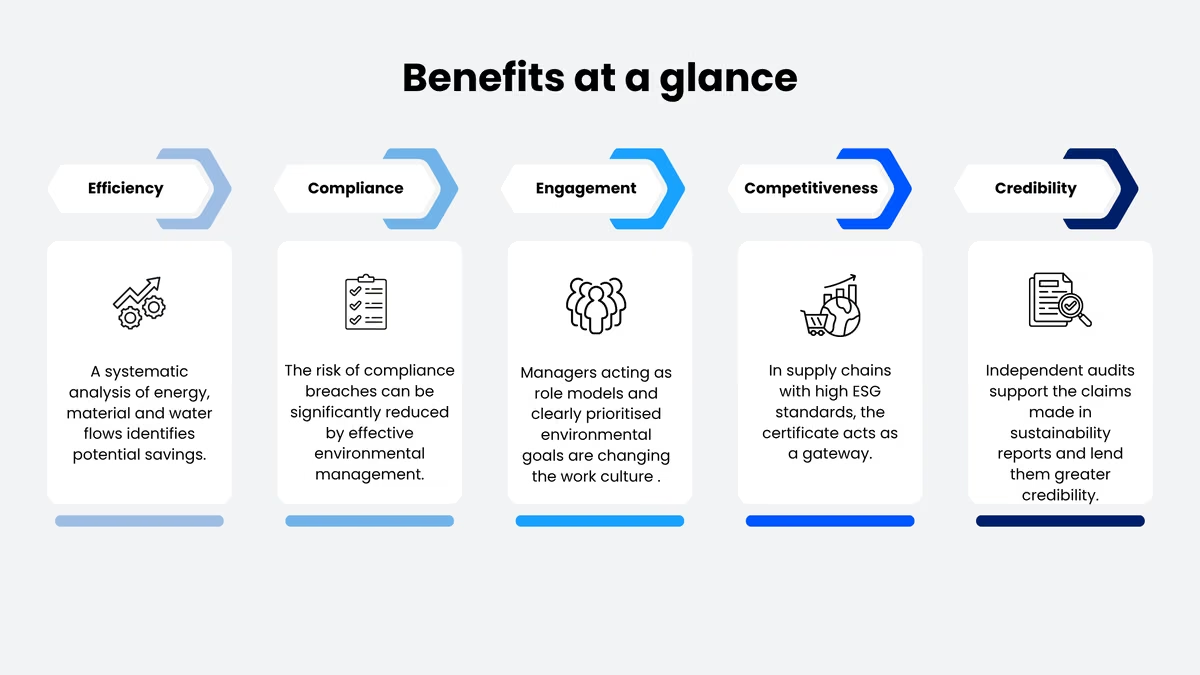
- Resource efficiency and cost savings: The systematic analysis of energy, material and water flows reveals potential savings that are easily overlooked in day-to-day business. Efficiency measures such as compressed air optimization, LED lighting or heat recovery often have a payback period of less than three years.
- Legal certainty: A functioning EMS significantly reduces the risk of breaches of environmental law. Clear responsibilities, regular compliance assessments and documented evidence help to pass inspections with confidence and avoid fines or shutdowns.
- Greater environmental awareness: Managers as role models and visibly prioritized environmental goals change culture and everyday life. Companies report greater identification, lower error rates and better communication between departments.
- Competitive advantages: In many tenders, ISO 14001 is a must or brings measurable points. In supply chains with high ESG requirements, the certificate acts as a door opener and reduces audit costs for customers.
- Credible Communication: Independent audits support the claims made in sustainability reports, on the website, and in marketing materials without resorting to greenwashing.
Typical stumbling blocks during implementation
- Resistance from the workforce: Changes often trigger skepticism. Early involvement, comprehensible benefit arguments and visible quick wins are helpful. If a team experiences that a changed cleaning method not only reduces emissions but also shortens set-up times, acceptance increases.
- Resources and Time Required: Setting up an effective system takes time and resources. Depending on the starting point, a realistic implementation timeframe is six to twelve months until certification. Overly ambitious timelines lead to frustration and superficial solutions.
- Integration into existing systems: Parallel management systems without clear interfaces create duplication of work. However, the high-level structure of the ISO standards allows for common manuals, standardized procedures for document control and internal audits, bundled management reviews and coordinated KPI systems.
ISO 14001 in Practice: Examples of Implementation from Various Industries
Just as industries vary widely, so do the opportunities that ISO 14001 unlocks in day-to-day operations. The following examples illustrate the typical measures the standard enables in various sectors and where concrete benefits arise.
- Manufacturing and Mechanical Engineering: In manufacturing facilities, the greatest opportunities for improvement lie in energy consumption, material usage, and waste streams. ISO 14001 structures these topics through the aspect register and monitoring, with measurable results: compressed air leaks are systematically identified and repaired, heat recovery is implemented in processes, scrap rates are reduced, and hazardous substances are substituted. Combining it with ISO 50001 is particularly effective because it adds an extra layer of depth to energy management. In supplier audits for the automotive and mechanical engineering industries, ISO 14001 has effectively become the standard, as suppliers without certification quickly lose market access.
- Chemical and Process Industries: In emission-intensive sectors such as chemicals, pharmaceuticals, and metal processing, risk management is a top priority. ISO 14001 mandates a comprehensive legal registry, clear responsibilities, and robust emergency plans. These are issues that are already central to facilities requiring permits, but the standard ensures they are systematically integrated. Leak tests, containment systems, hazardous material storage, and training plans are regularly reviewed as part of the PDCA cycle. This not only reduces the risk of environmental damage and regulatory action but also simplifies insurance negotiations and permitting processes.
- IT and Data Centers: Even though IT companies may appear to have less direct environmental impact at first glance, their indirect impact is significant, especially in data centers. ISO 14001 is used here to structure energy efficiency (PUE values), green electricity procurement via PPAs, efficient cooling concepts, and end-of-life policies for hardware. The standard thus provides the framework for credibly communicating to customers that not only the cloud but also its physical infrastructure is operated sustainably. This is an increasingly decisive factor in purchasing decisions, especially in B2B business.
- Construction and Real Estate Industry: Through ISO 14001, construction companies and real estate operators primarily address material flows, construction waste, construction site emissions, and the energy performance of existing buildings. The standard’s life-cycle perspective is particularly well-suited to this context: environmental aspects can be systematically assessed, from material selection through the construction process to the operational phase and demolition planning. In public tenders, ISO 14001 has become a common award criterion, and it is increasingly the standard in large-scale private projects.
- Public institutions and service providers— including municipal utilities, universities, hospitals, and government agencies—use ISO 14001 to demonstrate their environmental performance transparently. Typical areas of focus include electricity and heat consumption, procurement, mobility (vehicle fleets, commuter traffic), waste separation, and water consumption. In hospitals in particular, the sensitive handling of hazardous substances and hazardous waste is also a key consideration. The standard helps to consolidate these diverse topics under a single management framework and to document them in a transparent manner for citizens, patients, and governing bodies.
What these examples have in common
As diverse as the industries may be, one pattern emerges: ISO 14001 has an impact in areas where environmental aspects are often still managed today using Excel spreadsheets, individual areas of responsibility, or gut instinct. The standard requires a structured approach, and it is precisely this structure that leads to efficiency gains, legal certainty, and credible external communication. Companies achieve the greatest benefits when they view ISO 14001 not as a mandatory audit exercise, but as a management tool for their core business.
Conclusion
ISO 14001 is more than just an environmental standard. It is an effective management tool that combines ecological responsibility with business benefits. Those who implement the standard professionally gain transparency on environmental aspects, reduce costs and risks, increase innovative strength and improve their position in markets that are increasingly paying attention to sustainability. The path to certification is feasible if it is strategically planned, pragmatically prioritized and supported by management. With clear objectives, reliable data, competent teams and a PDCA cycle that is put into practice, ISO 14001 becomes the stable backbone of sustainable corporate development.
Frequently asked questions
Depending on the initial situation, the introduction takes between six and twelve months. Companies with existing management structures usually manage it in six to nine months; without preparatory work or with several locations, nine to twelve months is realistic. A careful gap analysis, realistic milestones and planned resources for data collection, training and internal audits are crucial.
The costs include internal expenses and external fees. For certification and audits, these costs typically range from the mid-four-digit to low-five-digit range over the three-year cycle, depending on the industry, number of locations, and certification body. In addition, there are investments in measurement technology and process optimization, which often pay for themselves quickly through efficiency gains.
EMAS builds on environmental management according to ISO 14001 but imposes additional requirements, such as a validated environmental statement and proof of legal compliance during the audit. ISO 14001 is more widely used internationally and is the standard in global supply chains. EMAS can offer advantages in dealing with government agencies and accessing grants and is more commonly chosen for organizations with a European focus.
Yes, ISO 14001 requires binding obligations to be identified, evaluated and monitored. A well-maintained environmental register maps site-specific permits, limit values, measurement obligations and deadlines and assigns responsibilities. Digital solutions with an amendment service make it easier to keep up to date and provide proof to auditors.
The ISO 14001 standard is an internationally recognized management standard that specifies the requirements for an environmental management system (EMS). It provides organizations with a structured framework for identifying, evaluating, and systematically managing environmental impacts throughout the entire life cycle of products and services. The focus is on compliance with legal obligations, measurable environmental objectives, and continuous improvement following the PDCA cycle (Plan-Do-Check-Act). The standard is applicable regardless of industry or company size and, with over 420,000 certifications worldwide, is considered the global standard for environmental management.
Yes, the standards follow a harmonized structure (High Level Structure) and can be easily integrated. Common elements such as context analysis, leadership, planning, and performance evaluation can be managed across the board, for example through shared manuals, standardized audits, and coordinated metrics. This saves effort and enhances consistency.

Matthias Klein
LinkedInESG compliance expert - lawcode GmbH
Matthias Klein advises companies on the implementation of supply chain laws such as the CSDDD and supports the implementation of digital solutions for legally compliant supply chains. His specialist articles on the lawcode blog combine regulatory depth with practical recommendations for action.