 DE
DE

Important facts
- emission targets according to the IPCC:
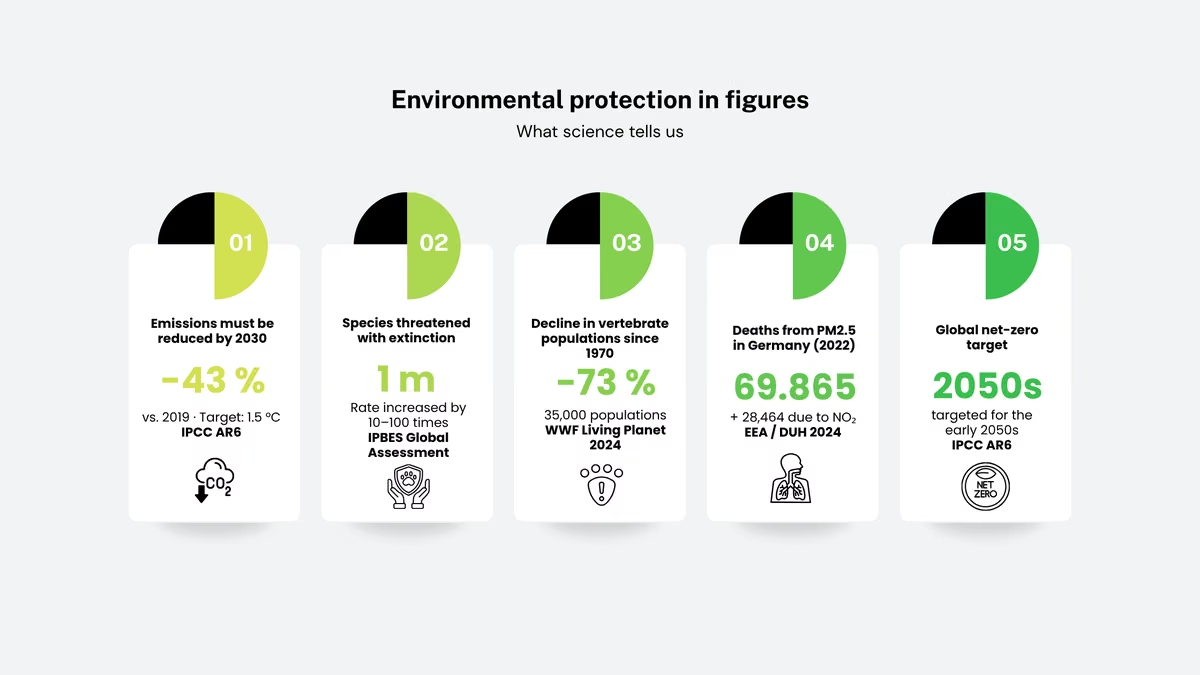
- To achieve the 1.5°C target, global greenhouse gas emissions must fall by 43% by 2030 and by 60% by 2035 compared to 2019; net zero is the target for the early 2050s.
- Biodiversity crisis according to IPBES:
- Up to one million species are threatened; >85% of wetlands have been lost in the last 300 years - with direct risks to food, water and climate.
- Habitat loss (WWF 2024):
- Populations of studied vertebrates have fallen by an average of 73 % since 1970 - protected areas, renaturation and networked landscapes are key levers.
- Health burden of pollution:
- Air, water and lead pollution cause millions of premature deaths worldwide; in Germany, an estimated 69,865 people died from PM2.5 particulate matter and 28,464 from NO₂ in 2022.
- Transformation in practice & regulation:
- Effectiveness is achieved through a circular economy, clean industry (efficiency, renewable process heat), climate-resilient cities (sponge city, green spaces) and transparent reporting (e.g. CSRD) - supported by EU instruments such as emissions trading and the Green Deal.
Abstract
Today, environmental protection is a central guideline for politics, business and society. It combines climate protection, biodiversity, resource efficiency and health protection in a holistic transformation program. The urgency is scientifically proven (IPCC, IPBES): emissions must fall rapidly, natural carbon sinks and habitats must be secured, pollution must be consistently reduced and cycles must be closed.
For states, companies and municipalities, this means clear goals, robust governance (e.g. ISO 14001/EMAS), investment in green infrastructure and transparent reporting (e.g. CSRD).
For individuals: conscious consumption, saving energy and water, proper waste separation and local commitment. Challenges such as grid expansion, storage, raw materials, skilled workers and permits require standards, digitalization, financing solutions and international cooperation. Properly designed, environmental protection strengthens resilience, innovation and competitiveness.
Never miss an update on ESG & sustainability again.
New specialist articles, regulatory updates and practical tips, straight to your inbox. Once a week, no spam.
Why environmental protection?
Definition and meaning
Environmental protection encompasses all political, economic and private measures that stabilize ecosystems, conserve natural resources and safeguard human health and livelihoods in the long term. This includes climate protection, nature conservation, water and soil protection, air pollution control, recycling management and sustainable energy supply. A holistic approach that combines ecological with social and economic goals is crucial. Environmental protection is therefore not an agenda for doing without, but a modernization programme that reduces risks, promotes innovation and strengthens the competitiveness of an economy in a resource-constrained world.
The role of environmental protection in today's society
In times of frequent extreme weather, global supply chains and digitally networked markets, the topic of environmental protection has a new systemic relevance. Cities are planning climate-resilient infrastructures, companies are focusing on low-CO2 value creation, investors are assessing ecological risks and consumers are demanding transparent, fair products.
International studies such as the reports of the IPCC and the World Biodiversity Council IPBES show that faster emission reductions and the protection of natural carbon sinks are necessary to ensure the quality of life of future generations. Environmental protection is therefore a cultural, economic and political transformation process.
Key messages of the IPCC reports
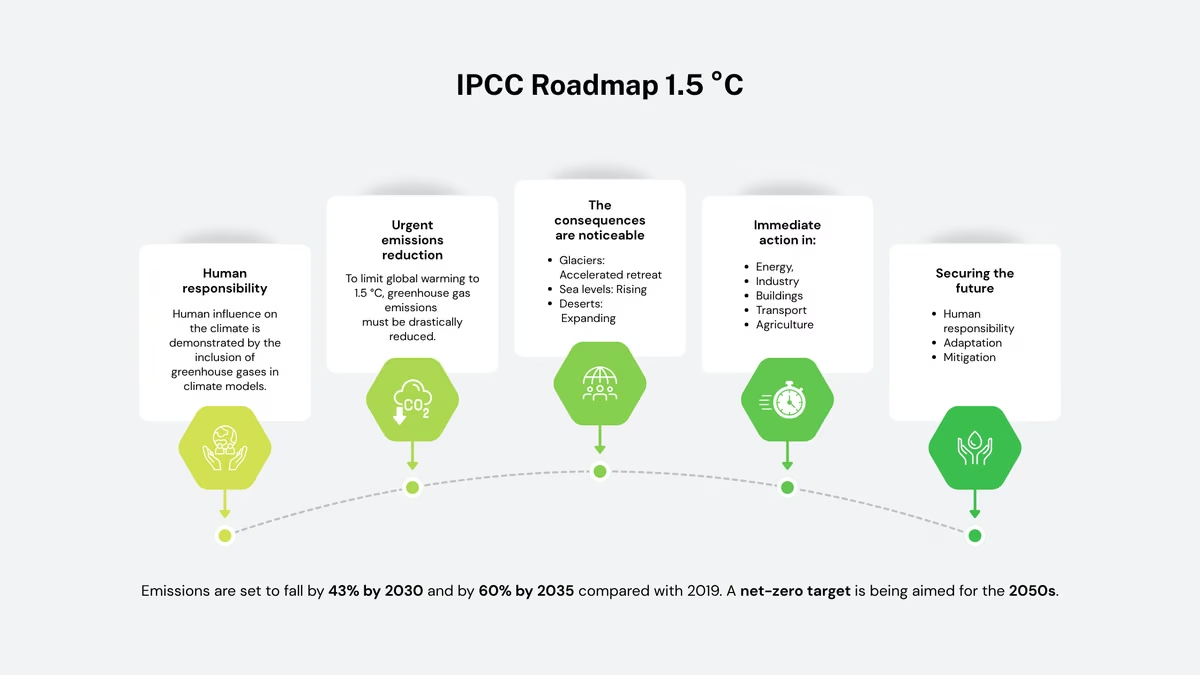
- Human responsibility: Climate change is clearly caused by human activity, as evidenced by the inclusion of man-made greenhouse gases in climate models.
- Urgent reduction in emissions: To limit global warming to 1.5 °C, global greenhouse gas emissions must fall by 43 % by 2030 and by 60 % by 2035 compared to 2019. A net-zero target is set for the early 2050s.
- Comprehensive measures: The report emphasizes the need for immediate and comprehensive emission reductions in all sectors of the economy.
- Consequences of climate change: The consequences of climate change are already being felt and include the melting of glaciers, rising sea levels, water shortages and the spread of deserts.
- Adaptation and mitigation: Both the reduction of greenhouse gases (mitigation) and measures to adapt to climate change are crucial to managing the risks.
Key messages IPBES Global Assessment (IPBES-7)
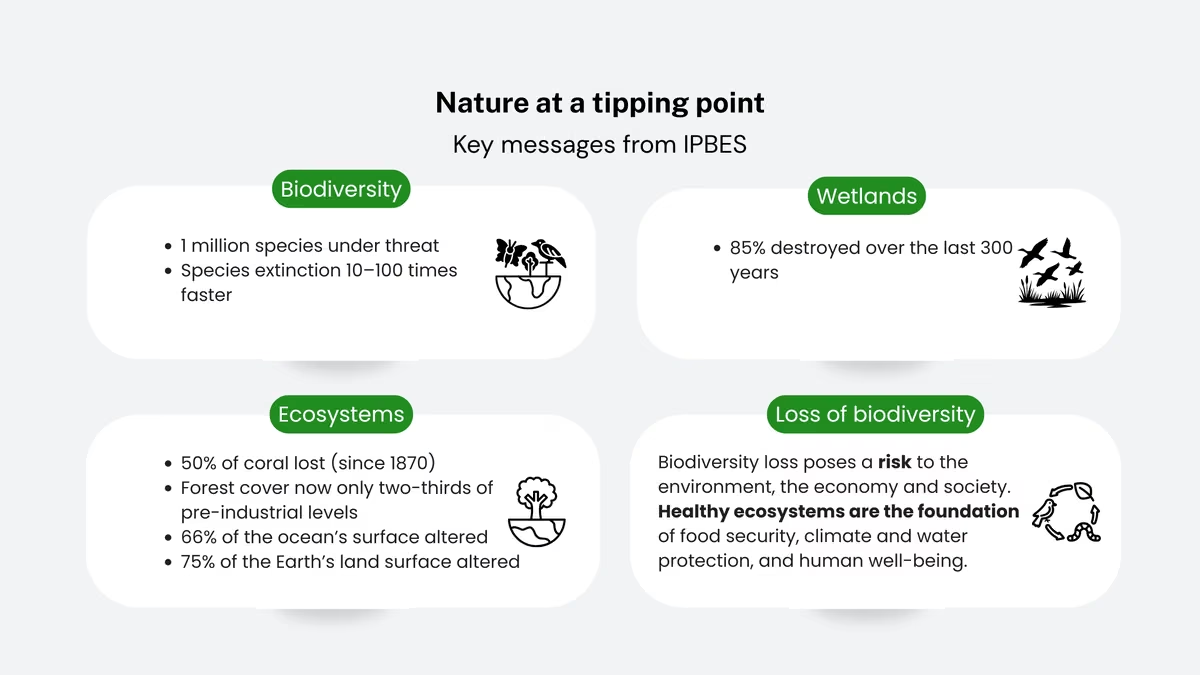
- Extent of the biodiversity crisis: Up to one million species are threatened with extinction worldwide, with the rate of species extinction today being at least ten to one hundred times higher than the natural average of the last ten million years.
- Loss of ecosystems: Since 1870, half of all living corals have disappeared, the global forest area is only around two thirds of its pre-industrial level, and over 85% of wetlands have been destroyed in the last 300 years. In addition, 75% of the land surface and two thirds of the ocean surface have already been massively altered by human activities. These figures make it clear that biodiversity loss is not only an ecological risk, but also an economic and social risk, as intact ecosystems form the basis for food, climate and water protection as well as human well-being.
Goals: Resources, biodiversity, sustainability
Conservation of natural resources
Resource conservation aims to reduce the demand for primary raw materials, use them more efficiently and substitute scarce materials. Consistent resource management reduces dependencies, lowers costs and protects ecosystems. In terms of environmental protection, this means keeping raw materials in the cycle for longer, increasing service life and accelerating material innovations.
Protection of biodiversity and habitats
Biodiversity is nature's business insurance. Intact habitats such as forests, moors, coral reefs and meadows provide pollination, water filtration, cooling and carbon sequestration. Environmental protection relies on protected areas, renaturation, ecological agriculture and networked landscapes so that species can migrate, survive and adapt to the climate.
WWF's Living Planet Report 2024 states that the vertebrate populations surveyed worldwide have declined by an average of 73 percent compared to 1970 levels.
Promotion of sustainable development
Sustainable development combines climate protection, social participation and economic performance. The UN Sustainable Development Goals (SDGs ) define the framework in which environmental protection is a driver of innovation, employment and resilience. Investments in green infrastructure, renewable energies and nature-based solutions create long-term benefits and reduce risk premiums for companies and municipalities.
The biggest environmental problems
Climate change and climate adaptation
The IPCC shows that the global temperature is currently around 1.3 to 1.4 °C above pre-industrial levels; 2024 was the first individual calendar year with an annual average of over 1.5 °C. The Paris target - measured as a long-term 20-year average - is scientifically considered to be in acute danger. Extreme events are already occurring much more frequently today. Environmental protection here means decarbonizing the electricity, heating and transport sectors, energy efficiency, strengthening carbon sinks and climate-friendly infrastructures. The remaining CO2 budget for 1.5 degrees is limited, which increases the pressure to act. Companies are focusing on science-based targets, green electricity, heat pumps, process heat from renewables and climate-compatible supply chains. Municipalities are integrating heat action plans, sponge city concepts and renewable district heating. According to many analyses, the costs of inaction exceed the investments in prevention many times over.
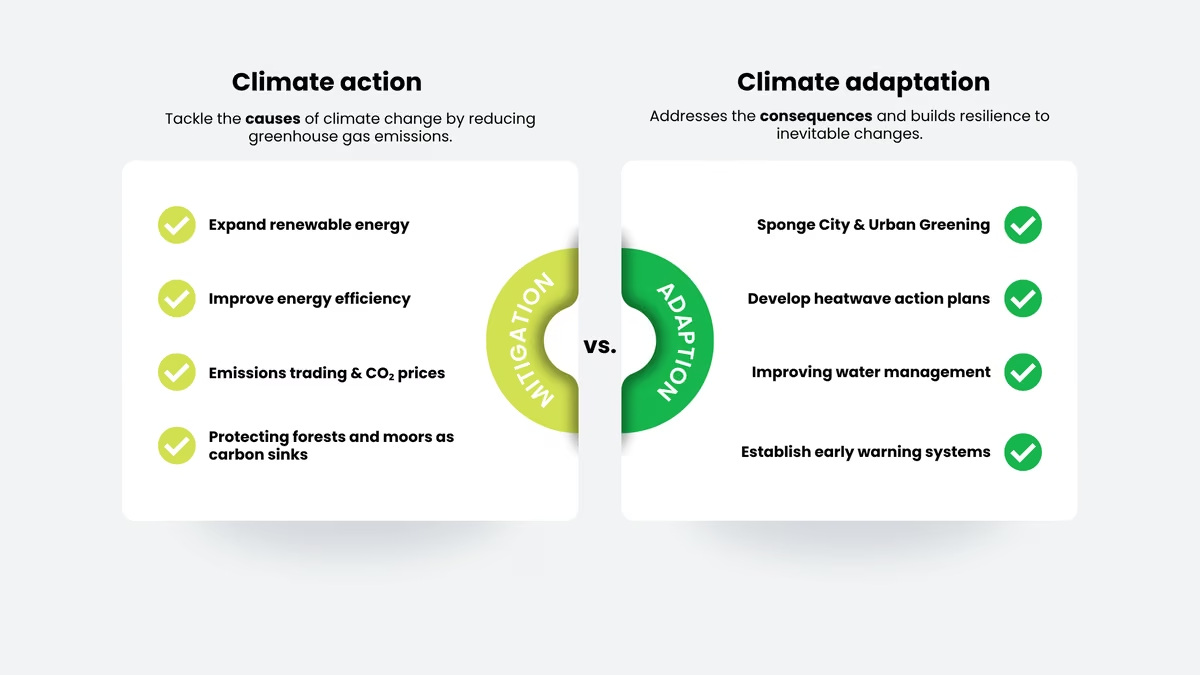
Climate adaptation refers to measures to mitigate the unavoidable consequences of climate change, prevent damage and strengthen the resilience of society and the environment. It complements climate protection by making concrete adjustments to heat, drought, heavy rainfall and other extreme events - for example through more urban greenery, improved water management or the development of warning systems.
Climate protection vs. climate adaptation
- Climate protection (mitigation): Combats the causes of climate change by reducing greenhouse gas emissions.
- Climate adaptation: Addresses the consequences in order to adapt society and the environment to the unavoidable changes.
Both approaches are necessary and should be considered together in order to shape a climate-resilient future.
Air, water and soil pollution
Particulate matter, nitrogen oxides and ozone pollute the airways, reduce performance and increase health costs. In the water, microplastics, pesticides and drug residues threaten drinking water resources, while in the soil, heavy metals, excess nutrients and sealing limit fertile areas. Environmental protection requires clean production processes, low-water procedures, precise agriculture and the conversion of urban areas into green, permeable structures.
Agriculture
Greenhouse gas emissions from German agriculture amounted to 60.3 million tons of CO₂ equivalents in 2023 - this corresponds to just under 9% of total German emissions. The most important greenhouse gases are methane and nitrous oxide, which account for more than 80 % of emissions. Although emissions are declining, they are falling more slowly than in other sectors - meaning that the relative share of agriculture is increasing. Savings potential lies primarily in the rewetting of moors, more efficient fertilization and optimization of liquid manure storage.
A study by the Lancet found that poor air quality, water pollution and lead are the main causes of premature death, with 6.7 million, 1.4 million and 900,000 deaths respectively as a result of these exposures.
According to the European Environment Agency (EEA), there were 69,865 deaths from particulate matter (PM2.5) and 28,464 from NO₂ in Germany in 2022.
From 2021 to 2024, an average of 50 hectares per day were designated for new residential and transportation areas in Germany - far above the German government's target of less than 30 hectares per day by 2030.
Loss of biodiversity and natural ecosystems
The loss of species and genetic diversity reduces adaptability and ecosystem services. The main causes are habitat destruction, invasive species, overexploitation, pollution and climate change. Deforestation also releases carbon and destabilizes regional rainfall patterns - agricultural expansion, illegal logging and infrastructure projects are the main drivers. Environmental protection responds with deforestation-free supply chains, certification, protected areas, ecological connectivity, restoration of degraded areas, sustainable fisheries and the removal of barriers in watercourses.
The problem of waste and plastic pollution
Millions of tons of plastic end up in rivers and oceans around the world every year, where they harm marine life and end up as microplastics in food chains. Environmental protection addresses this with prevention, reuse, design-for-recycling, deposit systems and strict regulations for single-use products. A circular plastics economy lowers crude oil consumption, reduces emissions and minimizes environmental risks. At the same time, collection infrastructure, sorting technology and quality standards are crucial.
Circular economy - EU figures
In 2024, 12.2% of the materials used in the EU came from recycled sources - the highest figure measured to date according to Eurostat. By comparison, the global circularity rate is only around 6.9%. However, the EU rate has only risen by one percentage point since 2015 - at this rate, the EU target of 23.2% by 2030 would be missed by a wide margin.
26.9% of European plastic waste is now recycled - for the first time more than is sent to landfill.
More concrete figures are available: Approximately one full garbage truck load of plastic enters the world's oceans every minute, and there are an estimated three to eleven million tons of plastic waste on the ocean floors, according to a study by CSIRO and the University of Toronto (April 2024) - the load on the ocean floor could be up to 100 times greater than that on the surface.
Microplastics have now been detected in human blood, in the brain, in the placenta and in breast milk; there are initial indications that they cause inflammatory reactions and possibly promote the formation of metastases and thromboses. This is completely missing from the section on plastic pollution and would greatly increase the relevance for the reader.
Framework conditions & players
International agreements
The Paris Agreement obliges countries to keep global warming well below two degrees, if possible at 1.5 degrees, and to regularly submit more ambitious targets. It replaces the Kyoto Protocol with a more universal approach and strengthens transparency and climate financing. Other key agreements include the Montreal Protocol to protect the ozone layer, the Convention on Biological Diversity, CITES against illegal wildlife trade, the Basel Convention on waste transportation and Stockholm and Minamata against persistent pollutants and mercury. Together, these mechanisms form a global safety net for environmental protection.
A new climate finance target was agreed at COP29 in Baku (November 2024): Support for developing countries is to increase to at least 300 billion US dollars annually by 2035 - a tripling of the previous 100 billion target.
EU directives and national law
In Europe, environmental protection is being driven forward with the Green Deal, the Fit for 55 package and emissions trading. Directives on air quality, water framework, waste, industrial emissions and renewable energies set demanding standards. The CSRD strengthens sustainability reporting and the taxonomy steers capital towards environmentally sustainable activities. In Germany, the Federal Immission Control Act, the Circular Economy Act, the Packaging Act, the Federal Nature Conservation Act and the Renewable Energy Sources Act regulate key areas. In addition, the Supply Chain Act enshrines ecological diligence across borders. Limits and permits restrict pollutants from industry, transport and agriculture; the EU ETS prices CO2 from large plants, and CO2 border adjustment mechanisms address distortions of competition.
Environmental protection in companies
A robust environmental strategy begins with a materiality analysis that identifies environmental risks and opportunities along the value chain. This is followed by science-based targets, a roadmap with clear milestones and anchoring in governance, budgets and incentive systems. ISO 14001 and EMAS structure this process with plan-do-check-act cycles, internal audits and continuous improvement - EMAS also requires a validated environmental statement.
Process optimization, heat recovery, electrical process heat, green chemistry and digital twins are leveraging efficiency potential. The circular economy focuses on design, use and recycling: products are designed to be repairable, modular and recyclable, by-products become raw materials and business models such as pay-per-use increase capacity utilization. Transparent reports in accordance with GRI, CSRD and TCFD make progress, risks and plans comprehensible - they facilitate access to capital, strengthen reputation and protect against accusations of greenwashing.
A study by the ZEW - Leibniz Centre for European Economic Research based on 6,303 German companies shows that companies that introduce environmental innovations have an average 0.72 percentage points higher return on sales - which corresponds to around 10 to 20 percent higher profits. The effect is particularly pronounced for resource-saving, regulation-related innovations and for small and medium-sized enterprises.
Role of NGOs
NGOs such as WWF, Greenpeace, BUND, NABU and ClientEarth strengthen environmental protection through expertise, education, law enforcement and local projects. They drive innovation, critically monitor legislative processes and mobilize social energy. Through monitoring, citizen research and campaigns, they increase transparency, create trust and accelerate learning processes between politics, business and the population.
What to do now
Contribution from individuals
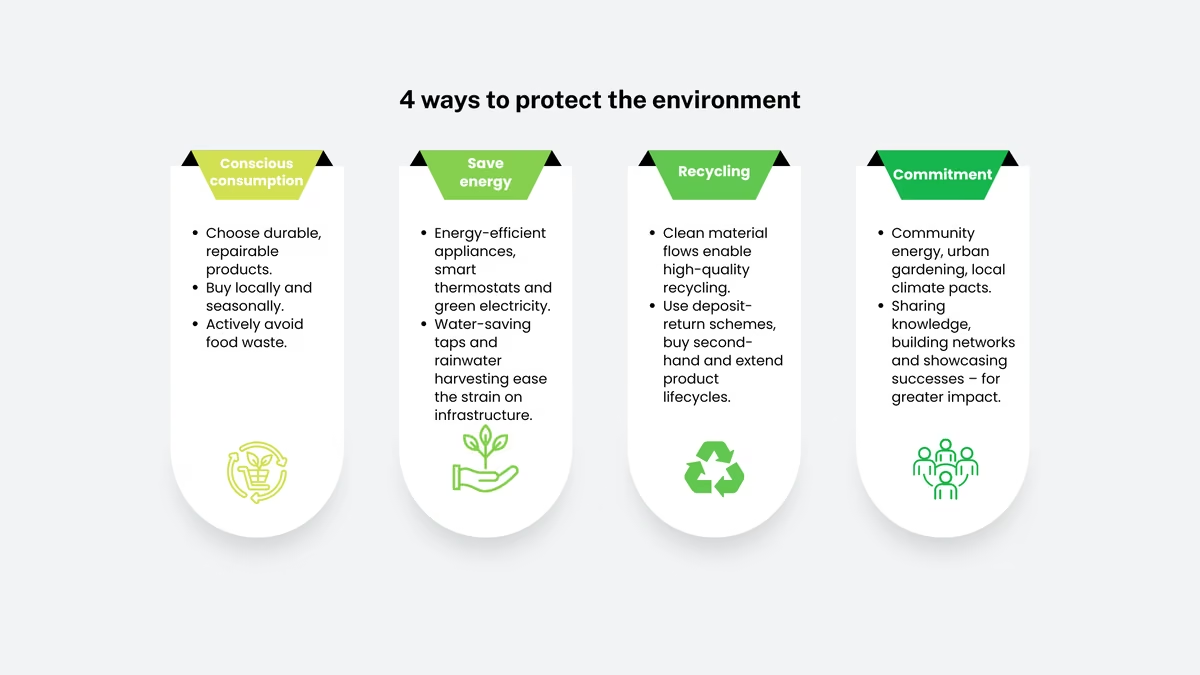
The biggest individual levers lie in mobility, heating, electricity and nutrition. Those who prefer durable, repairable and certified products, buy regionally and seasonally and avoid wasting food can significantly reduce their ecological footprint. Well-insulated buildings, efficient appliances, smart thermostats and a green electricity tariff noticeably reduce energy and heating requirements. Clean waste separation keeps recyclable materials in the cycle - with every kilogram consciously separated, primary raw material requirements and emissions along the entire chain are reduced. Those who also become active in community energy projects, urban gardening initiatives or local climate action projects accelerate environmental protection and create community.
Waste: Around 10.8 million tons of food waste were produced in Germany in 2022 - 58% of this in private households alone, which corresponds to around 74.5 kilograms per capita per year. The avoidable waste causes around 48 million tons of CO₂ emissions.
Transport: In 2023 , CO₂ emissions from the EU transport sector were around 786 million tons, around 19% above the 1990 level - while all other major sectors have fallen, in some cases drastically: Energy sector -52 %, industry -50 %, private households -41 %.
Challenges and solutions
Global environmental protection faces political, financial and technological hurdles. Countries are at different stages of development and pursue different interests - fair burden sharing, technology transfer and flexible pathways are therefore a prerequisite for binding results. Green infrastructure requires high initial investment, while climate finance, blended finance and clear carbon pricing can close gaps.
In terms of technology, power grids are at capacity in many places, there is a lack of storage infrastructure, the hydrogen economy is still in its infancy and an acute shortage of skilled workers is slowing down the ramp-up of new technologies. Modular standards for interoperability, consistent digitalization, innovation promotion through real-world laboratories and a responsible raw materials strategy for materials such as lithium, cobalt and rare earths can help.
In 2024, over 47.5% of the electricity generated in the EU came from renewable sources - the highest share ever measured, almost tripling since 2004. For Germany: renewable energies covered a good 55% of Germany's gross electricity consumption in 2024 - also a new record.
Globally, environmental protection also requires common standards, CO2 markets, transparency rules and climate clubs - because global environmental problems do not respect borders.
Conclusion
Environmental protection is the compass for the transformation of our economy and way of life. It protects health, reduces risks, opens up markets and strengthens resilience. The necessary instruments are available: international agreements, ambitious laws, innovative technologies, viable business models and a committed civil society. The decisive factor is the speed with which goals are translated into concrete measures, investments and routines. Those who understand environmental protection as quality, efficiency and sustainability will turn duty into opportunity and objectives into measurable reality.
Frequently asked questions
Climate protection focuses on reducing greenhouse gases and stabilizing the climate system. Environmental protection is broader and also includes the protection of biodiversity, water, soil and air as well as the circular economy and resource conservation. Climate protection is therefore a sub-area of environmental protection. Both areas reinforce each other, for example when peatlands are renaturalized, which simultaneously bind carbon and restore habitats.
Climate protection (mitigation) combats the causes of climate change by reducing greenhouse gas emissions - for example through renewable energies or energy efficiency. Climate adaptation, on the other hand, addresses the consequences that have already occurred or are unavoidable: Heat action plans, sponge city concepts or improved warning systems help to limit damage. Both approaches are necessary and complement each other - climate protection prevents, climate adaptation protects.
Very serious. According to IPBES, up to one million species are threatened with extinction worldwide, and the extinction rate today is at least ten to one hundred times higher than the natural average. The WWF Living Planet Report 2024 documents an average decline of 73% in the vertebrate populations surveyed since 1970. Intact ecosystems ensure pollination, drinking water, food and climate stability - their loss is therefore not only an ecological risk, but also an economic and social one.
The frequency and intensity of extreme events increase measurably with every additional tenth of a degree. 2024 was the first calendar year in which the global annual average exceeded the 1.5 °C mark (WMO: 1.55 °C). However, the Paris target refers to the long-term 20-year average, which is currently around 1.3 to 1.4 °C - not yet formally broken, but in acute danger. It can only be achieved with immediate emission reductions: -43% by 2030 and -60% by 2035 compared to 2019.
Companies are challenged by a range of regulatory requirements: The CSRD obliges many companies to report on sustainability, the Supply Chain Sustainability Act requires ecological due diligence beyond their own borders, and EU emissions trading prices CO₂ emissions from large facilities. Many companies voluntarily use management systems such as ISO 14001 or EMAS to structure processes, reduce costs and ensure legal compliance.
Companies benefit from efficiency gains, cost reductions, a lower risk profile and better access to capital. Customers reward credible sustainability and talented employees prefer responsible employers. Environmental protection also reduces regulatory risks and increases resilience in supply chains. Studies show that environmental innovations often go hand in hand with higher productivity and faster growth.
The challenges are of a political, financial and technological nature. Politically, different levels of development and interests make binding agreements difficult. Financially, there is often a lack of instruments to cushion high initial investments in green infrastructure. Technologically, the pace is slowed down by overloaded power grids, a lack of storage capacity and an acute shortage of skilled workers. Added to this is the dependence on critical raw materials such as lithium, cobalt and rare earths.
The biggest individual levers lie in mobility, heating, electricity and nutrition. People who fly less often, use public transport more often, insulate their homes better, switch to green electricity and avoid food waste significantly reduce emissions. Consistent waste separation and the purchase of durable, repairable products keep recyclable materials in circulation. Local involvement - in community energy projects, climate action or urban gardening initiatives - further accelerates change.

Karim Boukaouche
LinkedInESG compliance expert - lawcode GmbH
Karim Boukaouche advises companies on the implementation of the EU Deforestation Regulation (EUDR) and supports the implementation of digital solutions for legally compliant supply chains. His specialist articles on the lawcode blog combine regulatory depth with practical recommendations for action.