 DE
DE

Important facts
- What exactly is ISO 9001 and what are its objectives?
- ISO 9001 is the globally valid standard for quality management systems and aims to structure processes in such a way that companies are able to provide customer and legally compliant services on a permanent basis.
- What are the advantages of ISO 9001 certification for companies and customers?
- Certification increases efficiency and quality, creates trust among customers and partners and facilitates access to new markets and tenders.
- How does the certification process work and how long is a certificate valid for?
- The process includes internal analyses, audits and external reviews. The certificate is valid for three years and is accompanied by annual surveillance audits.
- For which companies and sectors is ISO 9001 suitable?
- The standard is independent of industry and size and can be applied by corporations, SMEs, service providers and public institutions alike.
- What are the requirements of the current version of ISO 9001:2015 - and how does it differ from previous versions?
- The 2015 version emphasizes a risk-based approach, management responsibility and continuous improvement, replacing the more documentation-oriented 2008 version.
Summary - ISO 9001 Explained Simply
DIN EN ISO 9001 is the world’s most important standard for quality management systems based on ISO 9001. It establishes industry-neutral requirements that help organizations of all sizes consistently deliver high-quality products and services. The current 2015 version incorporates a risk-based approach, strengthens the role of top management, and requires companies to pursue continuous improvement. More than one million organizations worldwide are certified.
Certification increases efficiency and process reliability, creates trust among customers and partners and opens doors to markets and tenders where proof of quality is a prerequisite. Thanks to its scalability, the standard is just as suitable for SMEs as it is for corporations. The introduction follows a clear process: from process analysis, documentation and training to the certification audit. With a duration of three years and annual surveillance audits, quality management becomes an integral part of the corporate culture - not a one-off project.
Never miss an update on compliance again.
New specialist articles, regulatory updates and practical tips, straight to your inbox. Once a week, no spam.
What is ISO 9001?
Definition of ISO 9001
DIN EN ISO 9001 is the primary, globally recognized standard for quality management systems (QMS). Published by the International Organization for Standardization (ISO), it specifies the minimum requirements for a quality management system in accordance with ISO 9001 within an organization.
This applies regardless of an organization’s industry or size. Compliance with these requirements is intended to ensure that organizations are able to consistently provide products and services that meet both legal and customer-specific requirements. The standard takes a process-oriented approach and aims to increase customer satisfaction through the effective implementation of the QMS. In addition, it promotes continuous improvement and serves as a basis for strategic and operational decisions within the company.
ISO 9001 certification is an internationally recognized mark of quality for competence and compliance and creates trust among customers, partners and authorities.
You can find more information on compliance in our in-depth article.
History and development of the standard (DIN EN ISO 9001)
The ISO 9001 standard was first published in 1987. Its origins were largely derived from British military standards developed in the 1950s and 1960s to ensure product safety and quality. Since then, the standard has been revised several times to reflect changes in the economy, technology, business practices, and management methods. Key milestones included the revisions in 1994, 2000, 2008, and finally 2015. ISO 9001:2015 is the current version and has comprehensively modernized the standard by, for example, integrating a risk-based approach and placing greater emphasis on the importance of leadership in operational processes. As of today, according to ISO estimates, more than one million companies worldwide are certified to ISO 9001 and operate in compliance with the standard.
The International Organization for Standardization (ISO) is planning to publish the next revision, probably at the end of 2026, integrating topics such as digitalization, sustainability and resilience.
The role of ISO 9001 in quality management
ISO 9001 plays a key role in quality management. It provides a structured framework with internationally recognized standards that serves as a guide for companies and equips them with tools for process optimization. Beyond ensuring compliance with legal and customer-specific quality requirements, the standard promotes a systematic improvement process and continuous development, in which all processes are regularly reviewed and adjusted. Companies benefit from clearly defined responsibilities, transparent processes, and a consistent focus on customer needs.
The use of ISO 9001 also facilitates the integration of other management systems, such as environmental management according to ISO 14001 or occupational health and safety management according to ISO 45001. This is made possible by the common High Level Structure (HLS), a uniform framework for all modern ISO management system standards that significantly simplifies their combination into an integrated management system.
It promotes a proactive corporate culture in which sources of error are systematically identified and rectified. This not only improves product and service quality, but also internal communication and cooperation between departments as well as performance. For many companies, ISO 9001 certification also represents a competitive advantage, particularly in tendering procedures and international trade. Supply chains also benefit, as requirements can be communicated and understood more clearly.
The standard creates trust among customers, partners and authorities and increases service quality - a key success factor in dynamic markets.
Advantages and relevance for companies
Strengthen competitiveness
In highly competitive markets, ISO 9001 certification can provide a decisive advantage. Companies that are certified signal to their customers that they adhere to strict quality standards and that their processes are transparent and comprehensible. A certified quality management system is often a prerequisite for participating in and winning tenders, particularly in the public sector or within complex supply chains.
The ISO Survey 2023 shows that companies with certification tend to have a higher market presence and are often preferred in international business.
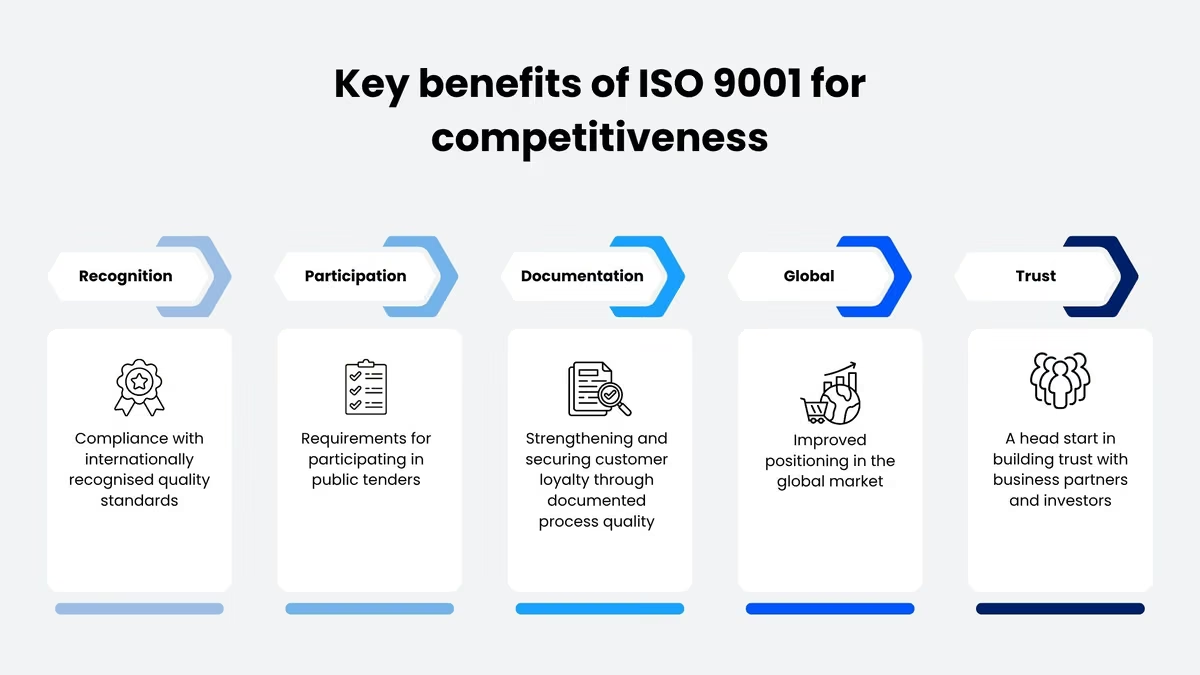
Key advantages of ISO 9001 for competitiveness:
- Compliance with internationally recognized quality standards
- Prerequisite for participation in public tenders
- Strengthening and securing customer loyalty through documented process quality
- Improved positioning in the global market
- Confidence advantage with business partners and investors
ISO 9001 opens the door to new markets and strengthens existing business relationships through trust in sustainable quality assurance.
Efficiency, product quality and internal processes
According to studies and practical experience, ISO 9001 certification leads to companies working systematically more efficiently. All work processes are analyzed, documented and regularly reviewed. Weak points are thus identified at an early stage and corrected sustainably with defined corrective measures. This results directly in higher product and service quality.
Clearly defined processes reduce the coordination effort between departments and noticeably shorten response times in the event of faults. In addition, traceability in production is improved, which reduces rejects and rework.
A practical example: by implementing ISO 9001, a mechanical engineering company identified redundant testing and approval processes, reduced the error rate by 35% and saved tens of thousands of euros annually. In this way, companies can not only increase product quality, but also conserve resources and reduce costs.
Customer satisfaction and stakeholder trust
By consistently aligning all processes with customer requirements, satisfaction increases measurably. Contractual and delivery obligations are met, complaints are processed more quickly and products and services are adapted more specifically to customer requirements. Many companies have observed significantly fewer complaints and greater loyalty among their regular customers following the introduction of a QMS.
Reliable quality also forms the basis for long-term partnerships. ISO 9001 acts as an internationally recognized seal of quality: for customers, investors, business partners and authorities, certification stands for planning security and minimized risk. Especially in safety-critical industries such as automotive, medicine or aviation, it is expected.
The standard explicitly requires the recording and evaluation of customer feedback, which creates a systematic learning process that focuses on the customer perspective on a permanent basis.
Improving internal communication and collaboration
ISO 9001 promotes transparency within the company. Clear definitions of processes, responsibilities and communication channels help to avoid misunderstandings and support managers and employees in their daily work. Areas that previously worked side by side develop a common understanding of goals and challenges in quality management. This promotes cross-departmental teamwork and enables innovation.
Facilitation of international business activities
As a globally accepted standard, ISO 9001 opens the door to international markets. Many international customers demand a certified organization as early as the selection process - especially in regulated industries such as medical technology, plant engineering or trade. The standard creates a uniform understanding of quality, reduces country-specific barriers and considerably simplifies integration into international supply chains.
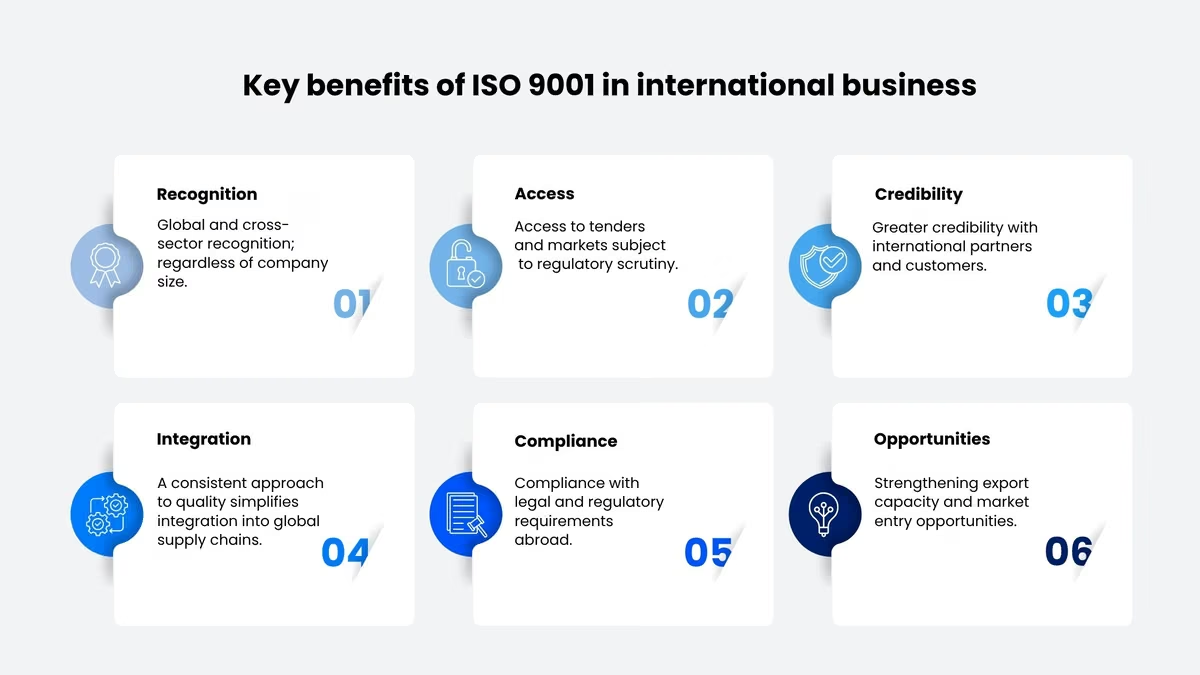
Key advantages of ISO 9001 in international business:
- Recognition worldwide - across all industries and regardless of company size
- Access to tenders and regulatory sensitive markets
- Greater credibility with international partners and customers
- Easier integration into global supply chains
- Compliance with legal and normative requirements abroad
- Strengthening export capability and market entry opportunities
Who is ISO 9001 suitable for?
Application in various industries and company sizes
ISO 9001 is designed to be industry- and size-neutral. This means that both large corporations and start-ups, as well as public administrations, can benefit from the requirements. The flexibility of the standard has led to companies from industry, the service sector, trade, construction, healthcare, education and even public institutions now being certified. Industry-specific supplements, such as ISO/TS 16949 for the automotive industry or ISO 13485 for medical technology, build on ISO 9001 as a basic structure and demonstrate its universal character.
Small and medium-sized enterprises (SMEs) in particular use the standard to structure their processes and better meet external requirements. In highly regulated industries such as pharmaceuticals, aviation or food safety, ISO 9001 creates a reliable basis for compliance with legal requirements. Internationally active companies also benefit, as certification is recognized worldwide and facilitates access to new markets. The high adaptability of the standard enables organizations to map individual processes without neglecting the basic requirements.
According to the ISO Survey 2023, there were 41,760 certified organizations of all kinds in Germany alone.
Special requirements for SMEs
Small and medium-sized enterprises (SMEs) often face greater challenges when planning and implementing a quality management system. They often lack the human and financial resources compared to large companies. However, ISO 9001 is deliberately designed to be scalable. Many requirements can be implemented according to the size and complexity of the company.
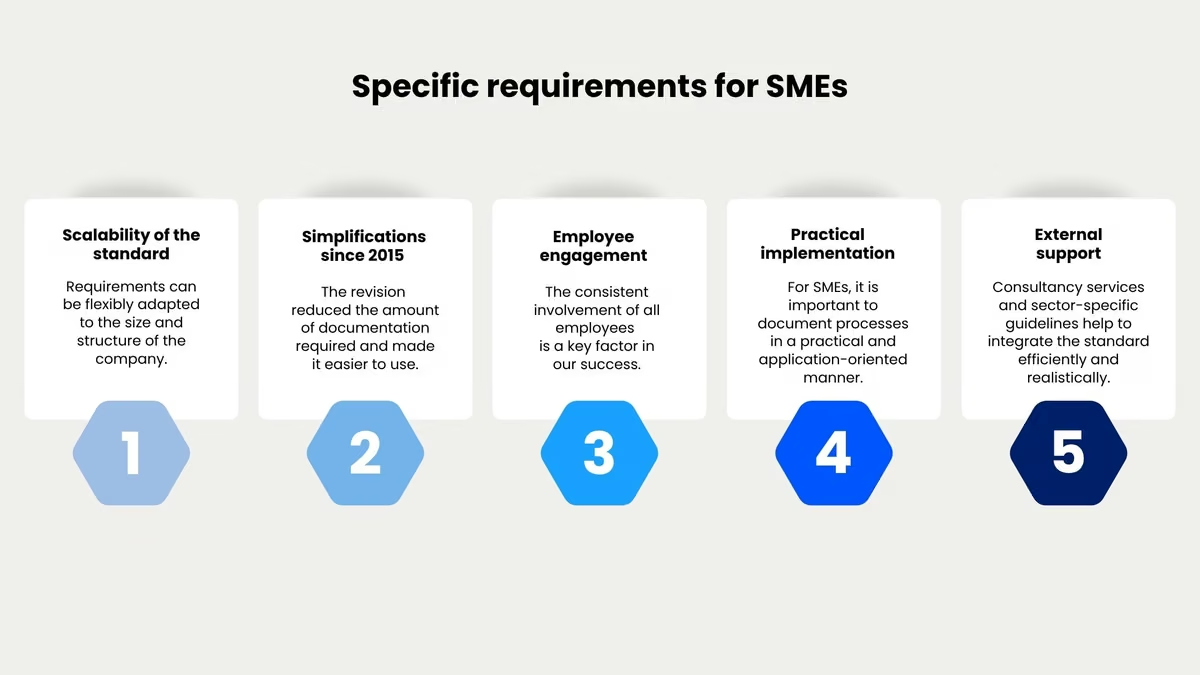
The most important features and support aspects for SMEs in dealing with ISO 9001 are:
- Scalability of the standard: Requirements can be flexibly adapted to the size and structure of the company.
- Simplifications since the 2015 revision: The revision reduced the documentation effort and simplified practical application.
- Employee involvement: The consistent involvement of all employees is a decisive success factor.
- Practical implementation: For SMEs, it is important to document processes in a concrete and application-oriented manner rather than in theory.
- External support: Consulting services and industry-specific guidelines help to integrate the standard efficiently and realistically into SME structures.
ISO 9001 also offers small companies a practicable basis for sustainable quality improvement - without creating excessive bureaucracy.
Application in the service and production sector
Although often associated with industrial production, ISO 9001 is also fully applicable in the service sector. Service companies particularly benefit from the process orientation of the standard, as they often offer complex services that are difficult to measure. One example is an IT service provider that clearly defines its service level agreements (SLAs), improves processing times, implements risk management and measurably increases customer satisfaction by implementing ISO 9001. In the production sector, on the other hand, the focus is often on error reduction, sustainable supply chain management and efficient production control. Both areas can benefit equally from an ISO 9001-certified QMS.
Requirements and implementation
Development of a process-oriented quality management system
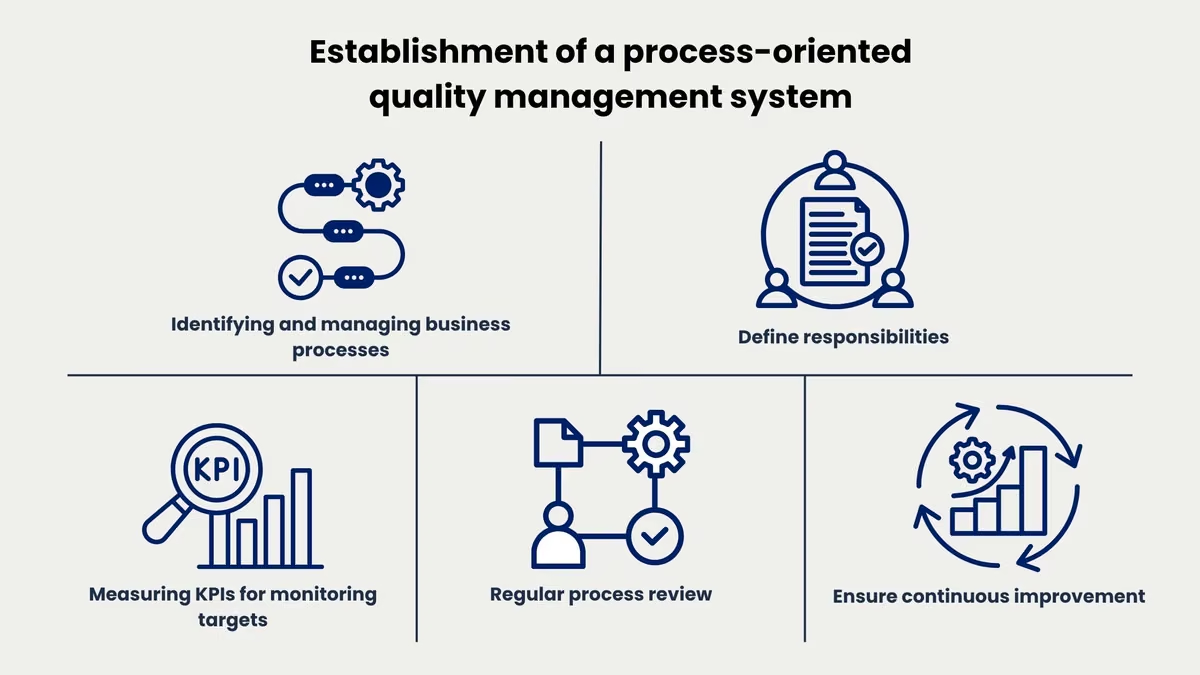
A central component of ISO 9001 is the development of a process-oriented QMS. This involves identifying all company processes, presenting them in terms of their interactions and managing them in a target-oriented manner.
This includes the following core processes:
- Production
- Distribution
- Development
- Purchasing
- Logistics
- Personnel management
Process planning must be clearly described, responsibilities clearly assigned and relevant KPIs defined. An annually revised set of process maps serves as a control instrument and basis for continuous improvement. Companies that implement this consistently benefit from smooth processes and can meet customer requirements faster and without errors.
Customer focus and continuous improvement
ISO 9001 emphasizes that all business activities must be geared towards the needs and expectations of customers and interested parties. This includes identifying and recording customer requirements and systematically translating them into productive measures. The effectiveness of these measures is regularly reviewed, for example through customer surveys or complaint analyses. The focus is also on the obligation to continuously develop the entire quality management system. Companies must use continuous improvement methods such as the PDCA method (Plan-Do-Check-Act) and regularly initiate corrective measures in the event of errors or deviations. This creates a learning organization whose quality level is constantly increasing.
A high degree of customer orientation strengthens competitiveness and has a positive effect on customer loyalty. Employees at all levels should be actively involved in the suggestions for improvement in order to promote quality awareness within the company. Internal audits and management assessments are also important tools for controlling and evaluating improvement processes.
The combination of customer feedback, internal reflection and systematic implementation creates a dynamic basis for sustainable corporate success.
Responsibility of the management level
The requirements of ISO 9001 stipulate that an organization’s leadership plays a central role in quality management. The standard requires a clear commitment from top management to the quality policy and to meeting customer requirements. In addition to formally establishing quality objectives, the active involvement of management in implementing and reviewing the QMS is crucial. In day-to-day management, this means, for example, taking personal responsibility, providing the necessary resources, and fostering a quality-oriented corporate culture that fosters a sense of identification. The management review, a regular reflection process, serves to systematically measure the achievement of objectives and identify areas requiring action. Only through the visible commitment of leadership can effective quality awareness be embedded throughout the entire organization.
Risk-based approach and assessment of opportunities
A key distinguishing feature compared to previous versions of ISO 9001 is the introduction of the risk-based approach. Companies must explicitly identify risks and opportunities for their processes and develop suitable measures to control and exploit them. This increases the company's resilience to unforeseen events and at the same time opens up the possibility of systematically identifying innovation potential. It is important to understand risks not only as a threat, but also as a source of impetus for strategic development.
Tools such as SWOT analyses, FMEA (Failure Mode and Effects Analysis) or risk matrices help to identify and evaluate risks in a structured manner. The risk-based approach thus helps to link quality management more closely with strategic corporate management.
Introduction in the company: Step by step
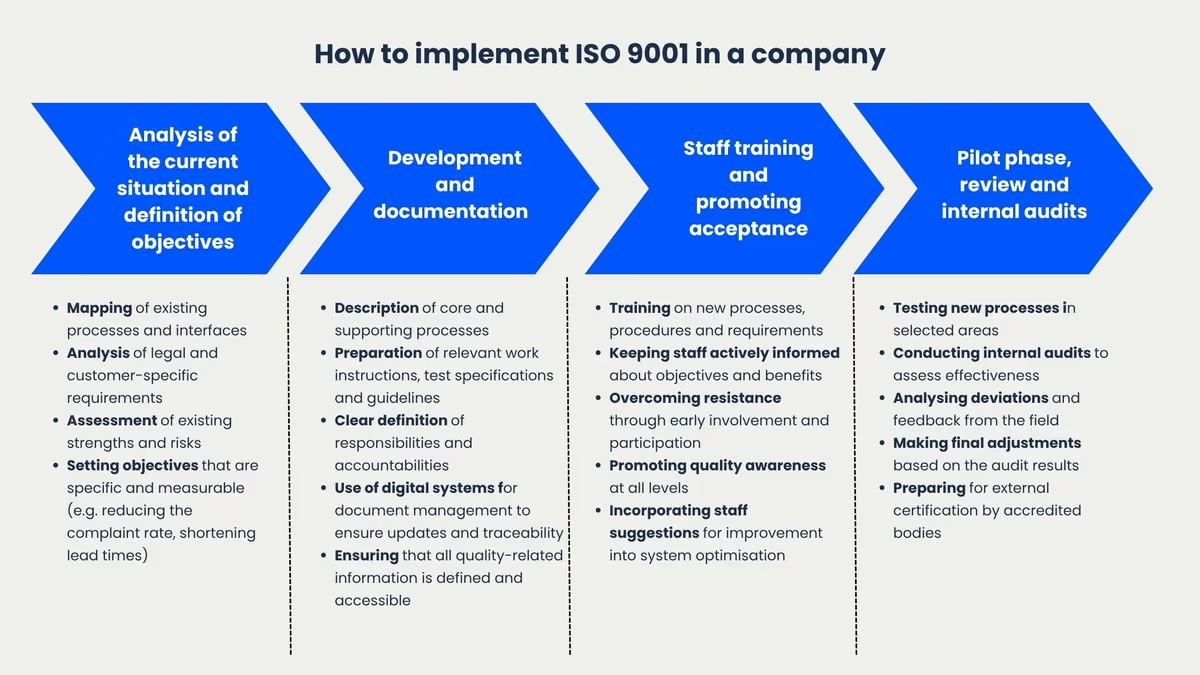
The introduction of an ISO 9001-compliant QMS follows a clear process - from analysis to certification.
- As-is analysis and target definition. First, existing processes, interfaces and external requirements are systematically recorded. On this basis, weak points can be identified and specific, measurable goals can be defined - such as a reduction in the complaint rate or shorter throughput times.
- Structure and documentation of the QMS. Core and support processes are described, responsibilities are clearly defined and relevant work instructions are created. Digital document management systems facilitate updating and traceability.
- Employee training and acceptance. Involving the workforce at an early stage is crucial. Training conveys new processes and requirements, while transparent communication about goals and benefits reduces resistance and promotes quality awareness at all levels.
- Pilot phase and internal audits. New processes are initially tested in selected areas. Internal audits check their effectiveness, deviations are analyzed and final adjustments are made - until the system is ready for external certification.
Certification and monitoring
Preparation and selection of the certification body
To successfully certify your quality management system, you must first select a suitable certification body. Accredited bodies such as TÜV, DEKRA, the BSI (Federal Office for Information Security), or an international provider such as SGS (Société Générale de Surveillance) have experienced auditors and can professionally guide you through the certification process.
The selection should be based on clear award criteria, such as the industry knowledge of the auditors, the transparency of the services offered and the overall costs of the certification process.
Pre-audit and document review
As part of a pre-audit, external auditors review the quality management system to ensure its compliance with ISO 9001. This includes the documentation of all processes, the implementation of key requirements, and spot checks of operational procedures. The goal of the pre-audit is to identify potential weaknesses and give the company the opportunity to address them before the main audit. Read more about audits in our article.
The pre-audit is voluntary, but is particularly recommended for initial certification in order to identify uncertainties at an early stage and significantly increase the chances of success in the main audit.
Main audit and assessment by the auditor
In the main audit, also known as the certification audit, auditors intensively review the entire company structure, visit relevant areas of the company and conduct interviews with employees and managers. Not only the formal requirements are assessed, but also the actual practice and effectiveness of the QMS.
If deviations are identified, the company has a fixed deadline for rectification:
- Significant (major) non-conformities must be rectified within a maximum of 90 days after the main audit, otherwise no certification can be issued.
- Minor non-conformities can also be closed in follow-up audits after the certificate has been issued - provided they do not pose a risk to the effectiveness of the QMS.
Issue of the certificate and period of validity
Upon successful completion of the audit, the certification body issues the ISO 9001 certificate. The certificate is generally valid for three years, with surveillance audits conducted annually. At the end of the three-year validity period, recertification is required, during which the entire quality management system is comprehensively reviewed again in order to renew the certificate.
In certain cases, the three-year rule can be deviated from - for example, in the event of significant deficiencies (shorter term), failure to conduct surveillance audits (loss of validity) or exceptional circumstances such as mergers or pandemics (temporary extension with clear justification).
Internal audits and continuous improvement
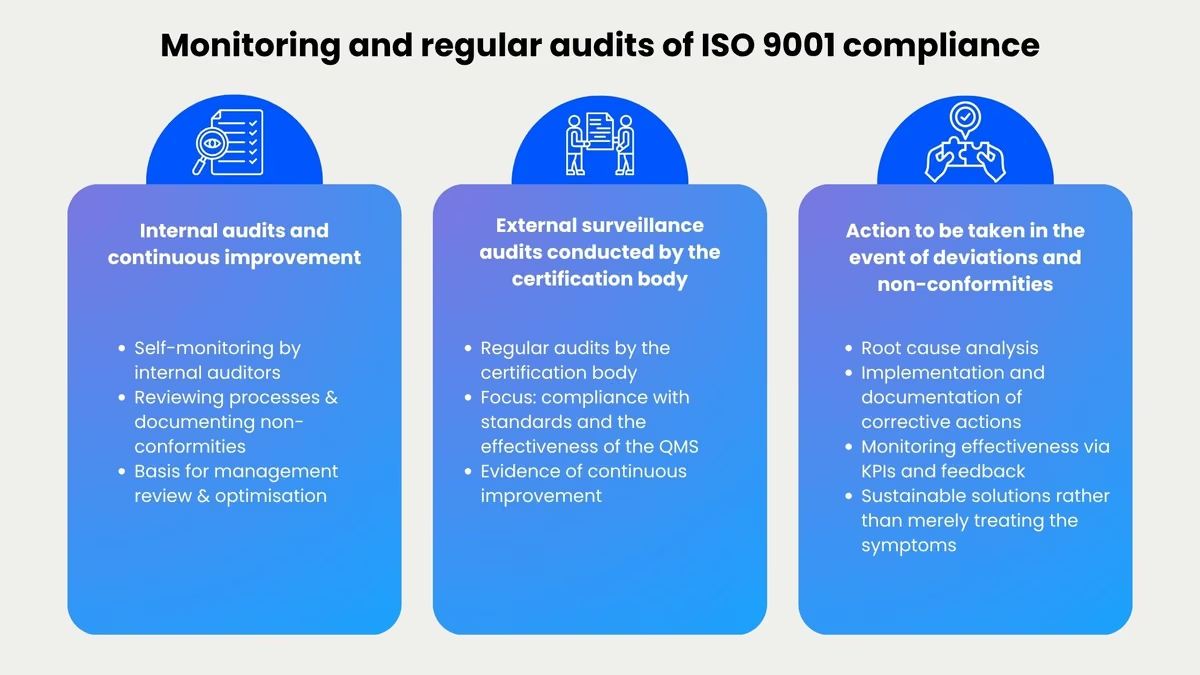
An effective QMS thrives on continuous development. Internal audits are the most important instrument for self-monitoring. Trained auditors from our own ranks independently check all processes, identify potential for improvement and systematically document deviations. The findings serve as the basis for the annual management assessments and are incorporated directly into optimization measures.
External monitoring audits and measures in the event of deviations
In addition to internal audits, external surveillance audits are carried out regularly by the certifying organization. The focus is on compliance with the requirements of the standard and the actual effectiveness of the QMS. If deviations or non-conformities occur, ISO 9001 requires a systematic approach: First, the causes are determined ("root cause analysis"), then corrective measures are implemented and their effectiveness is checked.
Typical corrective measures are
- Adaptation of incorrect work instructions
- Technical repair or replacement of components
- Additional training for employees in the affected area
- Introduction of additional test or release steps
- Expansion of process monitoring with KPIs or checklists
- Improvement of supplier evaluation for external causes
Challenges during implementation
Employee resistance to change
A key obstacle to the introduction of ISO 9001 is often employee acceptance. Changes to familiar work processes initially cause uncertainty. The introduction of new documentation requirements or process descriptions is often perceived as a bureaucratic burden. Companies meet these challenges through targeted communication, practical training and involving the workforce in improvement processes right from the start. This helps to break down inhibitions and increase acceptance of the system in the long term.
It is also helpful to demonstrate concrete benefits for day-to-day work - such as clearer processes or fewer sources of error. Managers should act as role models and actively support the changes in order to create trust. Involving multipliers from the specialist departments can accelerate the transfer of knowledge and strengthen support among the workforce. Regular feedback rounds give employees the opportunity to contribute their own experiences and play a constructive role in shaping the implementation.
It is advisable to communicate the introduction not as a one-off project, but as a joint change process.
Time and resources required for implementation
The introduction and maintenance of an ISO 9001-compliant QMS requires a considerable amount of time and resources, especially at the beginning. Small companies in particular often underestimate the extent of the necessary process analyses, documentation and employee training. Realistic project planning, support from external consultants and a focus on the most important processes help to keep the effort within reasonable limits. Internal capacities are often tied up, especially in the initial phase, which makes parallel operational tasks more difficult. We therefore recommend a step-by-step implementation with clear milestones in order to avoid excessive demands.
In the long term, companies benefit from clearer processes, fewer sources of error and increased transparency across all departments.
Complexity in complying with all requirements
ISO 9001 places high demands on process documentation, the organization of responsibilities and compliance with legal and customer-specific requirements. In companies with complex process landscapes, it can be a challenge to keep a complete overview of these and implement them in an audit-compliant manner. A structured approach with professional project management, regular internal audits and continuous dialog between all areas of the company are crucial to mastering the complexity and complying with the standard.
Conclusion
ISO 9001 has established itself as the world's leading standard for quality management systems - and rightly so. It helps organizations of all sizes to optimize processes, use resources more efficiently and consistently focus on customer needs. The systematic structure links strategic goals with operational measures, improves internal communication and creates measurably fewer frictional losses in day-to-day operations thanks to clearly defined responsibilities. The integrated PDCA cycle in particular promotes a learning organization that not only corrects errors but also uses them as a starting point for improvements. Although the introduction is associated with effort, the long-term benefits in terms of efficiency, quality and competitiveness far outweigh the costs.
In addition, practice has shown that ISO 9001-certified companies react more resiliently in times of crisis: Standardized processes and regular management assessments make it possible to respond more quickly to changing requirements. At the same time, the standard creates a common language with international customers and partners - a decisive advantage in globally networked supply chains. In the long term, ISO 9001 is therefore not a bureaucratic compulsory program, but an instrument for corporate development. Companies that see it as an opportunity send out a strong signal for quality, reliability and transparency.
Frequently asked questions
ISO 9001 is the world's best-known standard for quality management systems. It provides companies with a framework to ensure that their products and services meet customer expectations and legal requirements.
The main goal is to deliver consistently high quality through clear processes, a strong customer focus, and continuous improvement. ISO 9001 certification demonstrates that a company is committed to quality and reliably manages its processes.
ISO 9001 is not a legal requirement, but a voluntary standard. However, many clients, particularly in regulated industries or for public tenders, require certification as a prerequisite for participation.
The costs vary depending on the size of the company, the scope of the QMS and the choice of certification body. In addition to the external audit costs, internal expenses are incurred for process adjustments, training and documentation. For a medium-sized company, the total costs are between several thousand and tens of thousands of euros.
The certificate is valid for three years. During this period, external surveillance audits are carried out annually. Full recertification is required at the end of this period.
Yes, the standard is scalable and can be adapted to individual requirements. Many SMEs have seen a noticeable increase in efficiency and improved customer loyalty following its introduction.
The standard requires companies to systematically identify risks and opportunities and take appropriate measures to minimize uncertainties and make targeted use of development opportunities.
Top management is responsible for the effectiveness of the QMS. It must provide resources, set quality objectives and actively promote a quality-oriented corporate culture.

Larissa Ragg
LinkedInMarketing Managerin · lawcode GmbH
Larissa Ragg verantwortet die Content-Strategie bei lawcode und erstellt Fachbeiträge zu den Themen EUDR, ESG-Compliance, HinSchG, Supply Chain und CSRD. Ihre Beiträge auf dem lawcode Blog machen komplexe regulatorische Anforderungen verständlich und liefern Unternehmen praxisnahe Orientierung.