 DE
DE
Important facts
- What is data protection - and why is it so important today?
- Data protection protects personal data from misuse and secures privacy in an increasingly digital world.
- Which data is considered personal - and which of it is particularly worthy of protection?
- Personal data is all information that relates to an identifiable person - health data, religious beliefs or financial data, for example, are particularly worthy of protection.
- What rights do data subjects have vis-à-vis companies or authorities that process their data?
- Data subjects have the right to information, rectification, erasure, objection and data portability.
- What do companies need to do to meet the requirements of the GDPR and the BDSG?
- Companies must act sparingly with regard to data, provide transparent information, document processes and take technical and organizational protective measures.
- When is a data protection officer required by law - and what are their tasks?
- A data protection officer is mandatory if a lot of data or particularly sensitive data is regularly processed and provides advice, monitoring and training.
- What are the consequences of data protection breaches - legal, financial and in terms of trust?
- There is a risk of high fines, claims for damages, loss of reputation and personal liability for those responsible.
Abstract
Data protection protects personal data - such as name, address, health data or IP addresses - from misuse and safeguards the privacy of each individual. In the EU, the General Data Protection Regulation (GDPR), supplemented by the German Federal Data Protection Act (BDSG), forms the legal framework. It obliges companies and public authorities to process data only for specific purposes, transparently and as sparingly as possible. For private individuals, this means informational self-determination; for companies, consistent data protection means greater customer trust, lower liability risks and a clear competitive advantage.
Data subjects have extensive rights - including access, rectification, erasure and data portability. Companies must document processing operations, carry out a data protection impact assessment if required and appoint a data protection officer above a certain size. Violations of the GDPR can result in fines of up to 20 million euros, reputational damage and personal liability. New challenges arise from artificial intelligence, cloud computing and the Internet of Things.
Never miss an update on compliance again.
New specialist articles, regulatory updates and practical tips, straight to your inbox. Once a week, no spam.
What is data protection?
Definition of
A definition of data protection describes the rules and measures that ensure the protection of individuals’ personal data. The primary goal is to safeguard each individual’s privacy and prevent data from being misused, misappropriated, or stolen. Essentially, this is intended to ensure that people retain control over what happens to their data.
According to Article 4 of the GDPR, personal data includes any information that makes a natural person identifiable—such as name, address, email address, phone number, bank details, health information, or IP addresses. A clear definition of data protection and its implementation are therefore not only a protective measure but also help build essential trust in the digital space.
Objective: Protection of privacy and personal data
The fundamental aim of data protection is to protect privacy. Data about a person's identity, habits, interests or consumer behavior is valuable - both for companies that want to use it for advertising purposes and for criminals who could misuse the data. The protection of personal data ensures that such information is only used for specific, permitted purposes and that those affected can access their data at any time.
A study by Bitkom shows that 77 percent of Germans are very concerned about the use and processing of their private data.
Differentiation from information security and IT security
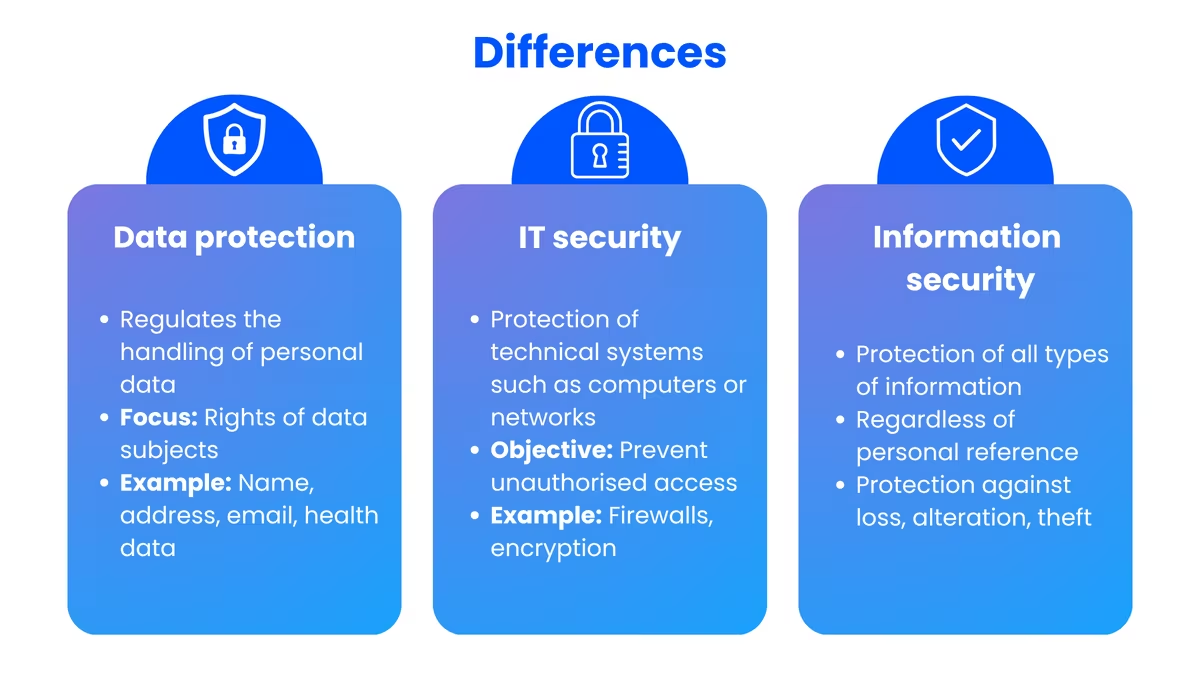
In everyday life, the terms data protection, information security and IT security are often used interchangeably. In reality, they are different concepts that partially overlap:
- Data protection regulates how personal data may be used, whereby the rights of the data subjects are paramount.
- IT security is concerned with protecting technical systems such as computers or networks - for example with firewalls or encryption.
- Information security is a broader term and protects all types of information - regardless of personal reference - against risks such as loss, alteration or theft.
Relevance for private individuals and companies
Data protection is closely linked to the protection of fundamental rights. In the European Union, the right to the protection of sensitive data and privacy is expressly enshrined in the EU Charter of Fundamental Rights. Article 8 emphasizes that everyone has the right to the protection of their personal data.
This enshrinement in fundamental rights forms the crucial legal and ethical foundation for data protection within companies. Organizations are therefore obligated to respect this right and implement it through technical and organizational measures. For individuals, effective data protection guaranteed by companies represents a form of self-determination and contributes significantly to quality of life in the digital world.
Building trust and competitive advantage for companies
Companies also benefit from good data protection. Trust is particularly important for business relationships in the digital age. Customers and business partners expect their data to be secure and only used for clear, permitted purposes. Companies that explain their data protection rules openly and clearly are often more popular with their customers. A high standard of data protection can also be a real competitive advantage - especially compared to companies that handle data less carefully.
Avoiding legal risks and financial penalties
Violations of data protection regulations can have serious consequences. The GDPR provides for fines of up to 20 million euros or four percent of a company's global annual turnover in the event of violations. Data protection is just one component of a comprehensive compliance system that protects companies from legal, financial and reputational risks.
Small and medium-sized companies in particular often underestimate the risk and possible consequences of a data protection breach. Such penalties, combined with possible claims for damages, can threaten a company's existence.
Legal basis
Basic principles of data processing
Data protection begins with the data-saving collection of personal data.
The principle of data minimization stipulates that only the data required for the respective purpose may be processed.
It must be determined at the time of collection why and for how long the data will be used. Data controllers must ensure that processing is lawful and transparent. Structured documentation of all processing operations in the record of processing activities is mandatory and forms the basis for legally compliant data processing.
Transparency and information obligations
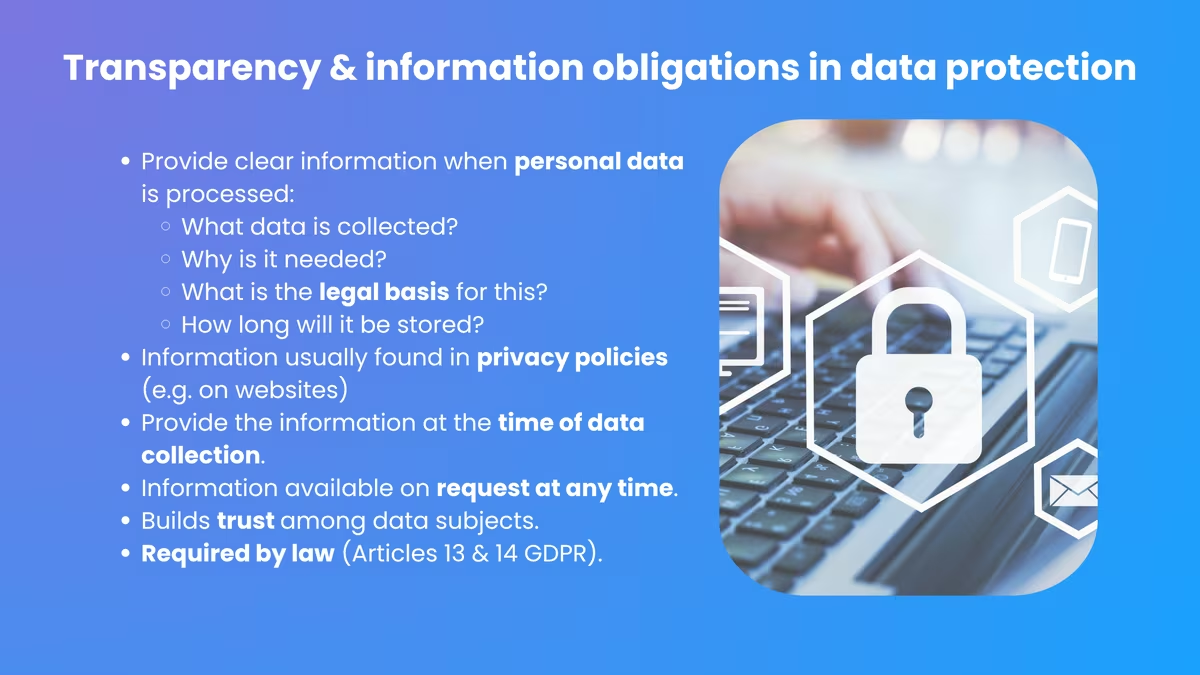
Transparency is one of the most important principles in data protection. If personal data is processed, the data subjects must be informed clearly and comprehensibly:
- which data is collected,
- why they are needed,
- on what legal basis this happens
- and how long the data is stored.
This information is usually included in data protection declarations on websites. This information must be provided as soon as the data is collected - and must be available on request at any time.
This transparency obligation is enshrined in Articles 13 and 14 of the GDPR.
Privacy by design and privacy by default
An important goal of the GDPR is the protection of data through technology design (privacy by design) and through data protection-friendly default settings (privacy by default), anchored in Art. 25 GDPR and in Section 71 BDSG. This means that companies must ensure that personal data is well protected from the outset when planning and developing IT systems. Examples include the encryption of data, secure login procedures or contact forms that only request the most necessary information.
Data protection-friendly default settings ensure that only as much data as absolutely necessary is processed automatically.
EU General Data Protection Regulation (GDPR)
The General Data Protection Regulation (GDPR, (EU) 2016/679) has been in force in all member states of the European Union since May 2018 and forms the central legal framework for the handling of personal data. It harmonizes data protection standards in Europe and regulates how companies and authorities may collect, store, process and pass on data. Important basic principles are lawfulness, transparency, purpose limitation, data minimization, integrity and confidentiality.
Particularly relevant is the extensive possibility of sanctions in the event of breaches and the obligation to report serious data protection breaches within 72 hours.
The Federal Data Protection Act (BDSG) and national peculiarities
The Federal Data Protection Act (BDSG) supplements the GDPR with special rules that only apply at national level in Germany. It contains special regulations for authorities and public bodies, for video surveillance in public spaces and focuses on the handling of employee data. The BDSG also describes in more detail the tasks of data protection officers and the conditions under which particularly sensitive data, such as health data, may be processed.
For companies in Germany, this means that they must comply with both the requirements of the GDPR and the additional regulations of the BDSG.
International data protection laws
Data protection laws outside Europe are also becoming increasingly important. Countries such as the USA, Canada, Australia and China have their own rules on the protection of personal data, some of which differ greatly from European regulations. For companies that operate internationally, this means that they must not only comply with the GDPR, but also observe the respective national laws.
Examples include the California Consumer Privacy Act (CCPA) in the USA and the Personal Information Protection Law (PIPL) in China.
Particularly sensitive data categories
According to the GDPR, health data such as medical diagnoses, treatments or laboratory results are considered particularly sensitive personal data. Biometric data - for example fingerprints, facial recognition or genetic information - also fall under this category. This data can cause great harm if misused: Discrimination, identity theft or psychological stress.
The GDPR therefore stipulates particularly strict rules - in principle, the explicit, voluntary and unambiguous consent of the data subject is required.
Data on political opinions or religious beliefs is also particularly well protected.
Bank data - such as credit card numbers or account balances - is also considered sensitive and must be protected with high technical security measures, such as encryption or two-factor authentication.
In addition to the General Data Protection Regulation (GDPR), Europe also has the Payment Services Directive PSD2 ((EU) 2015/2366) to protect bank data. These stipulate that bank data may only be used for clear and permitted purposes.
Rights and obligations
Right to information about stored data
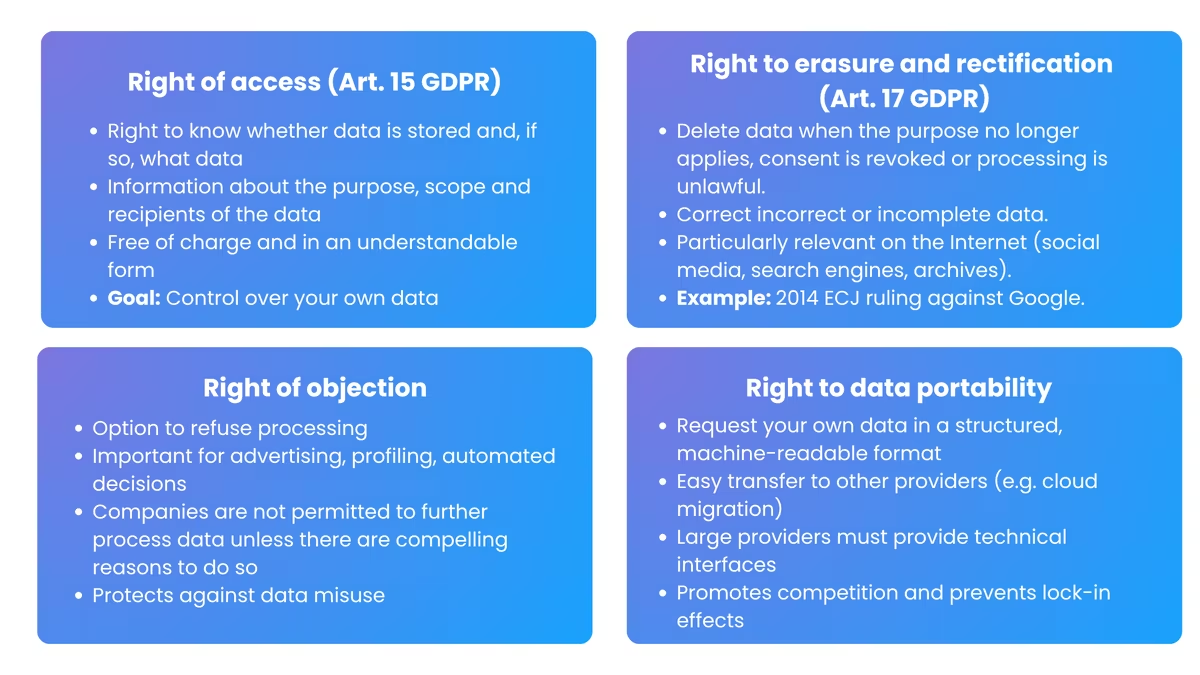
Every person has the right to know whether and what personal data is stored about them. The right to information is enshrined in Art. 15 GDPR. Upon request, data controllers must disclose in full for what purpose, to what extent and to whom data has been disclosed. The information must be provided free of charge, in an easily understandable form and in a timely manner.
Right to erasure and rectification
The so-called"right to be forgotten" under Article 17 of the GDPR states that personal data must be erased if it is no longer needed, consent has been withdrawn or the processing was unlawful.
In addition, people have the right to rectification (Art. 16 GDPR) if stored data is incorrect or incomplete.
A well-known example is the ECJ ruling of 13.05.2014(Ref. C-131/12) against Google, in which it was decided that people can request that certain search results be deleted if they violate their privacy and are no longer current or relevant.
Right to object to the processing
The right to object under Art. 21 GDPR allows people to object to the processing of their data in certain cases - particularly in the case of advertising, automated decision-making or profiling. If someone objects, the company must take the request seriously and may not continue to use the data unless there are very important reasons that outweigh the protection of the data.
Data portability
The right to data portability (Art. 20 GDPR) gives people the right to request their own data and receive it in a simple, readable format - for example when switching from one cloud service to another. This right strengthens competition and prevents users from staying with one provider simply because they cannot take their data with them.
Documentation obligations and data protection impact assessment
One of the most important obligations in data protection is that all data processing procedures are documented in detail. This enables companies to prove during an audit that they are complying with the GDPR. If the processing poses a high risk to the rights of data subjects, a data protection impact assessment (DPIA, in accordance with Article 35 of the GDPR) is required.
The data protection impact assessment examines what consequences the processing may have for people - and how these risks can be kept to a minimum.
Appointment of a data protection officer
Above a certain size or if a company regularly works with sensitive data, the law stipulates that a data protection officer (Art. 37 GDPR) must be appointed. This person advises the company, ensures compliance with the rules, trains employees and is the point of contact for authorities and data subjects.
In Germany, a data protection officer is required if at least 20 employees regularly work with personal data or if special data such as health information is processed (Section 38 BDSG).
Obligation to report data breaches
In the event of data breaches - such as hacks, data breaches or unintentional disclosure of personal data - the competent supervisory authority must be informed within 72 hours in accordance with Article 33 of the GDPR. In the case of serious incidents, immediate notification of the data subjects is often also required. Notable data breaches in recent years, such as in the case of Yahoo or the Marriott hotel chain, show the impact of transparent and rapid communication in such incidents.
Technical and organizational protective measures
Data minimization and purpose limitation
Data minimization means that only as much personal data as is really necessary may be collected and stored. The data may only be used for a clear, predetermined purpose. As soon as the data is no longer needed, it must be deleted or anonymized.
If another purpose is added later, this is only permitted with the new consent of the data subject.
Anonymization and pseudonymization
It is often not possible to completely avoid data processing. In these cases, anonymization or pseudonymization offer effective protection: anonymized data can no longer be traced back to an identifiable person. Pseudonymized data can only be assigned to a person with additional information. In the medical field or in scientific studies, pseudonymization minimizes risks so that research data can be used but still remains protected.
Encryption and secure data transmission
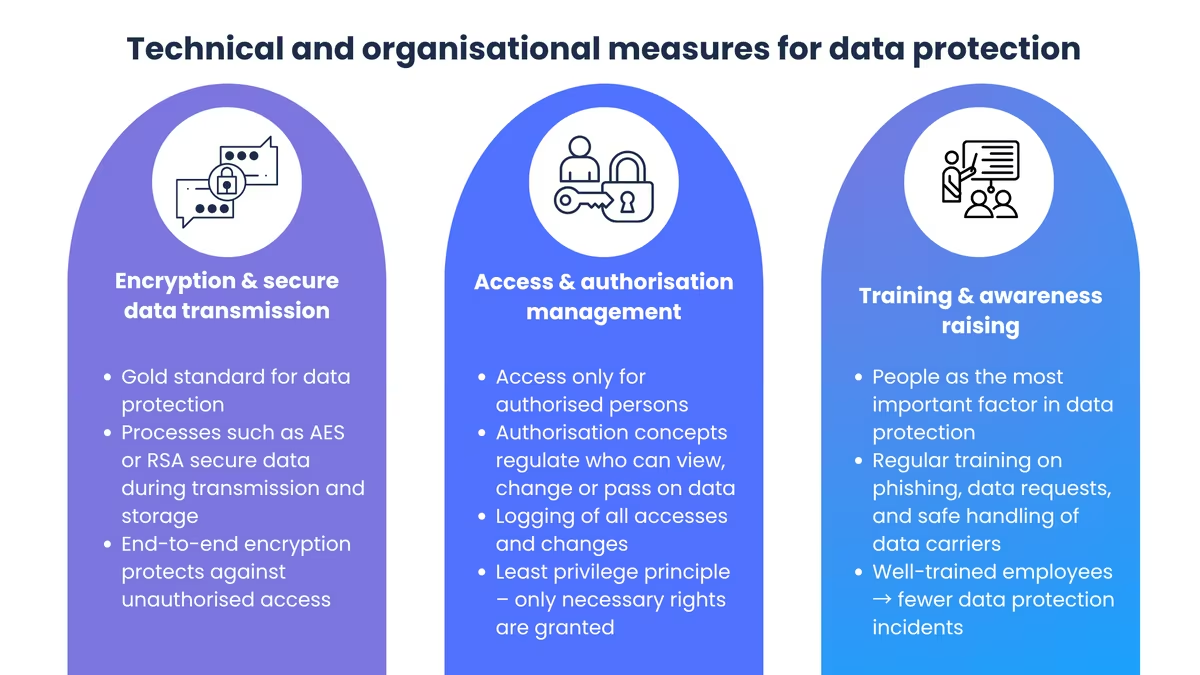
Encryption is considered the gold standard for protecting personal data. Modern methods such as AES or RSA secure data during transmission and storage. This prevents unauthorized persons from extracting readable information even when accessing the system. Companies are increasingly relying on end-to-end encryption to ensure maximum security.
End-to-end encryption (E2EE) means that messages or data are encrypted directly on the sender's device and only decrypted on the recipient's device.
Access and authorization management
Personal data may only be viewed or edited by authorized persons. Authorization concepts regulate exactly who is allowed to see, change or pass on which data. In addition, every change or access should be logged so that misuse can be detected more quickly.
An important principle is"least privilege": each person is only given the access rights that they absolutely need for their work.
Regular training and sensitization of employees
Despite modern technology, people remain the most important factor in data protection. Many data breaches occur because someone makes a mistake or is not well informed. In training courses, employees learn how to recognize fake e-mails (phishing), how to respond correctly to data requests and how to handle data carriers securely.
Companies that train their employees well have demonstrably fewer problems and improve safety awareness within the team.
Consequences of violations
Fines and financial sanctions under the GDPR
The sanctions for non-compliance with the GDPR are very strict by international standards. Even moderate infringements can result in severe fines. In Germany, around 185 million euros in fines were imposed in the year after the GDPR came into force - an increase of over 80% compared to the previous year. The fines are calculated based on the type, severity and duration of the infringement as well as the company's annual turnover.
According to a DLA Piper study, GDPR fines amounting to 1.2 billion euros were imposed across Europe in 2024.
Loss of reputation and loss of trust among customers
In addition to high fines, data breaches usually also result in considerable reputational damage. Customers often turn away from affected companies if they can no longer rely on the responsible handling of their data. Share prices also often react sensitively to breaches that become public. Preventive data protection is therefore not just a question of compliance, but is vital for the long-term survival of any company.
Liability and legal consequences
Data breaches can have serious consequences - not only for the company, but also for individual data controllers such as directors, managers or data protection officers. People whose data is affected by such an incident have the right to compensation - both for material and immaterial damages such as damage to reputation or loss of control over personal information. The company must prove that it has done everything necessary to comply with data protection. A functioning data protection management system with clear responsibilities and good documentation is therefore essential.
The important thing is that the company must prove that it has done everything necessary to comply with data protection. It is therefore not enough to simply define measures on paper - they must actually be implemented and documented.
Current challenges and developments
Data protection in the digital transformation and the use of AI
The digital transformation brings many new opportunities - but also new challenges for data protection. In particular, the use of artificial intelligence (AI) and automated decision-making places high demands. AI systems often need a lot of data, which is why data economy, transparency and traceability are becoming increasingly important. Companies must show how their AI systems work and ensure that no one is disadvantaged because of their age, gender, origin or other personal characteristics.
This means that it must be clear what data is collected, what it is used for and how the AI's decisions are made. Terms such as explainability (i.e. how well the result of an AI can be understood), verifiability (auditability) and protection against discrimination also play a major role.
International data transfers and cloud services
Globalization and the use of cloud services mean that many companies are coming up against the limits of European data protection regulations. If data is transferred to countries outside the EU, this is only permitted under strict conditions - in most cases, so-called standard contractual clauses must be used. Following the failure of the Privacy Shield agreement between the EU and the USA, companies need to take an even closer look at how they protect data. The organizational effort for internationally active companies has increased significantly as a result.
For cloud providers in particular, it is important that the server locations and access to the data comply with European requirements.
Data protection in connection with big data and IoT
Big data analysis and the Internet of Things (IoT) offer new business opportunities, but also pose considerable risks to privacy. Connected devices are constantly collecting data, often without the user's knowledge. Compliant solutions therefore rely on privacy by design, early involvement of data protection officers and a transparent information policy. Companies are faced with the task of effectively utilizing big data potential without violating data protection principles.
The challenges range from secure storage and transmission to authorization management and the deletion of large volumes of data.
Conclusion
The definition of data protection is far more than a bureaucratic obligation or legal necessity. The protection of personal data is key to the secure and trustworthy handling of personal information in a digital world. Companies that consistently implement data protection in line with the “Privacy by Design” principle not only comply with legal requirements but also strengthen their image, build trust among customers and employees, and minimize risks associated with potential data breaches or legal disputes. For individuals, data protection remains the central tool for safeguarding their own autonomy and privacy. Technological progress—particularly AI, big data, and cloud computing—brings new challenges that can only be overcome through a holistic, strategic approach to data protection management.
Frequently asked questions
Data protection refers to all measures and rules designed to ensure that people's personal data is protected. The goal is to safeguard privacy and prevent data from being misused, stolen, or used without permission.
Essentially, the point is that each person can decide for themselves who receives which of their personal data and what happens to it (this principle is also known as “informational self-determination”).
"Personal data" includes anything that can be used to identify a person—not just names and addresses, but also email addresses, phone numbers, bank account information, health information, and even your computer’s IP address. In the EU, the General Data Protection Regulation (GDPR) serves as the primary legal basis for this.
Personal data includes all information that makes it possible to identify a person. This includes name, address, date of birth, e-mail addresses as well as bank details, medical information or online identifiers such as IP addresses.
According to the GDPR and BDSG, a data protection officer must be appointed if at least 20 people in a company are permanently involved in the processing of personal data or if particularly sensitive data such as health information is processed. Appointment is also mandatory if data processing is a core activity of the company.
According to the GDPR, sensitive data on health, genetic or biometric characteristics, political views, religious beliefs and data on ethnic origin are particularly worthy of protection. Financial and banking data are also considered sensitive and are subject to increased protection requirements.
In the event of a data breach, the company must inform the competent supervisory authority within 72 hours. In the event of a high risk for data subjects, immediate notification of the data subjects is also required. Immediate measures must be taken to rectify and prevent similar incidents.
Companies are threatened with high fines, claims for damages, considerable loss of reputation and loss of trust among customers. In addition, there are possible personal liability risks for managers or data protection officers as well as increased controls by supervisory authorities. Comprehensive data protection management helps to effectively minimize these risks.

Alexander Hilmar
LinkedInESG compliance expert - lawcode GmbH
Alexander Hilmar advises companies on the implementation of ESG compliance, sustainable reporting and supports the implementation of digital solutions for legally compliant supply chains. His specialist articles on the lawcode blog combine regulatory depth with practical recommendations for action.