
 DE
DE
Important facts
- What is benchmarking, and how does it benefit companies?
- It involves systematically comparing the company with best-in-class firms to identify performance gaps and implement improvements.
- What are the goals—both operational and strategic?
- The aim is to increase competitiveness, make processes more efficient and make more informed strategic decisions.
- What types of benchmarking are there and how do they differ?
- The main types are internal, external, competitive, functional and generic benchmarking, which differ according to the comparison partners and objectives.
- How does a successful benchmarking process work?
- A successful process involves defining objectives, collecting data, analyzing the data, implementing measures, and conducting ongoing reviews.
- Which current trends characterize modern benchmarking?
- Modern trends such as digitalization, big data and artificial intelligence make benchmarking faster, more data-driven and strategically even more effective.
Abstract
Benchmarking is a key management tool for objectively evaluating and systematically improving a company’s performance, innovative capacity, and competitive position. It is based on the systematic comparison of products, processes, services, or strategies with best-in-class companies or direct competitors. Its goal is to identify performance gaps, adopt best practices, and derive concrete measures to increase efficiency. There are also various types of benchmarking.
The process consists of five phases: goal setting, data collection, analysis, deriving actions, and continuous review. It employs traditional methods such as SWOT analysis and the Balanced Scorecard, as well as modern digital tools, big data analytics, and AI-powered forecasts. The main challenges lie in data availability, the comparability of key performance indicators, and resource requirements—all of which can be managed through clear standards, systematic data management, and an open learning culture. Companies that consistently engage in benchmarking, on the other hand, not only increase their process efficiency but also position themselves in the long term as agile, highly innovative competitors in dynamic markets.
Never miss an update on compliance again.
New specialist articles, regulatory updates and practical tips, straight to your inbox. Once a week, no spam.
What is benchmarking?
Definition of
The definition of benchmarking refers to the ongoing, systematic comparison of a company’s products, services, processes, or strategies with those of leading market players—so-called “best-in-class” companies—or direct competitors. The goal is to identify performance gaps, pinpoint best practices, and develop measures for improvement. Unlike one-time analyses, benchmarking is designed as an ongoing optimization process and combines quantitative metrics with qualitative insights.
Benchmarking is the systematic comparison of a company's products, processes, or strategies with those of leading market players. The goal is to identify performance gaps, adopt best practices, and develop specific improvement measures.
What does "benchmark" mean in German?
The term “benchmark” originally comes from the fields of construction and surveying and refers to a fixed standard against which other measurements are compared—in management, this is applied to the standard set by top performers. In German, “benchmark” is therefore translated, in essence, as “reference value” or “comparison value” and describes a standard against which companies measure themselves in order to assess their own performance and improve it in a targeted manner.
Real-World Benchmark Examples
Automotive: A manufacturer compares the throughput times of its assembly line with the industry leader and discovers that the competitor produces 15% faster thanks to just-in-time delivery and robotics. Reaction: targeted investments in automation and material flow optimization.
Telecommunications: A provider determines that its own hotline wait time—an average of 5 minutes—is five times as long as that of another company (1 minute). Response: Introduction of chatbots and self-service portals.
Health Care: A hospital is applying the checklist system used by airlines to patient management, resulting in a measurable reduction in medical errors.
How did the benchmarking/comparison concept evolve?
The concept originated in the United States, specifically at Xerox in the 1970s and 1980s. When Xerox realized that Japanese competitors were manufacturing their copiers at lower costs and with higher quality, the company began systematically analyzing its competitors’ production processes and services. The goal: to learn from their methods. What began as a purely operational comparison of costs and quality has now evolved into a strategic management tool that covers all areas of the business: from production and logistics to human resources and sales.
Why benchmarking is more important than ever for companies
For companies, conducting benchmarks provides a transparent information base for objectively identifying opportunities for improvement and establishing a sound foundation for decision-making. In markets characterized by increasing pressure to innovate, digitalization, and global competition, benchmarking enables companies to monitor and measure their own performance and systematically close gaps relative to leading market players or partners. Competitive benchmarking is equally relevant for small and medium-sized enterprises as well as for large corporations, since growth and efficiency gains are evaluated not only internally but, above all, in direct comparison to market leaders.
A benchmark analysis by McKinsey shows that companies that systematically conduct such comparisons achieve efficiency gains of up to 25% in core processes and attain measurably higher customer satisfaction scores.
Three further advantages that are often underestimated:
- Knowledge Transfer: It promotes internal knowledge transfer by applying best practices from one area to others.
- Learning culture: It establishes a learning culture that makes companies more agile in the face of market changes.
- Fact-based: In strategic management, it provides the factual basis for aligning targets with the competition rather than estimating them internally.
Benchmarking in Small Businesses
Even small businesses can use benchmarking to make targeted improvements to their processes, costs, and performance. This doesn’t necessarily require large amounts of data or complex analyses. It is often sufficient to regularly track key metrics such as customer satisfaction, delivery times, cost structure, website performance, or sales conversion rates and compare them with previous periods, industry averages, or selected competitors. It is important to choose realistic benchmarks and to derive concrete actions from the results. In this way, benchmarking becomes a simple tool even for small businesses to identify strengths, uncover weaknesses, and make informed decisions.
Objectives of benchmarking
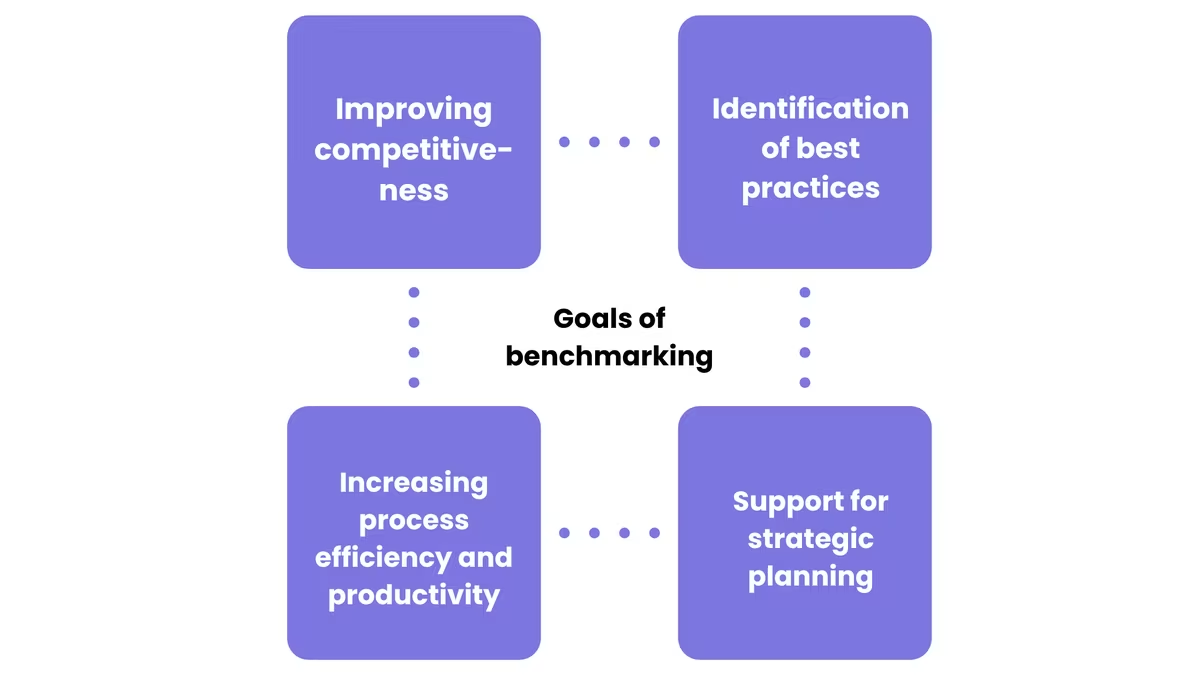
Improving competitiveness is at the heart of every benchmarking project. By comparing itself with the best in the industry, a company gains clarity on where it stands relative to its peers and which factors lead to superior success. In the automotive industry, for example, performance benchmarking is essential for adopting new production methods and service concepts early on and holding its own in the face of global competition.
Benchmarking also serves as an early-warning system: technological or strategic gaps relative to the competition become apparent before they affect the bottom line. On this basis, long-term strategies can be developed that are guided by proven best practices rather than internal assumptions.
The market comparison is designed to identify particularly successful work practices, processes, and management methods and to use them as models. These best practices can be applied to one’s own organization and adapted to its specific circumstances.
A real-world example: As part of its “T-Labs” initiative and later through its subsidiary “hubraum,” Deutsche Telekom specifically analyzed innovation and development processes in Silicon Valley by collaborating with local startups, research centers, and tech companies. These insights were incorporated into the company’s internal innovation culture, for example in the form of agile development processes, open innovation platforms, and accelerated product cycles. Through these cross-organizational initiatives, Deutsche Telekom was able not only to enhance its capacity for innovation but also to position itself internationally as an attractive partner for technological collaborations.
The targeted analysis and continuous improvement of business processes often lead to greater process efficiency and increased productivity. The logistics industry, for example, uses benchmarking in process management to optimize transportation, warehousing, and loading flows. A case study by DHL in the textile and fashion industry shows that process benchmarking reduced the average delivery lead time by up to 15%. This resulted in lower costs, optimized resource utilization, and faster responses to customer requests.
Industry benchmarking not only provides operational recommendations but also plays a key role in strategic planning. The data obtained makes it possible to set realistic goals, tap into growth areas, and identify disruptive technologies at an early stage.
In concrete terms, this means
- Enables well-founded, realistic objectives to be set at a strategic level
- Identifies potential growth areas and new market opportunities for the same industries
- Supports the early detection of disruptive technologies or trends
- Serves as a basis for well-founded decisions in strategy workshops
- Sharpens your own competitive position compared to the rest of the industry
- Promotes the development of long-term targets and strategic measures
The types of benchmarking
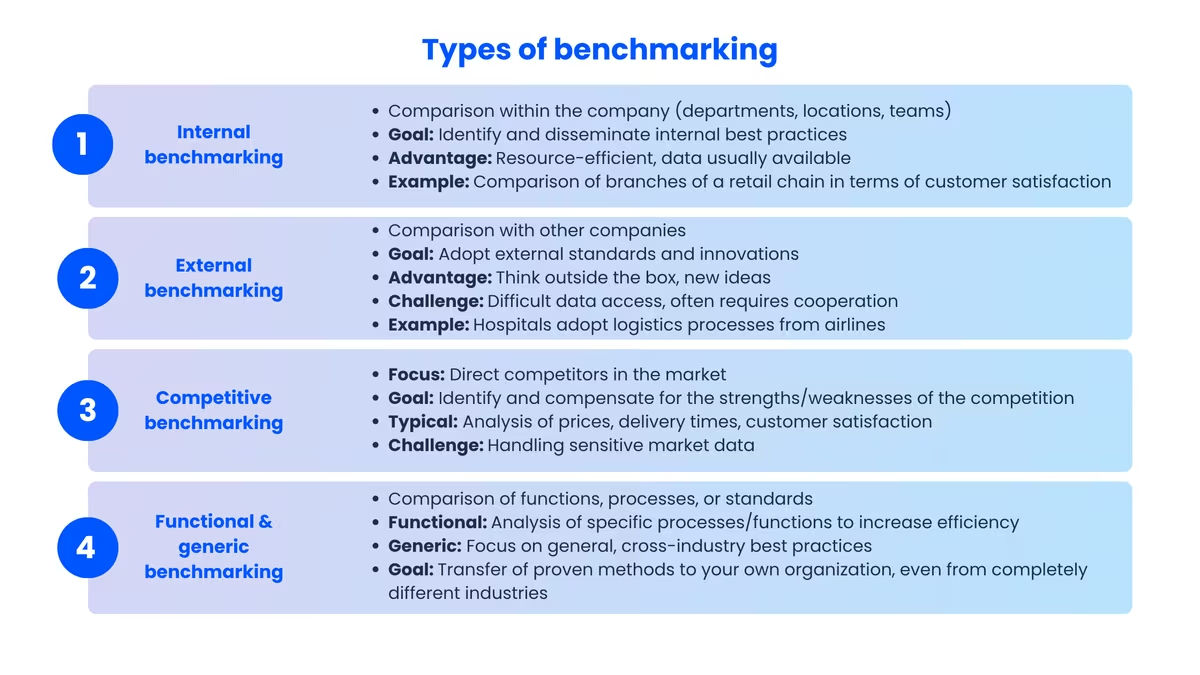
Internal benchmarking
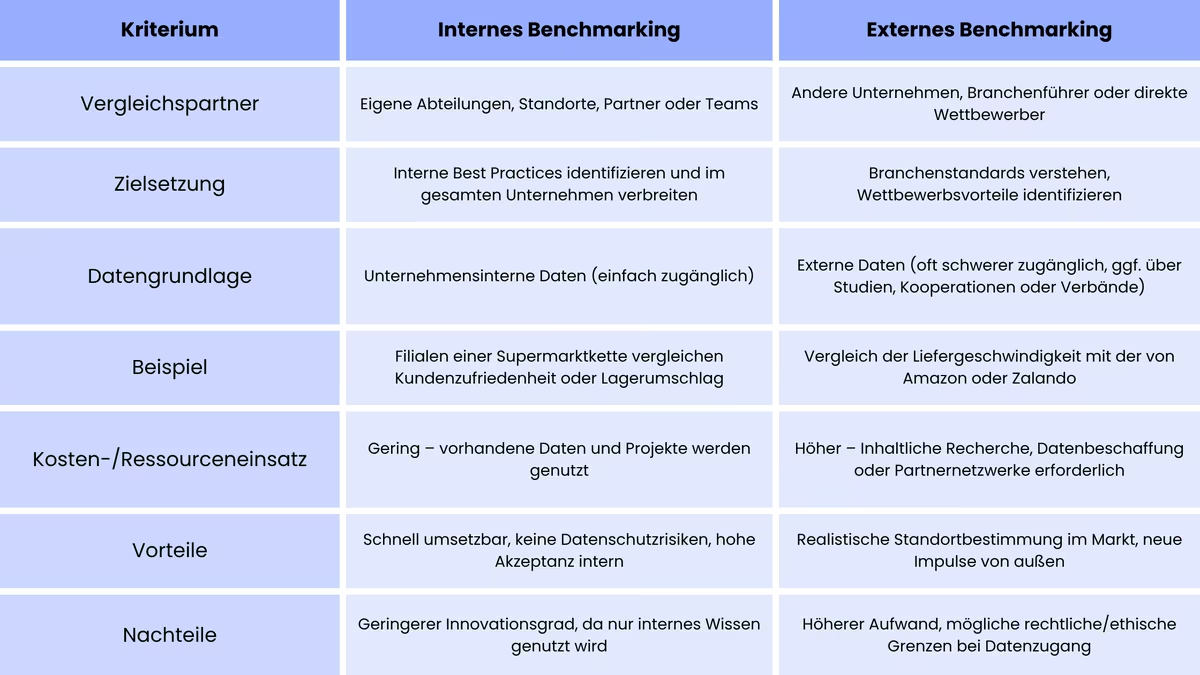
In an internal industry comparison, a company compares different business units, departments, or locations with one another. The goal is to identify internal performance differences and promote optimal standards company-wide. For example, a retail chain can compare customer satisfaction across different stores and implement the most efficient practices company-wide. This approach is often resource-efficient, as the relevant data is typically already available within the company.
External benchmarking
External benchmarking involves comparing a company’s performance with that of organizations outside its own, including both direct competitors and companies outside the industry that are considered particularly high-performing in certain areas. For example, public administrations adopt innovative digital citizen services from pioneers in other countries to modernize their own offerings. Strategic benchmarking is also a form of external benchmarking. This involves comparing a company’s own strategy and the underlying success factors with those of its most successful competitors or leading companies in other industries.
External benchmarking allows us to “think outside the box” and uncovers opportunities for innovation that remain hidden in purely internal comparisons. At the same time, it presents specific challenges:
Advantages:
- Access to innovation impulses outside your own organization
- Unlocking potential for improvement that would not be visible internally
- Basis for the development of long-term, competition-oriented strategies
Challenges:
- External data is often difficult to access because companies treat their key figures confidentially
- Meaningful comparisons often require collaborative partnerships or benchmarking clubs
- Recourse to specialized consulting companies may be necessary
Those who overcome these hurdles gain one of the most valuable insights in the entire process.
Benchmark Comparison with Competitors / Competitive Benchmarking
Competitive benchmarking focuses on direct competitors. Companies analyze competitors' products, offer structures and services in order to balance out strengths and weaknesses in their own portfolio. In e-commerce, for example, competitors' price structures, delivery times and customer satisfaction ratings are continuously monitored in order to react flexibly to market developments. This form requires particular sensitivity when dealing with sensitive market data.
Functional and generic benchmarking
Functional benchmarking refers to specific functions or processes, regardless of the industry. For example, a production company can analyze the maintenance processes of a leading energy supplier in order to benefit from its efficiency.
Generic performance benchmarking, on the other hand, is based on very general processes or standards that are considered exemplary across industries. In this context, customer-centric thinking—as is common in retail or tech companies, for example—is often applied across sectors.
Benchmarking in Practice: Industry Applications
Competitive benchmarking is not a one-size-fits-all solution, as the relevant metrics, peers, and objectives vary significantly from industry to industry. The following examples illustrate how different sectors use this tool in practice.
Overview of Benchmarking Across Various Industries
In the manufacturing industry, benchmarking has traditionally been used to improve efficiency and quality. Manufacturers systematically compare lead times, scrap rates, and machine utilization with industry leaders. This often takes place as part of lean management initiatives. Toyota is considered the classic benchmark in this regard: Many companies worldwide model their operations after the Toyota Production System to streamline their own manufacturing processes and reduce waste.
Hospitals and clinics use benchmarking to improve the quality of care, length of stay, and patient satisfaction. A common approach is to make comparisons using structured quality reports, as required by law in Germany. In addition, many facilities adapt methods from other industries to their daily clinical practice, such as checklist systems from the aviation industry, which have been shown to help reduce medical errors.
Banks and insurance companies use benchmarking primarily in the areas of risk management, cost structure, and customer satisfaction. The Net Promoter Score (NPS) is a key metric in this context. Financial institutions regularly compare themselves to digital banks such as N26 or ING, which have set new industry standards for customer satisfaction. Regulatory requirements such as Basel III also make industry-wide benchmarking mandatory.
In retail, speed and customer experience are key to gaining a competitive edge. Amazon sets the benchmark for delivery times, returns processing, and personalization. Not only online retailers but also brick-and-mortar retailers are now measuring themselves against these standards. Companies like Zalando use continuous benchmarking to compare conversion rates, shopping cart abandonment rates, and logistics costs against competitors in real time.
Logistics service providers benchmark key performance indicators such as on-time delivery, inventory turnover, and transportation costs per shipment. Cross-industry comparisons are particularly relevant here: DHL and other providers also analyze efficiency models from outside their own industries—such as those in aviation or healthcare—to further develop processes in warehousing or fleet management.
The public sector, too, is making increasingly systematic use of benchmarking. Municipalities compare service levels, the degree of digitization, and citizen satisfaction—both nationally, through initiatives such as the German Association of Cities’ Municipal Performance Comparison, and internationally, for example with Scandinavian administrative models, which are considered benchmarks for e-government.
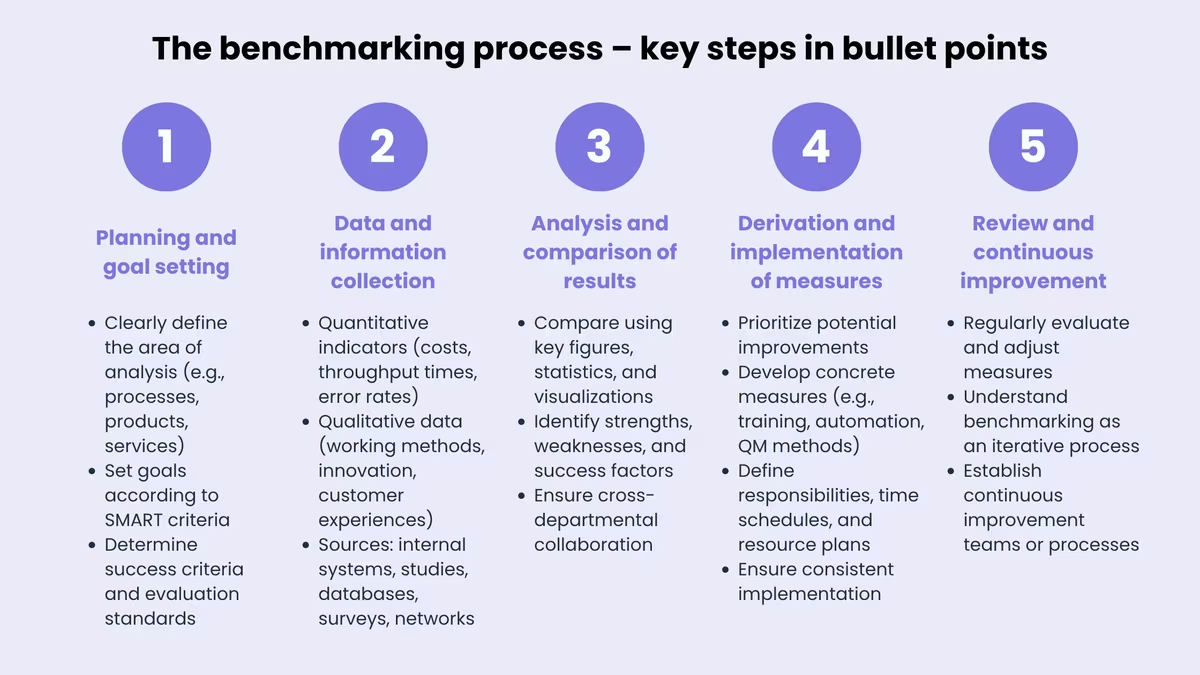
The benchmarking process in 5 steps
Planning and objectives
Benchmarking stands or falls on the basis of precise objectives. First, those responsible clearly define which areas, processes, or products are to be analyzed and what specific improvement goal is being pursued through the benchmark comparison. For example, a software company can compare the development times for new products with those of the industry leader in order to optimize time-to-market.
The definition of objectives follows the SMART principle: specific, measurable, accepted, realistic and time-bound. This is the only way to objectively evaluate the success of the project afterwards.
Data and information collection
Systematic data collection involves two levels: quantitative metrics such as cost data, lead times, or error rates, and qualitative information on work practices, the degree of innovation, or customer experiences. In many cases, data is obtained from internal ERP systems, external studies, public databases, or through direct surveys of employees and customers.
In some cases, particularly when it comes to external benchmarking, direct interaction with other companies or participation in networks is necessary.
Analysis and comparison
The collected data is then subjected to a thorough analysis. The comparison is usually carried out using key figure ratios, statistical evaluations or graphical representations such as dashboards, diagrams or tables. The aim is to make performance differences, success factors but also weaknesses in your own company transparent and to be able to compare the benchmarking. Cooperation between IT, controlling and specialist departments is essential, especially for cross-departmental processes, and often results in a high learning potential.
The analysis should be interpretable and actionable so that concrete measures can be derived in the next phase.
Derive and implement measures
Based on the results of the analysis, potential improvements are identified and prioritized in the next phase. Specific measures are then developed to help achieve the defined goals. Responsibilities as well as time and resource plans are defined for each area. If, for example, quality deficiencies become apparent in comparison to a competitor, a package of measures could be developed consisting of additional training, process automation and the introduction of new quality management methods.
It is crucial that the measures are not only developed, but also consistently implemented in accordance with the template.
Review of measures and continuous improvement
In the final step, following implementation, performance is regularly monitored, and the next cycle begins. Performance benchmarking is not a one-time project, but an iterative process.
Benchmark Analysis: Key Metrics and Methods
The most important key figures
Key financial figures
The hard financial indicators form the backbone of any benchmarking:
- Turnover
- Profit
- Return on invested capital (ROI)
Cost structures per product or process can be compared across industries and provide objective business information on performance differences. For example, an industrial company can compare its material cost ratio (MCR) with that of its competitors and leverage optimization potential through targeted negotiations with suppliers.
Financial benchmarks are particularly suitable for annual comparisons and performance trends.
Process key figures
Process indicators are key when it comes to operational excellence and efficiency. Typical process indicators are:
- The average delivery time
- Machine running times
- scrap rates or
- the time span from customer inquiry to delivery.
In the pharmaceutical industry, for example, low error rates in the manufacturing process are not only cost-relevant, but also a clear competitive factor.
Today, automation and digitalization make it possible to record process data in real time - and therefore react to deviations much more quickly.
Customer satisfaction and quality indicators
In customer-oriented sectors such as retail, services and IT, soft factors are gaining in strategic importance:
- Customer satisfaction
- the Net Promoter Score (NPS)
- Quality indicators.
Customer surveys, review sites, and social media monitoring provide valuable comparative data. Companies like Amazon and Apple set the bar in this area, as their customer experience is considered the benchmark in many industries.
Methods and tools for benchmarking
SWOT analysis
The SWOT analysis is a proven tool for assessing a company’s internal strengths and weaknesses, as well as external opportunities and threats. In the context of competitive analysis, the SWOT analysis can help identify the key success factors of competitors and partners and use them to derive specific development goals.
Many companies use the SWOT analysis to identify strategic fields of action and relevant benchmarks at an early stage.
Balanced scorecard
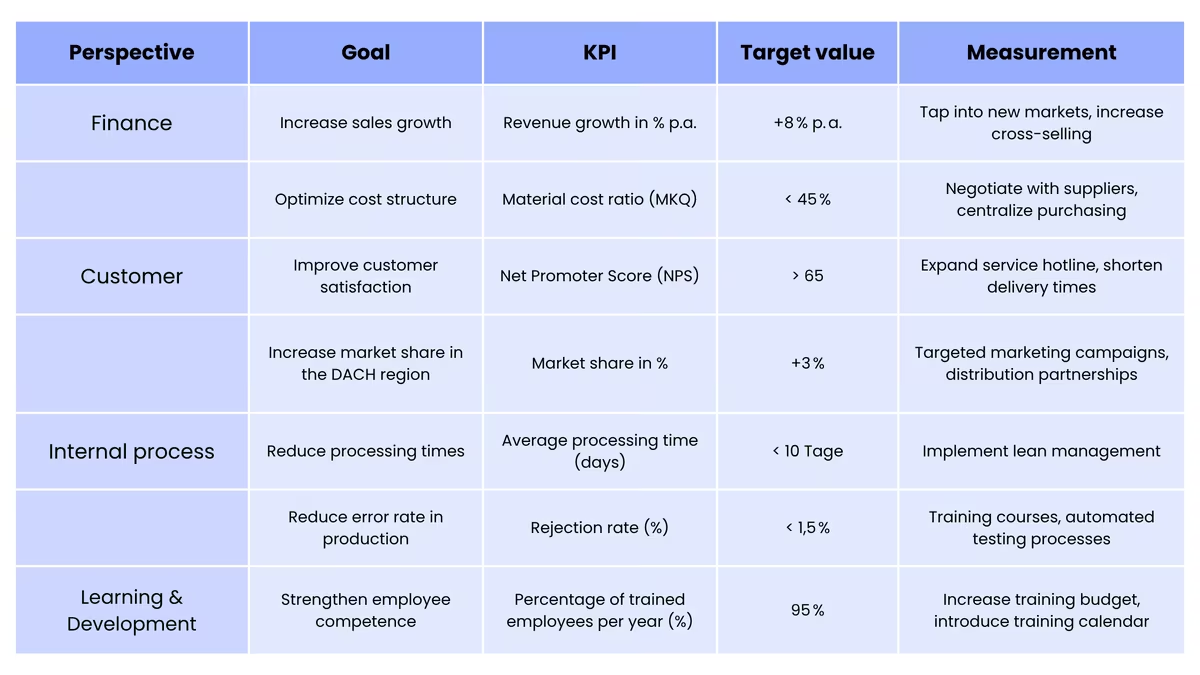
The Balanced Scorecard helps companies clearly present and link metrics from various business areas. Financial metrics, process metrics, and employee and customer satisfaction scores are considered together in the analysis to ensure a balanced assessment. In the benchmarking process, the Balanced Scorecard serves as a central dashboard for comparing a company’s own metrics with those of its competitors and for implementing targeted management actions. Benchmarking examples of the Balanced Scorecard model:
Software and Digital Platforms
Today, powerful tools make data collection, evaluation and visualization largely automatic. Proven solutions at a glance: Tableau and Power BI for internal data aggregation and visualization; Similarweb and Semrush for digital competitive benchmarking; QPR Benchmarking and APQC Open Standards Benchmarking for process-related industry comparisons. For SMEs without their own BI department, industry associations such as VDMA or IHK key figure systems offer cost-effective entry-level data.
Cloud-based platforms are indispensable, especially for international companies, as they manage data standards, methods and reporting structures centrally.
Interviews and questionnaires
Interviews and standardized questionnaires are proven qualitative methods for gathering specific process details, employee experiences or customer opinions. Particularly in internal benchmarking or in sensitive areas such as innovation culture or management styles, open discussions often provide deeper insights than pure key figure surveys.
Companies are increasingly using feedback sessions and employee surveys as an integral part of their benchmarking processes.
Challenges and risks
Missing or inaccurate data is the single greatest risk in performance benchmarking. External competitive data is often difficult to access, as companies treat their key metrics as confidential, and publicly available information is frequently strategically curated or outdated. Internal problems also arise when different departments use different definitions or measurement methods: inconsistent data directly leads to incorrect conclusions. Clear accountability for data is therefore essential. Without specifying who collects which data, how, and when, you risk analyses that are fruitless or unverifiable.
Added to this is the time factor: Data that is current at the time of collection may already be outdated by the time it is analyzed. A defined update schedule is therefore not just a nice-to-have, but a prerequisite. After all, not all relevant success factors can be captured in metrics: corporate culture, leadership style, or innovative capacity require qualitative research methods such as interviews or structured observation.
Benchmarking requires that the key figures under consideration are actually comparable. A production plant in Hamburg and a plant in Southeast Asia operate under fundamentally different cost structures, labor market conditions and regulatory frameworks - a direct comparison of key figures would be misleading. The same applies to international comparisons with different accounting standards (HGB, IFRS, US GAAP).
The recommendation: first carry out benchmarks within the same economic area and only gradually expand internationally. You can find out which specific regulatory requirements play a role here in our detailed article on the Compliance basics for companies.
Sharing performance data, process descriptions, or innovation concepts is often a sensitive matter, as it involves trade secrets or data protection regulations. Especially when it comes to competitive benchmarking, companies find themselves caught between the need to gain insights and the obligation to maintain confidentiality. Establishing trust networks, conducting anonymized data collection, or utilizing open benchmarking initiatives can help mitigate this problem. In addition, clear confidentiality agreements (NDAs) and legal framework templates should be defined to avoid misunderstandings. The use of external service providers can also help ensure neutrality and data security. It is also important that only aggregated or structured data—without any references to sensitive details—be shared. Internal training on data protection and information security promotes a consistent understanding of how to handle critical data.
Ultimately, transparency regarding the origin, use, and limitations of the data strengthens the credibility and acceptance of the process.
Benchmarking involves a considerable amount of resources. Data collection, analyses and the implementation of improvements require capacities in specialist departments, IT and management. This can lead to bottlenecks, especially in small companies. Efficient benchmarking therefore requires a realistic assessment of the effort involved from the outset, clear project plans and, if necessary, support from external consultants or tools.
The solution is not to do without, but to prioritize: start with a single process, select three to five key figures and realistically assess the effort involved from the outset.
Benchmarking for Small and Medium-Sized Enterprises
Benchmarking is often seen as a tool used by large corporations, yet small and medium-sized enterprises in particular can benefit significantly from it if it is implemented in a pragmatic way.
The biggest hurdles for SMEs are well known: limited human resources, a lack of data, and restricted access to comparable companies. These challenges are real, but they can be overcome.
Specific starting points for SMEs:
- Industry Associations as a Data Source: Associations such as the VDMA, DIHK, or industry-specific chambers provide comparative key figures that can be used without the need for an in-house data collection infrastructure, often free of charge or at a low cost.
- Start small: Instead of conducting comprehensive analyses, it’s enough to begin with three to five key metrics, such as delivery time, complaint rate, or revenue per employee. This keeps the effort manageable while still providing actionable insights.
- Use simple tools: For small and medium-sized businesses without their own BI department, Excel-based analyses or cost-effective tools like Google Looker Studio are a sensible first step before investing in specialized software.
- Leverage networks: Regional business networks or cluster initiatives often provide informal opportunities for companies of similar size to exchange experiences and key performance indicators anonymously.
The key point: For SMEs, a comparative analysis doesn’t have to be a time-consuming, large-scale project. By starting with a single process, a handful of key metrics, and a realistic benchmark, you can already gain valuable insight and lay the foundation for continuous improvement.
Best practices and trends
Integration into the corporate strategy
Benchmarking only realizes its full potential when it is viewed not as a one-time project but as an integral and ongoing part of corporate strategy. One-time data collections provide a snapshot, while regular cycles create strategic value by providing new impetus for organizational and operational improvements.
Leading companies are establishing dedicated benchmarking offices and anchoring the results directly in the strategy process.
Feedback loops and regular reviews
Continuous feedback loops are essential for the long-term success of initiatives. Successful companies regularly review the status of their improvement projects, adjust their approaches as needed, and learn from setbacks.
Modern dashboards, templates and automated reports help to identify developments at an early stage and evaluate long-term trends.
Success factors for sustainable improvement
Key factors for successful competitive analysis include an open learning culture, partners and leaders who actively support the process, and a willingness to view other companies’ best practices not as a threat but as an opportunity.
Transparent communication, training and systematic change management ensure that the knowledge gained is integrated into the company's day-to-day operations and used for sustainable improvement.
Digital benchmarking and big data
Digitalization has fundamentally changed benchmarking. Big data analyses now provide companies with huge amounts of data from which benchmarks can be generated automatically. Online retail, for example, uses real-time data on market prices, sales movements and customer preferences to adapt to changes in the competitive environment in a matter of seconds.
Digital tools enable cross-sector comparisons and open up new perspectives for increasing efficiency, market development and innovation.
AI-supported data analysis and forecasts
Artificial intelligence takes benchmarking to a new level. Algorithms identify patterns in large data sets, forecast trends and enable personalized benchmarks for individual business areas. Financial institutions use AI to compare risk profiles and key earnings figures with the market in real time. In the production environment, machine learning models enable predictive maintenance and efficiency comparisons across multiple locations.
A key advantage: AI improves with every new data point, as forecasts become more accurate and recommendations more context-specific. Natural Language Processing (NLP) also makes it possible to analyze unstructured data such as customer reviews or market reports.
It is important to remember that ethical standards and transparency in the use of AI are not limitations, but rather prerequisites for reliable results.
Global benchmarking networks and cooperations
International networks such as the “Global Benchmarking Network” enable companies to exchange data across national borders, share best practices, and establish benchmarks that transcend regional differences. For multinational corporations, these platforms enable consistent performance evaluation across national borders. At the same time, they contribute to the standardization of methods and metrics, which significantly increases the validity of the results.
Conclusion
Once you understand what benchmarking can do, you’ll quickly ask yourself: Why didn’t we start doing this sooner? The answer is usually the same: lack of time, uncertainty about how to get started, or concerns about not being able to compare data. All three of these hurdles can be overcome.
Performance benchmarking is not an end in itself, nor is it a project format that gets shelved after the final report is completed. It is a management tool that highlights performance gaps, identifies best practices, and systematically builds competitive advantages. Challenges such as data quality, comparability, and data protection can be managed through clear standards, governance, and collaborative networks. Digital tools, big data, and AI accelerate the process and increase precision.
The crucial first step is simple: choose a process, define three key metrics, identify a benchmark, and measure. What comes next will be determined by the data.
FAQ: What Does Benchmarking Mean?
Benchmarking refers to the systematic and ongoing comparison of a company’s products, processes, or performance with those of other companies, particularly industry leaders or best-practice examples. The goal is to identify a company’s own strengths and weaknesses, learn from successful approaches, and identify specific areas for improvement. Benchmarking can focus on internal areas, direct competitors, or top-performing companies outside the industry, and is a proven tool for increasing competitiveness, efficiency, and quality over the long term.
Benchmarking goes beyond a simple comparison of performance by specifically seeking out the causes of performance differences and identifying best practices. While a conventional comparison assesses the current state, the comparison of key performance indicators is geared toward continuous improvement and the adoption of successful methods used by other companies.
This depends on the industry, company size and objectives. The basic rule is an annual cycle for strategic benchmarks. In dynamic markets such as e-commerce or software, a quarterly or ongoing comparison can be useful.
Benchmarking offers advantages for all companies, regardless of size or sector. Organizations that are open to change, have a strong learning culture and are specifically looking for growth and optimization potential benefit in particular.
The most common pitfalls are incorrect data collection, a lack of comparability of key figures and inadequate handling of confidential information. A professionally set up process with clear rules, uniform standards and high data quality makes these risks manageable.
Corporate culture is crucial to the acceptance and implementation of results. An open culture that embraces learning promotes the exchange of knowledge, the adoption of best practices, and the motivation to continuously improve. Managers should actively support benchmarking and involve all employees in the improvement process.

Matthias Klein
LinkedInESG compliance expert - lawcode GmbH
Matthias Klein advises companies on the implementation of supply chain laws such as the CSDDD and supports the implementation of digital solutions for legally compliant supply chains. His specialist articles on the lawcode blog combine regulatory depth with practical recommendations for action.