
 DE
DE
Important facts
- What does compliance mean and what exactly does it involve?
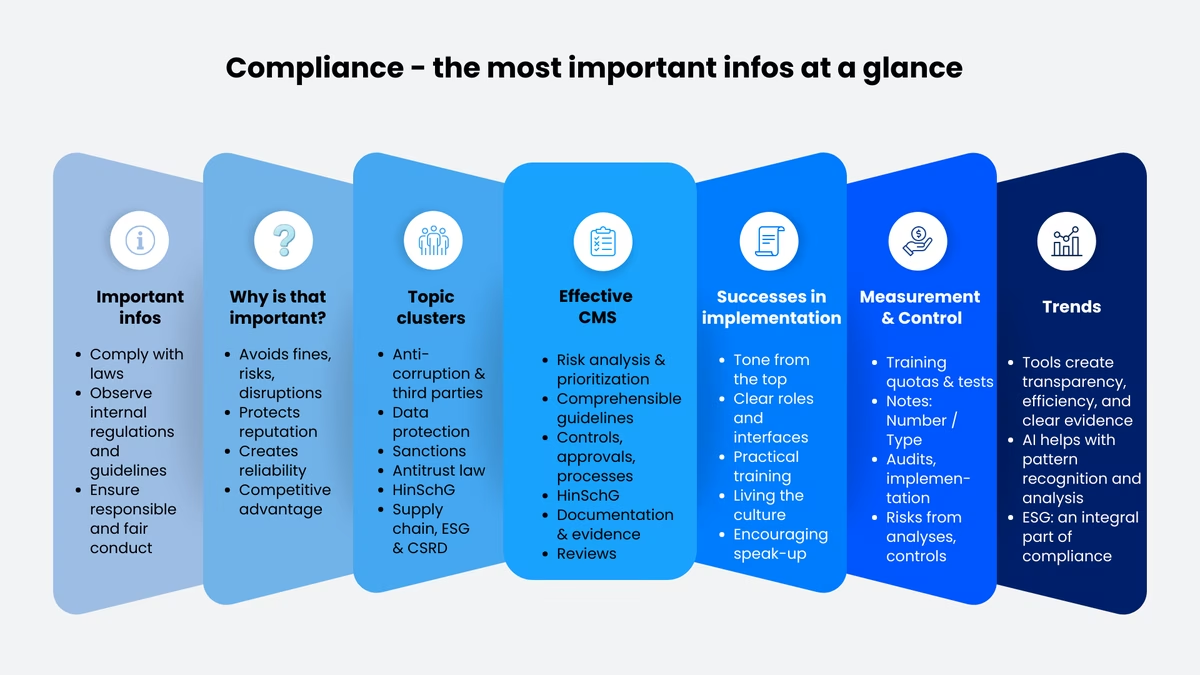
- Compliance means that a company reliably adheres to laws, observes internal rules and acts responsibly. This includes, for example, anti-corruption, data protection, whistleblower systems and ESG issues.
- Why is compliance a real success factor for companies today?
- Effective compliance avoids fines, liability risks and reputational damage. At the same time, it strengthens the trust of customers, investors and employees.
- Which typical risks occur most frequently and how can they be prevented?
- Typical risks include corruption, data protection violations, illegal competition agreements and gaps in the supply chain. Clear rules, training and secure reporting channels prevent this.
- How do you set up an effective compliance management system?
- A CMS starts with a risk analysis and clear responsibilities. There are also rules, controls, training and continuous improvement.
- How can you tell if compliance is really working?
- In key figures such as training rates, audit results and processing times for reports. Regular reviews and documented measures prove this to the outside world.
Abstract
Today, compliance means more than just adhering to rules: It's about fulfilling laws, observing internal guidelines and acting responsibly. Good compliance reduces risks, strengthens trust and can create a real competitive advantage.
The most important topics are anti-corruption, data protection, money laundering prevention, antitrust law, whistleblower systems, supply chain and sustainability. An effective compliance management system (CMS) is based on a solid risk analysis and combines clear guidelines, controls, training and secure reporting channels.
Clear responsibilities, a credible attitude at management level and an active compliance culture are crucial for success. Key figures such as training rates, audit results and the processing of reports show whether the system really works.
Digital tools and AI make processes more efficient, but do not replace responsibility. ESG requirements are increasingly becoming part of modern compliance programs and require clear responsibilities and reliable data.
Definition, objectives and benefits
What does compliance mean?
Compliance basically means "adherence to rules": A company consistently adheres to specifications on three levels: Laws, internal rules (e.g. guidelines, processes, code of conduct) and ethical standards. It is crucial that employees and managers know on a day-to-day basis what is permitted, what is not and how to make safe decisions in gray areas.
Important: Compliance is not just "having rules", but also ensuring that they work. This includes practical components such as clear guidelines, training, controls, reporting channels and a procedure if something goes wrong. The aim is to prevent misconduct as far as possible, to identify risks at an early stage and to react clearly and comprehensibly in the event of an emergency before major damage occurs. In short: compliance is the system that ensures that a company acts in a legally correct, transparent and responsible manner.
Why compliance is a success factor today
The topic of compliance has become much more important in recent years. Not because companies need more bureaucracy, but because violations are now noticed more quickly and often become expensive. Legal requirements are becoming more complex, reporting obligations are increasing and topics such as data protection, the supply chain, discrimination and corruption are coming under greater scrutiny. This is being observed not only by the authorities, but also by customers, business partners and employees.
What companies gain from good compliance:
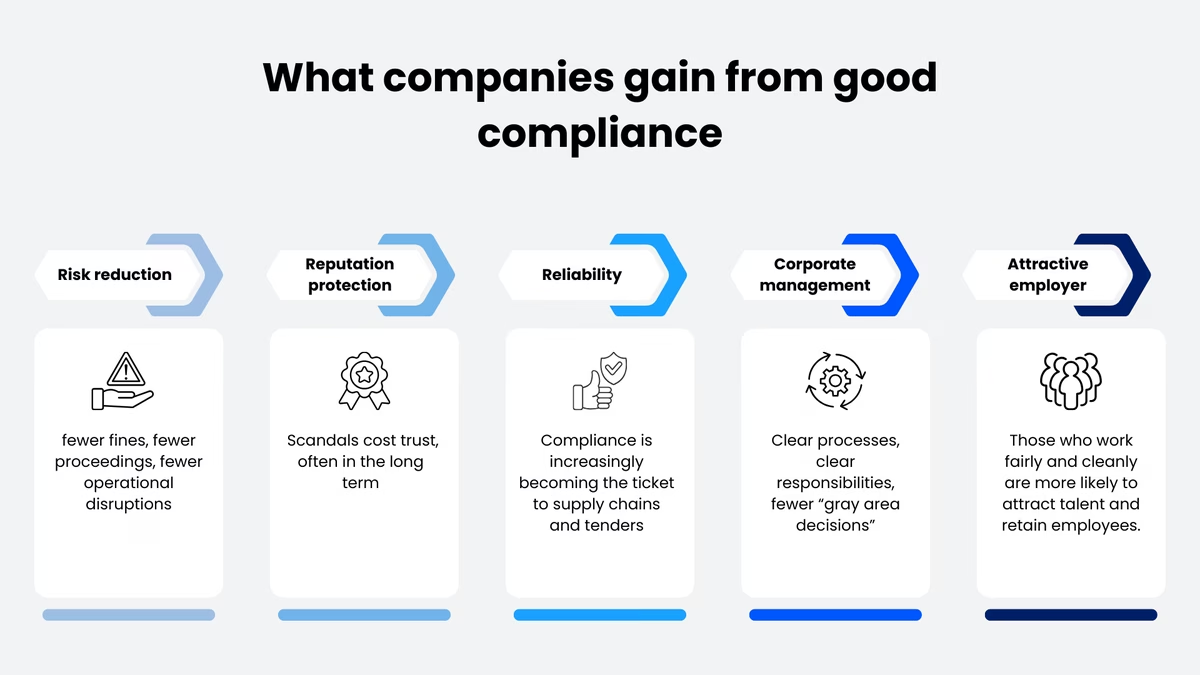
- Risk reduction: fewer fines, fewer proceedings, fewer operational disruptions
- Protecting reputation and brand: scandals cost trust, often in the long term
- Reliability towards partners and customers: Compliance is increasingly becoming an entry ticket in supply chains and tenders
- Better control within the company: clear processes, clear responsibilities, fewer "gray area decisions"
- Attractiveness as an employer: those who work fairly and cleanly are more likely to attract talent and retain employees
The bottom line is that compliance is not only a safeguard against risks, but also a competitive factor: companies that visibly practise compliance and integrity appear more stable, professional and trustworthy, both internally and externally.
Compliance vs. ethics vs. governance: what belongs where?
The terms are often used together and are closely related. Nevertheless, it is worth making a clear distinction because each topic has a different focus:
Compliance focuses on: Adhering to legal regulations (laws, internal guidelines, standards) and controlling risks. Examples: Anti-corruption rules, data protection processes, whistleblower system, training certificates, controls.
Ethics focuses on: Values and attitude, i.e. what is "right" even if there is no clear rule. Examples: fair treatment, respectful leadership, responsible decisions in gray areas.
Governance focuses on: structures and responsibilities that control and monitor how the company is managed. Examples: Roles, responsibilities, reporting lines, supervision/advisory board, risk and control systems.
You can remember it like this:
→ Governance creates the framework (Who decides? Who controls?)
→ Compliance ensures conformity with rules (How do we ensure compliance?)
→ Ethics provides guidance on attitudes and gray areas (What do we stand for and how do we act?)
When these three areas work well together, the result is a company that is not only "formally correct", but also reliable, responsible and stable in the long term.
What is compliance? The most important topics
Compliance is not a single set of rules, but a bundle of topics that are weighted differently depending on the industry, size and business model. Some areas affect almost every company, others are industry-specific. The decisive factor is always a risk-based approach: which topics are particularly relevant for my company and where is the potential for damage greatest? In the following, we have listed the central topics that are almost always part of a structured compliance organization in practice.
Subject areas
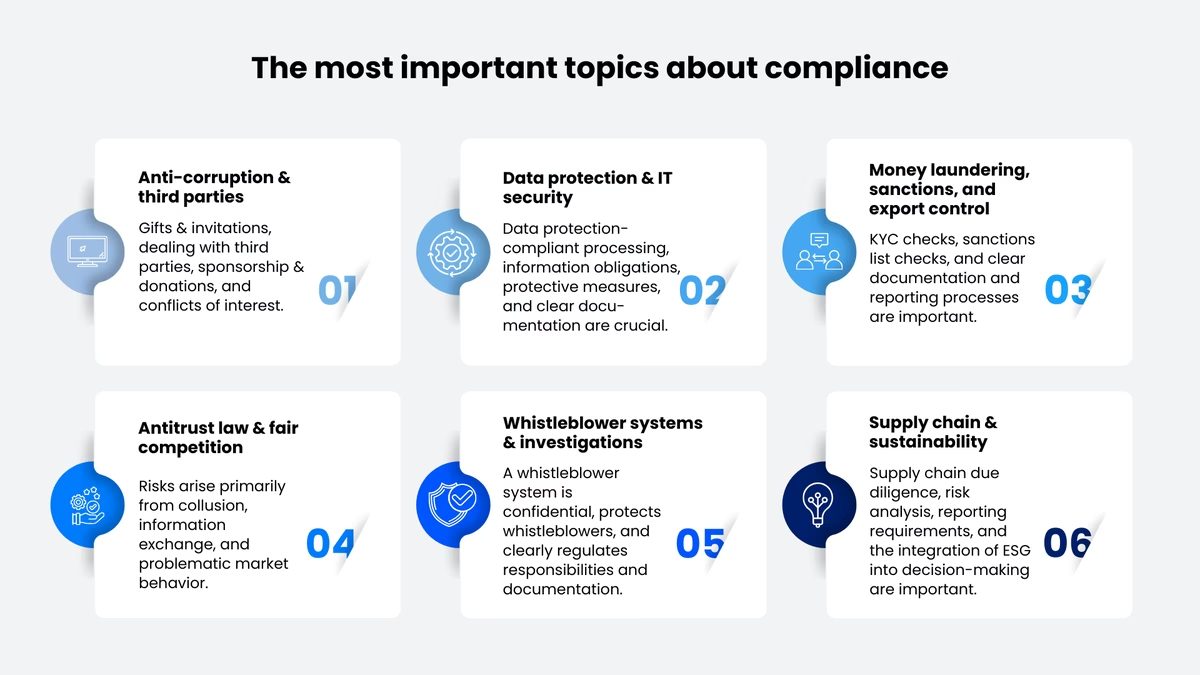
Preventing corruption is one of the classic core areas of compliance. It is not only about obvious bribery, but also about everyday situations such as gifts, invitations or sponsorship.
Typical risk areas:
- Acceptance or granting of gifts and invitations
- Dealing with intermediaries, consultants or commercial agents
- Sponsorship and donation decisions
- Conflicts of interest among decision-makers
Third parties pose a particular risk. Many cases of corruption do not arise directly within the company, but through business partners. Structured review processes (third party due diligence) are therefore important, e.g:
- Identity and background checks
- Comparison with sanctions lists
- Risk assessment before concluding a contract
- Documented approval processes
The aim is to create clear rules and ensure transparency. Not to distrust every business relationship, but to make risks controllable.
Data protection is no longer a specialist topic, but affects almost every company. The GDPR affects many areas, from HR, sales and marketing to IT and management.
Key aspects are:
- Legally compliant processing of personal data
- Transparent information obligations
- Technical and organizational protective measures
- Access restrictions according to the "need-to-know" principle
- Documentation of processing activities
In addition to data protection, information security is also becoming increasingly important. Cyber attacks, data leaks or poorly secured access can not only result in fines, but can also severely damage a company's reputation.
An effective compliance system therefore combines:
- legal requirements (e.g. GDPR),
- IT security measures,
- clear responsibilities,
- Training on the secure handling of data.
Depending on the industry, money laundering prevention, sanctions lists and export controls play a key role, particularly in the financial sector, international trade or complex supply chains.
Important topics are:
- Identification of business partners (Know Your Customer, KYC)
- Verification of beneficial owners
- Comparison with international sanctions lists
- Documentation and reporting obligations
- Compliance with foreign trade regulations
If audit processes are lacking, the consequences can quickly become serious, ranging from fines to criminal investigations. This is why clear processes for partner auditing and transaction monitoring are important, especially for international transactions.
Antitrust violations are among the most financially risky compliance offenses. Price fixing, market sharing or unauthorized exchange of information can result in high penalties.
Risk areas in everyday life are, for example:
- Exchange of sensitive information with competitors
- Agreements within the framework of industry associations
- Agreements with suppliers or sales partners
- Market behavior in tenders
Many violations do not happen on purpose, but because there is a lack of knowledge or because "that's just how it's done" is considered industry practice. This is precisely why targeted training is important, especially for sales, purchasing and management. A clearly communicated zero-tolerance principle in antitrust law also sends a clear signal, both internally and externally.
An effective compliance system needs secure reporting channels. The Whistleblower Protection Act (HinSchG) obliges many companies to set up internal reporting offices.
A functioning whistleblower system should:
- be confidential and can be used anonymously if required
- contain clearly defined responsibilities
- Ensuring protection from reprisals
- Provide for structured examination processes
- Document results
It is not only the technical solution that is important, but also the culture behind it. Employees must be able to trust that reports will be taken seriously and investigated fairly. In addition to the report itself, case management is also crucial: How are reports assessed? Who carries out investigations? How is it documented? What measures follow?
Sustainability is now an integral part of compliance issues. Human rights, environmental standards and transparency in the supply chain are being demanded much more strongly by legislators, investors and the public.
Relevant aspects include:
- Due diligence obligations in the supply chain
- Risk analyses on human rights and environmental violations
- Documentation and reporting obligations
- Integration of ESG criteria into business decisions
Regulations such as the Supply Chain Sustainability Act (LkSG ) or European reporting obligations (e.g. CSRD) show that compliance and sustainability are increasingly merging. Companies therefore not only need to keep an eye on their own processes, but also on their suppliers:
- Rate suppliers,
- Document risks,
- Define preventive and remedial measures,
- Creating external transparency.
Today, compliance no longer ends at the company's own borders - it extends along the entire value chain.
Legal framework & requirements
Compliance never operates in a vacuum. It is based on legal principles that are made up of national laws, European requirements, international standards and industry-specific regulations. For companies, this means that they do not need to know every detail by heart, but they do need a structured overview of which requirements are actually relevant to their business model.
Relevant laws & standards
Different sets of rules apply depending on the size, legal form and international nature of the company. The following levels typically play a role:
National requirements (Germany):
- Administrative Offenses Act (§ 130 OWiG - supervisory duties)
- General Data Protection Regulation(GDPR) and Federal Data Protection Act
- Money Laundering Act(GwG)
- German Stock Corporation Act (Section 91 (2) AktG - risk management obligation)
- Whistleblower Protection Act(HinSchG)
- Supply Chain Due Diligence Act(LkSG)
European regulations:
- EU money laundering directives
- EU Whistleblower Directive
- Corporate Sustainability Reporting Directive(CSRD)
- EU AI Act (for AI-related compliance issues)
International requirements (relevant for foreign transactions):
- Foreign Corrupt Practices Act (USA)
- UK Bribery Act (Great Britain)
- Sanctions and export control regulations
In addition, there are standards that are not legally binding but are relevant in practice, for example:
- German Corporate Governance Code (DCGK)
- ISO 37301 (compliance management systems)
- ISO 37001 (anti-corruption)
It is important to note that companies do not have to implement "everything", but rather identify the regulations that apply to them. Particularly in the case of international activities, foreign laws can also apply even if the company is based in Germany.
Never miss an update on compliance again.
New specialist articles, regulatory updates and practical tips, straight to your inbox. Once a week, no spam.
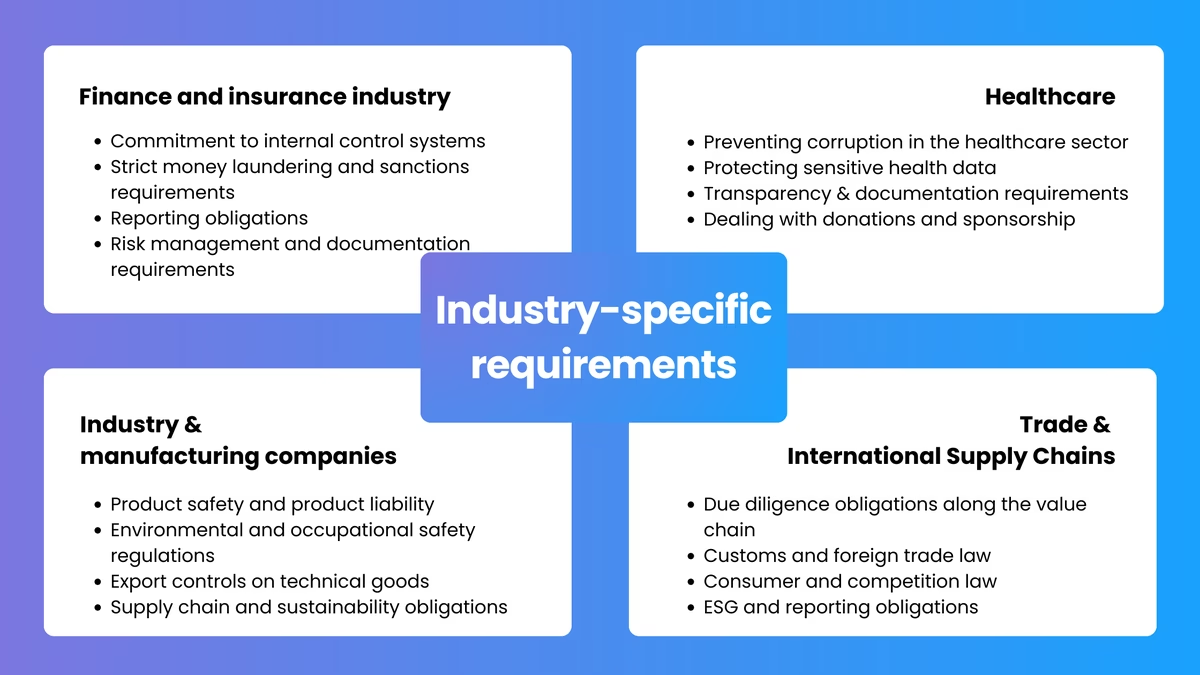
Sector specifics: Finance, Health, Industry, Trade
The legal framework differs significantly depending on the sector. While basic obligations apply to everyone, certain sectors are particularly heavily regulated.
Finance and insurance industry
- Commitment to internal control systems with compliance function
- Strict money laundering and sanctions regulations
- Reporting obligations to supervisory authorities
- Requirements for risk management and documentation
Healthcare
- Preventing corruption in the healthcare sector
- Data protection of sensitive health data
- Transparency and documentation obligations
- Dealing with donations and sponsoring
Industry & manufacturing companies
- Product safety and product liability
- Environmental and occupational safety regulations
- Export controls for technical goods
- Supply chain and sustainability obligations
Trade & international supply chains
- Due diligence obligations along the value chain
- Customs and foreign trade law
- Consumer and competition law
- ESG and reporting obligations
The challenge is to dovetail industry-specific risks with general compliance requirements. A mechanical engineering company has different risk areas than a financial services provider, but both need a functioning system.
What "appropriate" means: risk-based approach & proportionality
A central concept in the compliance context is "appropriateness". As a rule, laws do not require a perfect system, but an appropriate and effective one. What does this mean in concrete terms?
A compliance system must:
- be tailored to the size of the company
- take into account the actual risk areas
- be organizationally viable
- are regularly reviewed and adjusted
The principle behind this is the risk-based approach. Companies should:
- Identify risks
- Evaluate probability of occurrence and extent of damage
- Set priorities
- Define measures
- Check effectiveness
A medium-sized company does not need the same system as a global corporation. The decisive factor is that the measures are comprehensible, documented and proportionate. The principle of proportionality helps small and medium-sized companies in particular: They do not have to set up an oversized compliance system. Nevertheless, they should carefully examine their risks and introduce appropriate measures.
The legal framework provides guidelines. How a company actually fills these out depends on its industry, size, internationality and risk profile. A systematic approach and documentation of the risk-based approach creates a solid foundation for effective compliance management.
Establishing a compliance management system (CMS)
A compliance management system (CMS) is the organizational foundation of your compliance work. It ensures that rules are not observed haphazardly, but are structured, comprehensible and permanent. A good CMS is not an end in itself. It helps to systematically manage risks, clarify responsibilities and, in an emergency, to be able to prove that the company has taken its obligations seriously.
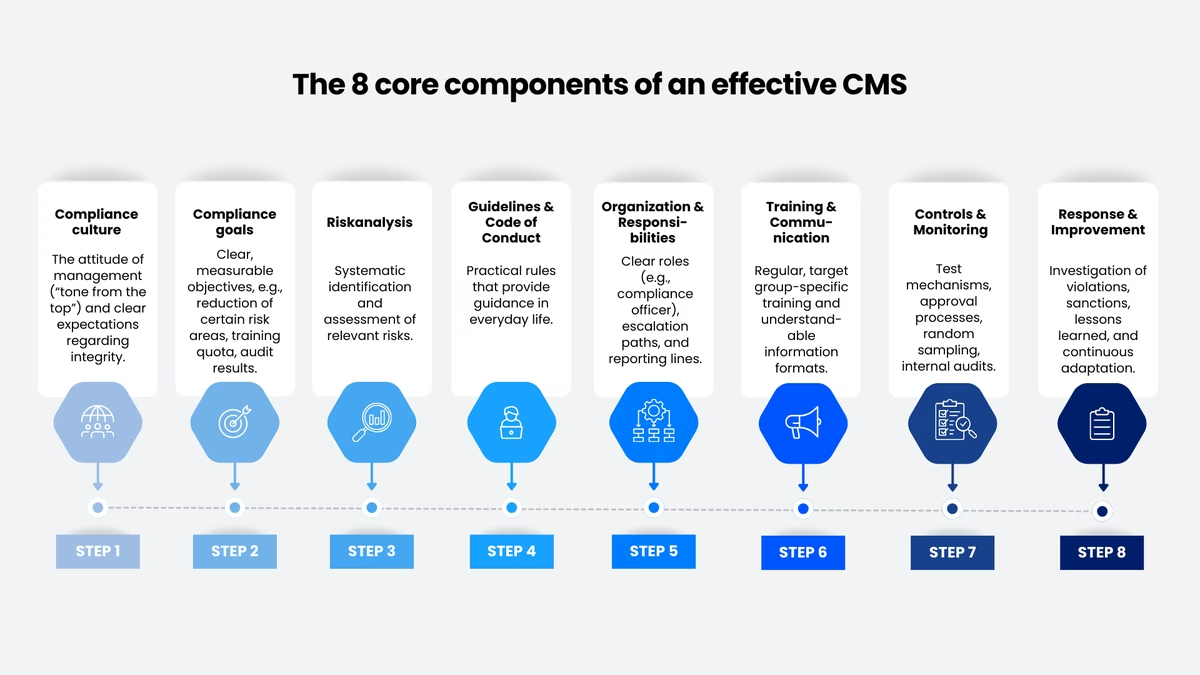
The 8 core building blocks of an effective CMS
In practice and standards (e.g. ISO models, governance recommendations), similar core elements appear again and again. An effective CMS typically comprises the following components:
- Compliance culture: The attitude of management ("tone from the top") and clear expectations of integrity.
- Compliance targets: Clear, measurable objectives, e.g. reduction of certain risk areas, training rate, audit results.
- Risk analysis: Systematic identification and assessment of relevant risks.
- Guidelines & Code of Conduct: Practical rules that provide orientation in everyday life.
- Organization & responsibilities: Clear roles (e.g. compliance officer), escalation channels and reporting lines.
- Training & communication: Regular, target group-specific training and comprehensible information formats.
- Controls & monitoring: inspection mechanisms, approval processes, spot checks, internal audits.
- Response & improvement: Investigation of violations, sanctions, lessons learned and continuous adaptation.
These building blocks interlock. If one is missing, the system is incomplete. Would you like to find out more about lawcode's Compliance Management System? The CMS makes it easy to manage guidelines, policies and training in a single system.
Risk analysis: How to identify and prioritize risks
Risk analysis forms the foundation of any effective compliance management system. The aim is to recognize at an early stage where the company is particularly vulnerable. This is not about theoretical dangers, but about specific business practices: which industry, which markets, which third parties are affected? Internal aspects such as payment flows, approval processes or the handling of sensitive data are also included.
In the next step, the risks are assessed and prioritized. Two questions are crucial: how likely is a breach and how great would the damage be, financially, legally or reputationally? Critical risks are prioritized, while others can be addressed with less costly measures. This risk-based approach ensures that resources are deployed in a targeted manner.
Suitable measures are then defined on this basis: Adapt guidelines, introduce controls, carry out training or technically safeguard processes. Equally important is the proper documentation of the risk analysis, which protects against liability in the event of an emergency and shows auditors and authorities that the company has its risks under control in a structured manner.
Guidelines & Code of Conduct: from "paper" to practice
Many listed and unlisted companies have policies, but not every policy works.
For regulations to work in everyday life, they should:
- be formulated in an understandable way (no unnecessary legal phrases)
- contain concrete examples
- Designate clear responsibilities
- be easily accessible for employees
- be updated regularly
A Code of Conduct serves as an overarching orientation framework. It bundles the basic values and most important rules of conduct and makes expectations transparent, both internally and externally.
What counts in the end is not whether rules are written somewhere, but whether they are actually applied in everyday life. This requires managers who clearly communicate what is expected and set a good example themselves. Training should also be practical: it should address typical everyday situations and provide concrete help so that employees can make decisions and act with confidence.
It is helpful to think about compliance right from the start, for example during onboarding. In this way, new employees understand early on which standards apply and what they mean in everyday life. It is also effective if compliance is also incorporated into targets and assessments, making it clear that compliant behavior is not an "extra". Only when employees see the practical relevance to their own work does paper compliance become lived practice.
Controls, approvals & processes
A compliance management system only works reliably if rules are backed up by appropriate processes. In practice, this means that important decisions are based on the principle of dual control, sensitive topics such as gifts or sponsorship are subject to clear approval processes and new business partners are checked in a structured manner. Technical measures such as regulated access rights, spot checks and internal audits complement the system.
The right balance is crucial: too many control steps make processes cumbersome, too few create gaps. Digital solutions, such as automated approval workflows or standardized documentation, help to reduce effort and ensure traceability at the same time.
Documentation & evidence: What you really need
A functioning CMS must be verifiable. Particularly in the event of liability or audits by the authorities, it is not just what has been done that counts, but whether it can be proven.
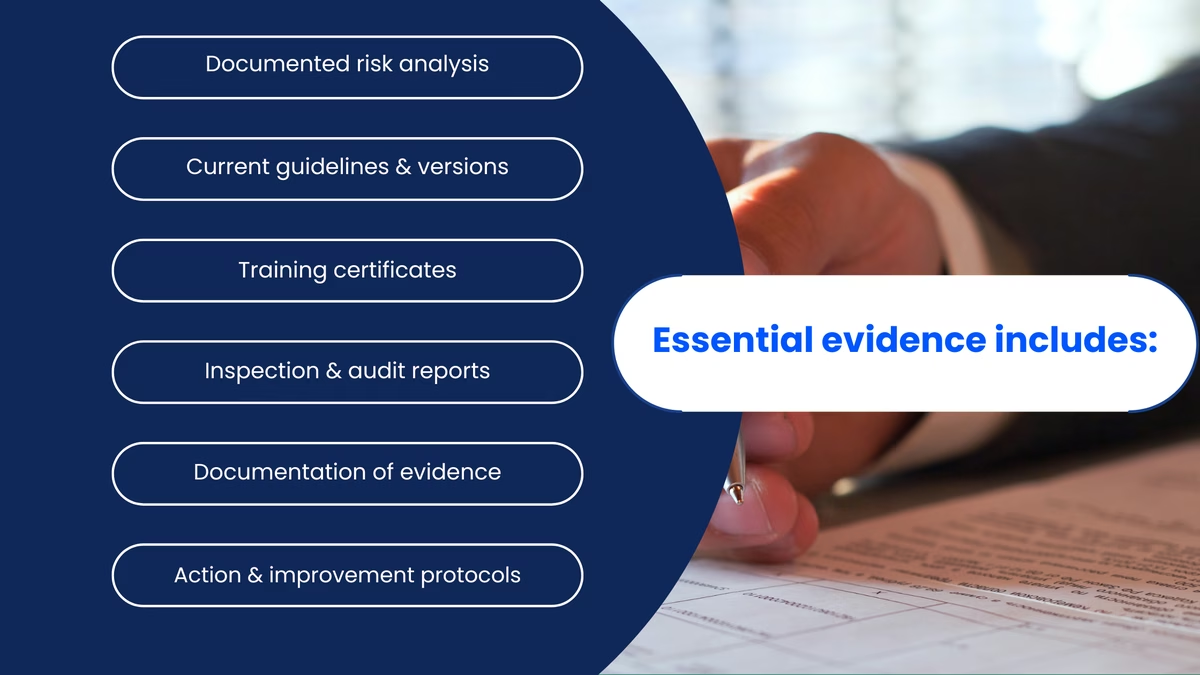
Essential proofs are:
- Documented risk analysis
- Current guidelines & versioning
- Training certificates
- Protocols of controls & audits
- Documentation of information and investigations
- Action and improvement protocols
Important: Documentation should be structured, audit-proof and traceable, but not get out of hand. The aim is transparency, not bureaucracy.
A compliance management system is not a project with an end date, but is ongoing. Those who regularly review risks, define clear rules, introduce effective controls and document everything properly create a stable basis for legally compliant and responsible action.
An effective compliance system depends not only on rules and processes, but also on responsibilities
Roles and responsibilities: Who does what?
Overall responsibility for compliance lies with the Executive Board. This responsibility cannot be fully delegated. Even if operational tasks are delegated to compliance officers or specialist departments, the management is still obliged to set up an appropriate system and monitor its effectiveness.
The decisive factor here is the so-called "tone from the top". This refers to the attitude that managers exemplify. If compliance is only treated as a formal obligation, employees will feel it immediately. If, on the other hand, integrity is visibly demanded and exemplified, this has a lasting impact on the corporate culture.
The role of the management includes in particular
- Definition of the compliance strategy and objectives
- Provision of sufficient resources (budget, personnel, tools)
- Clear communication of expectations to managers and employees
- Regular review of the effectiveness of the compliance system
- consistent action in the event of violations, regardless of hierarchy or function
Compliance starts at the top. Without credible leadership, any set of rules is ineffective.
In practice, compliance is a cross-sectional task. Different functions work together, often with different perspectives and focuses. It is important that roles are clearly defined and interfaces function smoothly.
Typical roles at a glance:
Compliance Officer / Compliance Department
- Coordination of the compliance program
- Carrying out risk analyses
- Advice on specific issues
- Organisation of trainings
- Investigation of indications
- Reporting to management or supervisory body
Legal (legal department)
- Legal assessment of facts
- Interpretation of laws and regulatory requirements
- Support with internal investigations
- Assistance with official procedures
HR
- Integration of compliance in employment contracts and guidelines
- Organisation of trainings
- Accompanying labor law measures in the event of violations
- Anchoring compliance in target and appraisal systems
Finance
- Controls in payment transactions
- Implementation of money laundering and sanctions checks
- Participation in internal control systems
IT
- Technical access controls
- IT security measures
- Support with data protection and cybersecurity issues
- Ensuring audit-proof documentation
It is important that the individual functions do not work in isolation. Regular communication, clear escalation channels and distributed responsibilities are therefore essential. Important: Compliance is teamwork that requires clear leadership and coordination.
Compliance is not just a task for the compliance or legal department, but affects the everyday lives of all employees. Each person is responsible for knowing the relevant rules in their own area of work, applying them and asking questions if they are unsure. This also includes reporting anomalies or possible violations via the designated channels and complying with the necessary approvals and documentation requirements.
Managers have a special responsibility here because they communicate expectations clearly, provide guidance and show through their behavior that compliance is taken seriously. For this to work, an environment is needed in which questions are expressly permitted and information is treated fairly and confidentially; only then will risks become visible early on and can be properly resolved.
Training courses: Compliance in everyday life
A set of rules alone does not make compliance. It is crucial that employees understand why rules exist and what they actually mean in their day-to-day work. This is precisely where training and awareness measures come in.
In principle, many violations are not caused by malicious intent. For example, ignorance, uncertainty or time pressure can be cited as the reason for a breach. Good training is particularly important to create clarity, provide orientation and strengthen confidence in action. They also serve as important proof that the company is fulfilling its organizational and supervisory duties.
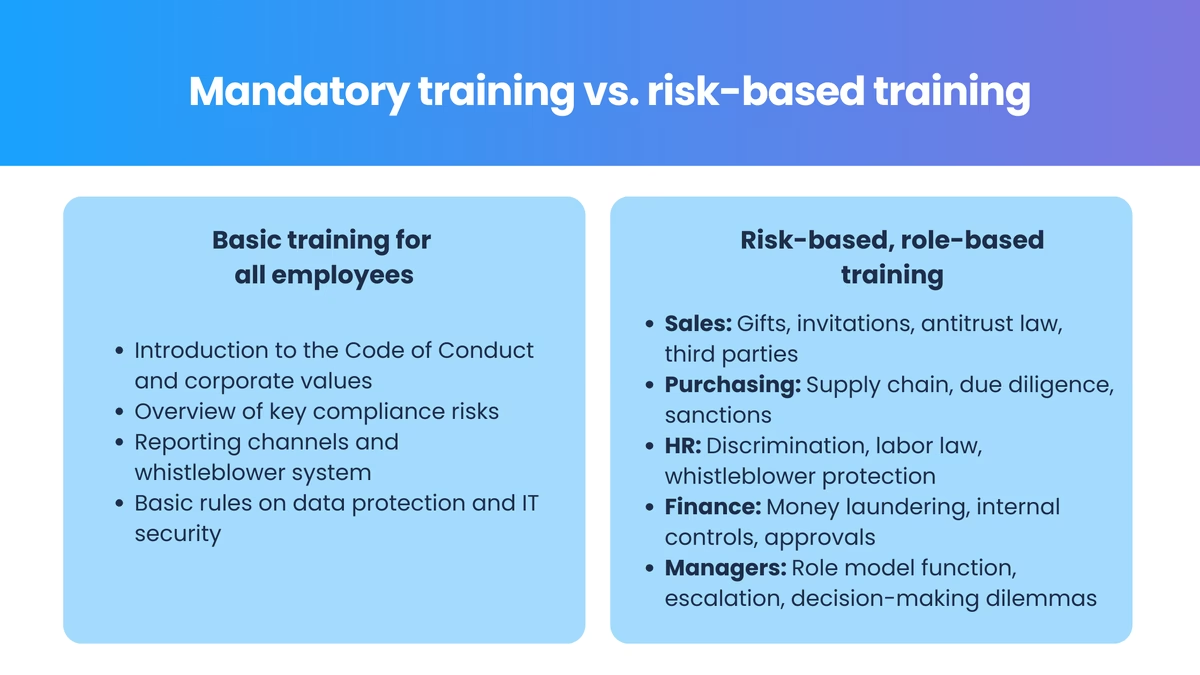
Compulsory training vs. risk-based training
Many companies have traditional mandatory training courses, for example on data protection, corruption prevention or occupational health and safety. This basis is important, but is often not enough.
A modern training concept combines two levels:
Basic training for all employees
- Introduction to the Code of Conduct and corporate values
- Overview of key compliance risks
- Reporting channels and whistleblower system
- Basic rules on data protection and IT security
Risk-based, role-related training
- Distribution: gifts, invitations, antitrust law, third parties
- Purchasing: supply chain, due diligence obligations, sanctions
- HR: Discrimination, labor law, whistleblower protection
- Finance: money laundering, internal controls, approvals
- Managers: role model function, escalation, decision-making dilemmas
The higher the risk of a role, the more intensive and specific the training should be. This risk-based approach also corresponds to the basic principle of an effective compliance management system: resources are deployed where the risk potential is greatest.
Making training effective
Compliance training is often perceived as a chore. Especially when the content remains abstract and has no connection to everyday life. Training is only effective if it is practical and interactive.
Proven elements:
- Case studies from practice: Concrete case studies (e.g. accepting gifts, data leaks, conflicts of interest) help to make gray areas tangible.
- Dilemma situations: Instead of "right or wrong": decision questions with several justifiable options promote reflection.
- Microlearning: Short, compact learning units of 5-10 minutes increase absorption capacity and are easier to integrate into everyday working life.
- Nudges in everyday life: Small reminders, checklists or digital notifications before critical processes (e.g. approval of invitations) support compliant behavior at exactly the right moment.
- Managers as multipliers: When managers actively take up content and discuss it in the team, the relevance increases significantly.
The decisive factor is that compliance must not only be understood as "communicating rules", but also as providing support in difficult decisions.
Verifiability: documentation, tests, participation rates
In addition to the quality of the content, verifiability plays a key role. In the event of an emergency, such as an official audit or internal investigation, a company must be able to demonstrate that it has trained its employees appropriately.
Important elements of the documentation:
- Participation rates and reminder mechanisms
- Timing and content of the training courses
- Test results or knowledge queries
- Repetition training at defined intervals
- Special training for high-risk areas
Digital learning platforms make documentation much easier. They send automatic reminders, assign training courses according to role and create comprehensible, audit-proof reports. Nevertheless, a high participation rate alone does not mean that the training is really effective.
It therefore makes sense to supplement this with:
→ short knowledge tests
→ feedback queries
→ evaluation of incidents (were there typical errors despite training?)
→ regular updating of content
Ultimately, good compliance training is not a one-off project, but a continuous process. They create orientation, strengthen a sense of responsibility and help to ensure that compliance is not perceived as an instrument of control, but as a natural part of professional conduct.
Risks, violations and consequences
Compliance is not a theoretical topic. Violations happen every day, in large corporations as well as in SMEs. It is often small decisions in everyday working life that can have major consequences. It is therefore important to be familiar with typical risk constellations, to realistically assess the possible consequences and to draw the right conclusions from known cases.
It is striking that many of these violations occur where processes are unclear or managers do not act consistently.
Most violations occur insidiously.
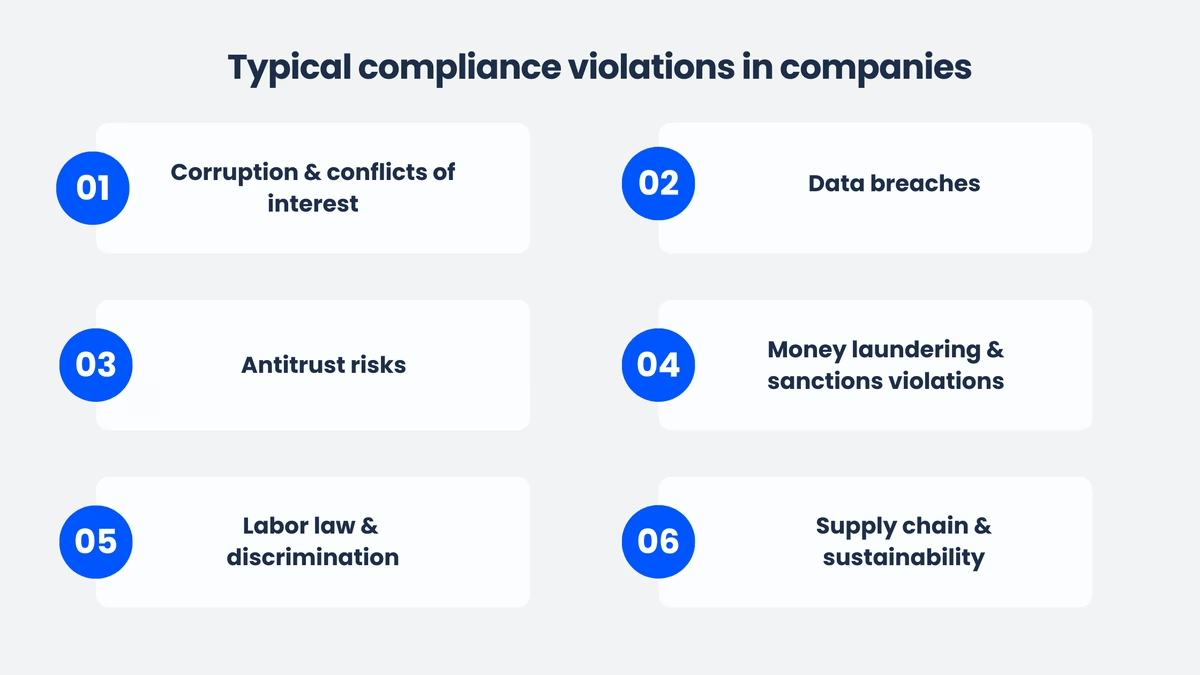
Typical compliance violations in the company
- A sales employee regularly invites a customer to expensive events - without an approval process.
- A purchaser places orders with a company in which a relative has an interest.
- Personal data is sent unencrypted by e-mail.
- Customer data is stored for longer than permitted.
- Access rights are too broad ("everyone can see everything").
- Informal exchange with competitors about prices or market strategies.
- Arrangements for tenders.
- Business partners are not sufficiently checked (lack of due diligence).
- Payments to sanctioned persons or countries.
- Unequal treatment in promotions.
- Tolerance of inappropriate behavior in the team.
- No review of human rights or environmental standards at suppliers.
- Lack of documentation of due diligence obligations.
Consequences: financial, legal, reputational, organizational
The consequences of non-compliance rarely end with a single fine. Violations often result in further problems that keep the company busy for a long time. In addition to penalties, such as for data protection violations, there may also be claims for damages, costs for lawyers and internal investigations as well as lost sales due to lost orders.
Depending on the case, there may be legal investigations and proceedings. In serious cases, the personal liability of management or executives can also play a role. Companies also run the risk of being excluded from public tenders.
The consequences for reputation are particularly sensitive. Negative headlines, less trust from customers, partners or investors and a declining attractiveness as an employer often have a faster and longer-lasting effect than any fine. There is also usually a lot of organizational effort involved: processes are tightened up, controls are tightened, responsibilities are redistributed or external bodies take a closer look. The problem is that trust that has grown over the years can be lost in a short space of time.
Lessons learned and what companies should derive from them
Well-known corporate scandals, whether accounting fraud, corruption cases or data protection breaches, show similar patterns time and again.
Typical causes are
→ Lack of "tone from the top"
→ Pressure to achieve short-term targets
→ Weak internal controls
→ Ignored warning signals
→ No functioning whistleblower systems
What companies should learn from this:
- Culture beats rules: Paper doesn't help if managers don't set an example.
- Take early indications seriously: Small irregularities can indicate structural problems.
- Prioritize based on risk: Not every risk is equally critical - resources must be deployed in a targeted manner.
- Documentation is protection: verifiable preventive measures can mitigate penalties in an emergency.
- Transparency reduces damage: Open and structured handling of incidents can limit reputational damage.
Ultimately, compliance is not just a control function, but a protective mechanism for the company. Those who recognize risks early on, consistently address violations and learn from mistakes strengthen stability, trust and competitiveness in the long term.
Corporate culture & ethics
Compliance does not stand or fall with guidelines, but with the culture. Processes can be set up, policies can be sent out. But whether they are actually put into practice on a day-to-day basis is decided on a completely different level: in terms of attitude, leadership and behavior in daily interactions. A strong compliance culture is therefore not a "soft issue", but a real effectiveness factor.
Why culture determines effectiveness
Many compliance violations do not occur because rules are missing, but because they are ignored, relativized or circumvented. This is precisely where corporate culture comes into play.
influenced by culture:
- how openly risks are discussed
- whether employees ask about uncertainties
- How managers deal with conflicting goals
- whether rule violations are tolerated or consistently addressed
If sales targets seem more important than integrity, even the best rules are of little help. If, on the other hand, managers make it clear that compliance has priority, even if this is inconvenient in the short term, this has a noticeable impact on day-to-day decisions.
A values-based culture ensures that employees not only know what is permitted, but also understand why it is important. Compliance is then not perceived as control, but as guidance.
How to build a compliance culture
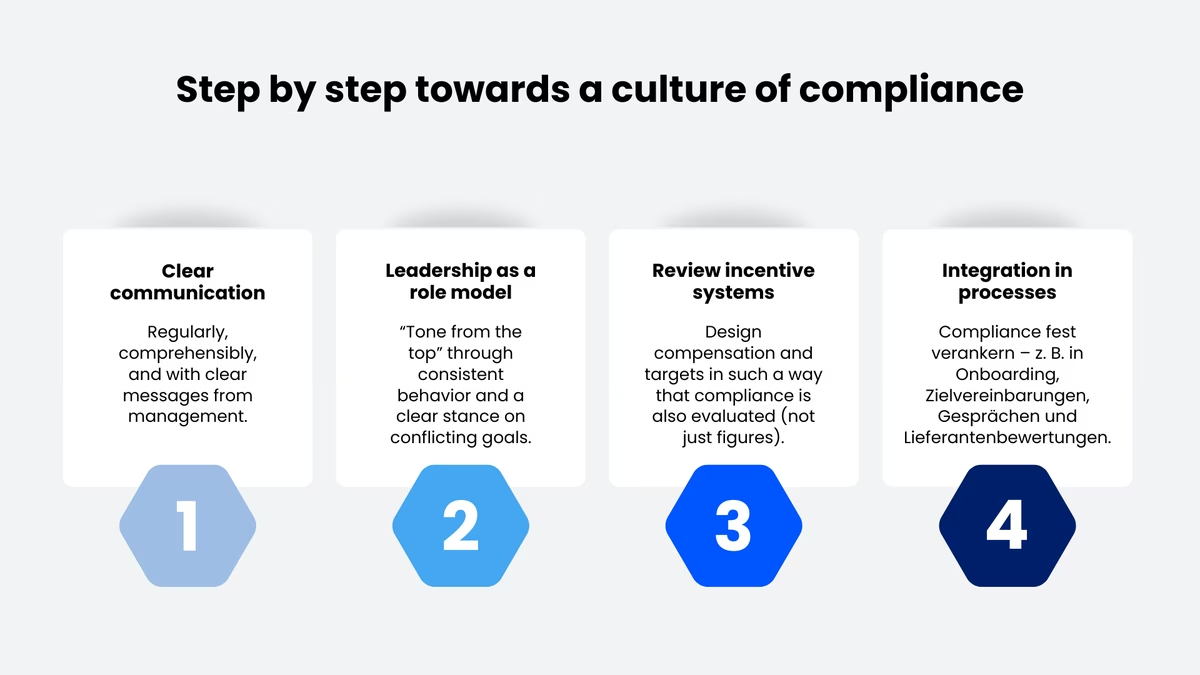
Compliance issues should be communicated regularly and clearly, not just in the event of a crisis. This includes
- Clear messages from the management
- Transparent communication in the event of violations (without pillorying, but with consequences)
- Comprehensible guidelines instead of legal texts
"Tone from the top" is more than just a buzzword. Managers shape whether rules are taken seriously through their behavior. If they themselves circumvent processes or justify "exceptions", this undermines every culture.
Living the role model function:
- Consistent adherence to rules
- Dealing openly with your own mistakes
- Clear stance in the event of conflicting objectives
Compliance culture and remuneration should go hand in hand. If bonuses are only linked to short-term figures, it is easy to create false incentives. It therefore makes sense to also take other points into account when managing, for example:
- qualitative criteria
- Leadership behavior
- Adherence to compliance standards
Compliance must not be an add-on module. It belongs in:
- Target agreements
- Staff appraisals
- Onboarding processes
- Supplier evaluations
The more firmly compliance is anchored in the system, the more natural it becomes.
Speak-up culture: creating trust, lowering inhibitions
A key element of a functioning compliance culture is the willingness to speak up about grievances. Technical whistleblowing systems alone are not enough. The decisive factor is whether people dare to use them.
A genuine speak-up culture is characterized by the fact that:
- Information to be taken seriously
- Whistleblowers need not fear negative consequences
- Transparent feedback
- Managers see criticism not as an attack, but as an opportunity
Many are hesitant because they fear disadvantages, reprisals, social exclusion or career problems. Companies should actively reduce these concerns. This can be achieved with clear protection rules, credible communication and consistent action in the event of violations. At the same time, employees should know that not only serious violations are reportable. Uncertainties or "gray areas" can also be addressed. This is exactly where prevention comes in.
Ultimately, a compliance culture is not a document, but a behavior. If integrity, transparency and responsibility are actually practiced, the risk of violations decreases significantly and trust within and outside the company grows sustainably.
Measurement & effectiveness
A compliance management system is only as good as its actual impact. Guidelines, training and processes are important. But without measurable control, it remains unclear whether they are really effective in everyday life. That is why professional compliance always includes systematic monitoring. If you want to manage risks, you need to know where you stand and where you need to tighten up.
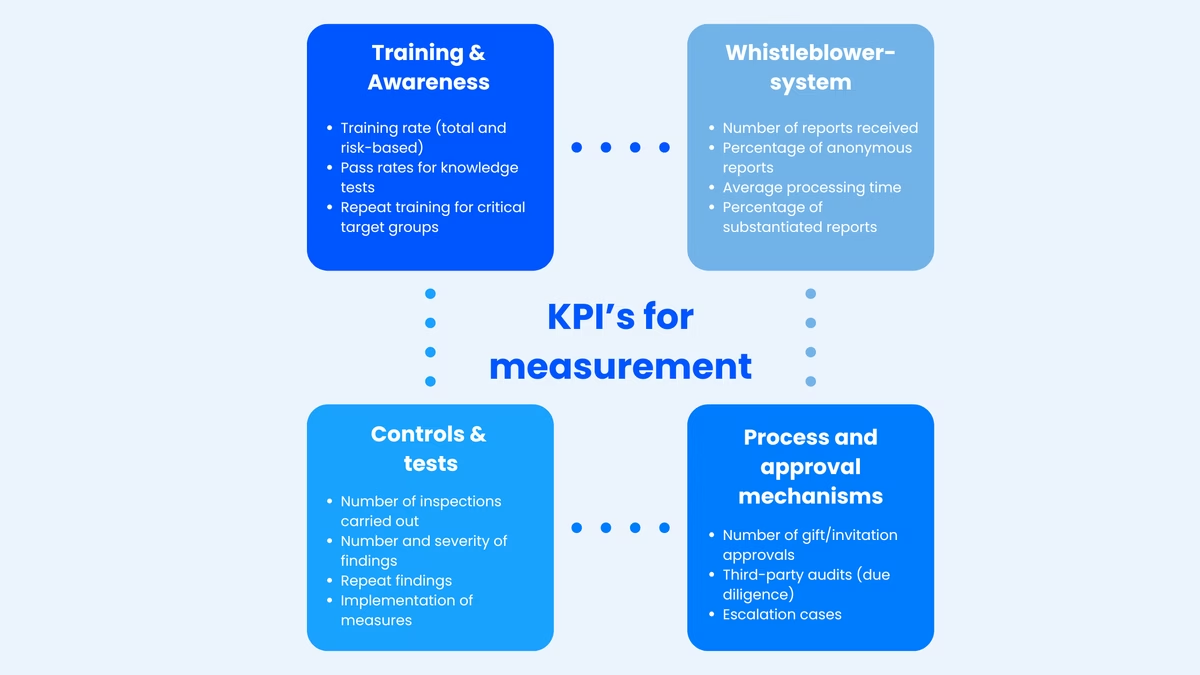
Key figures help to make compliance tangible and controllable.
Meaningful KPIs
- Training rate (total and risk-based)
- Pass rates for knowledge tests
- Repetition training for critical target groups
- Number of comments received (by subject area)
- Percentage of anonymous reports
- Average processing time
- Quota of substantiated evidence
- Number of checks carried out
- Number and severity of findings
- Repeat findings
- Speed of implementation of measures
- Number of gift/invitation approvals
- Third-party audits (due diligence)
- Escalation cases
It is important to note that a low reference number does not automatically mean that there are no problems. It can also indicate a lack of trust. KPIs must therefore always be interpreted in context. Good compliance management combines quantitative key figures with qualitative assessments, for example from employee surveys or risk workshops.
Audits & reviews: What, how often, how to document?
In addition to ongoing monitoring, a CMS needs regular checks so that weaknesses can be identified early on and measures can be improved. Various formats are suitable for this depending on requirements, for example internal compliance audits, thematic deep dives (e.g. on anti-corruption or data protection), audits by third parties, process reviews or effectiveness checks of individual measures. The frequency of audits should be tailored to the risk: High-risk areas need tighter controls than topics with lower relevance.
The documentation is just as important as the audit itself. It should comprehensibly record what was audited, what findings were made, what measures were derived from them, who is responsible and by when they must be implemented, including proof that implementation has actually taken place. The decisive factor here is not whether there are findings, but whether the company deals with them professionally, learns from them and follows up consistently.
Proof of effectiveness vis-à-vis auditors and stakeholders
External audits, certifications or inquiries from authorities are the latest to show how stable a compliance system really is. Management, supervisors, investors and authorities then expect clear and comprehensible proof that the measures are effective.
This includes, among other things:
→ documented risk analyses
→ current guidelines and training certificates
→ logs of inspections and audits
→ processing of tips including case files
→ regular reporting to management
An effective compliance system is not a static construct. It is demonstrated by the fact that risks are identified, measures are implemented, results are reviewed and processes are continuously improved. Transparency plays a central role here. Openly documenting how risks are dealt with signals professionalism and a sense of responsibility.
In the end, it is not about proving perfection, but rather the ability to control. A company that is aware of its risks, monitors them in a structured manner and consistently follows up on them has a compliance system that not only exists on paper, but is effective within the company.
Tools & digitalization: What makes compliance more efficient
Digitization is noticeably changing compliance. Instead of Excel lists, email inboxes and paper files, many companies now use integrated systems. This is not about "more control at any price", but about more transparency, more efficient processes and clean documentation, especially for audits, reviews and stakeholder inquiries.
Different tools are used depending on the size of the company and its risk profile.
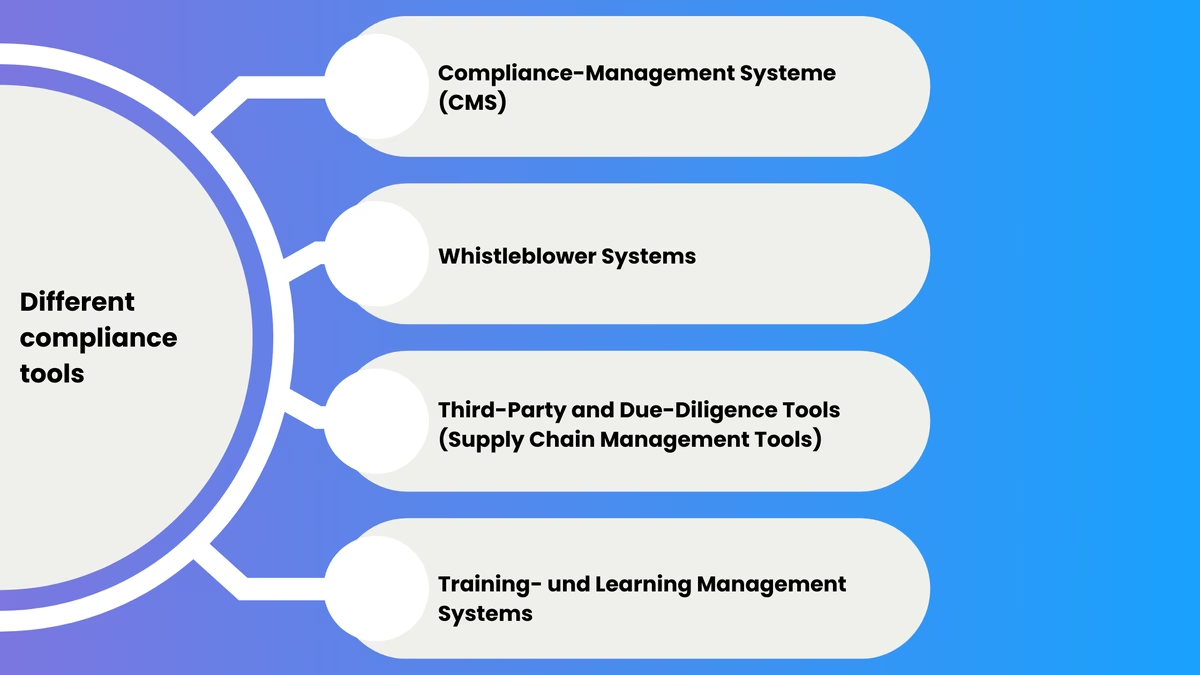
What compliance tools are available
Central platforms that bundle various functions, for example:
- Policy management (versioning, confirmations)
- Risk assessments and action tracking
- Control and audit tracking
- Reporting and dashboards for management & supervisory bodies
A good CMS creates an overview and helps to manage activities in a structured way.
Since the Whistleblower Protection Act (HinSchG) came into force, secure internal reporting points have become mandatory for many companies. Enabling digital whistleblower systems:
- anonymous or confidential reports
- Structured case processing
- Documentation of deadlines and measures
- Audit-proof archiving
They are a central element of a functioning speak-up culture. Are you already familiar with the lawcode whistleblowing system?
Business partners are a significant risk, particularly in the areas of anti-corruption, money laundering prevention and the supply chain. Corresponding tools provide support:
- Sanctions list and PEP screenings
- Risk analyses of suppliers and intermediaries
- Documentation of tests
- continuous monitoring
This turns selective checks into a systematic process. We also have a module for managing suppliers and tracking the supply chain - the Supply Chain Management Tool.
Digital training platforms help to roll out and document training courses efficiently. They make it possible:
- Role-based learning paths
- Automated reminders
- Knowledge tests and certificates
- Evaluations of participation rates
Digital solutions are often the only viable option, especially for internationally active companies. In practice, these tools are often linked together to avoid media disruptions and to evaluate data consistently. Are you already familiar with the lawcode training module? This tool makes it easier to manage, control and evaluate training courses.
Selection & introduction: cost-benefit and typical stumbling blocks
Not every company needs a fully integrated platform right away. The selection should be based on the actual risk profile, not the range of functions of a tool.
Important questions when choosing:
- What specific risks should be addressed?
- Which processes are particularly error-prone or lack transparency today?
- How well can new tools be integrated into existing systems (e.g. ERP, HR, LMS)?
- Who will manage the tool operationally?
- Is the solution scalable and can it be used internationally?
A common mistake is to see digitalization as a pure IT project. Compliance tools only work well if processes are clearly defined. A tool cannot fix bad processes, it can only make them more visible.
Typical stumbling blocks are:
→ unclear responsibilities
→ lack of user training
→ overly complex systems with low acceptance
→ lack of integration into existing processes
→ focus on documentation rather than effectiveness
A structured implementation project with clear governance, a training concept and accompanying communication is therefore crucial. If employees understand the added value and the system is easy to use, acceptance will also increase. When used correctly, digital tools are not an end in themselves, but a lever: they make compliance more transparent, efficient and audit-proof and relieve the burden on the specialist departments on a day-to-day basis.
ESG & Compliance: How it is connected
In many companies, ESG and compliance are still considered separately. In practice, however, the two topics are closely linked. Compliance ensures adherence to laws and internal rules, while ESG broadens the view to include environmental, social and good corporate governance. Modern compliance programs are therefore increasingly addressing ESG, not only because of reputation, but also because regulatory requirements are increasing significantly.
ESG as part of modern compliance programs
ESG stands for environmental, social and responsible corporate governance. In terms of content, much of this has long been part of classic compliance, often just under different headings. Environmental regulations and emissions requirements are part of E, topics such as occupational health and safety, anti-discrimination and human rights are part of S. Corruption prevention, transparency and internal controls fall under G.
What is new above all is how strongly these issues are being demanded today. Investors, customers and authorities expect comprehensible evidence of how companies recognize and manage ESG risks.
Many companies are therefore systematically incorporating ESG into their compliance program, for example in risk analysis, guidelines and codes of conduct, internal controls, reports and training. ESG is therefore not so much a sustainability project in its own right, but part of normal corporate management.
Interfaces to LkSG/CSRD & supply chain
The link between ESG and compliance is particularly clear in the case of legal requirements such as:
- Supply Chain Due Diligence Act (LkSG)
- Corporate Sustainability Reporting Directive (CSRD)
- international human rights and environmental standards
These regulations oblige companies to systematically identify, assess and address risks in their own business areas and along the supply chain.
Typical interfaces to compliance:
- Risk analyses on human rights and the environment
- Establishment of complaints mechanisms
- Documentation and reporting obligations
- Control measures vis-à-vis suppliers
- Integration into existing CMS structures
The LkSG in particular shows the extent to which compliance and sustainability are intertwined: it is not just about image, but also about specific duties of care with potential fines and reputational risks. The CSRD in turn increases the pressure for transparency. Companies must record, review and publish ESG data in a structured manner. This requires robust processes, clear responsibilities and robust controls - classic compliance tasks.
Practical implementation: data, responsibilities, governance
When it comes to implementation, it quickly becomes clear that ESG is data-intensive. Without clean processes, inconsistencies, duplication of work and liability risks arise.
Important success factors are:
- Who is responsible for ESG risks?
- How do compliance, sustainability, purchasing and HR work together?
- What role does the management play?
A clear governance structure prevents silo thinking.
ESG key figures relate to, among other things:
- CO₂ emissions
- Working conditions in the supply chain
- Diversity key figures
- Incidents and complaints
- internal controls
This data must be consistently collected, documented and verifiable.
Instead of parallel structures, it makes sense to embed ESG requirements in existing compliance mechanisms, for example:
- Expansion of the risk analysis to include ESG factors
- Integration of supplier audits into due diligence processes
- Adaptation of the Code of Conduct
- Integration in internal audits
ESG issues are increasingly becoming the focus of management and supervision. This requires regular reports, clear key figures and a firm anchoring in the strategy. Ultimately, ESG and compliance pursue the same goal: identifying risks at an early stage, acting responsibly and ensuring trust. Those who manage both together are better prepared from a regulatory perspective and strengthen their competitiveness in the long term.
Conclusion
Today, compliance is much more than just adhering to laws and internal regulations. It is a central component of good corporate governance because it makes risks visible at an early stage, creates clear orientation in everyday life and strengthens trust among customers, employees and business partners. The decisive factor here is not the number of guidelines, but their effectiveness: responsibilities must be clear, processes must work in practice and managers must set a credible example of compliance.
A modern compliance system is risk-based and anchored in everyday life, for example through training and awareness. It is continuously improved through key figures, audits and regular reviews. Digital tools help to make processes more transparent and document evidence properly. At the same time, a look at ESG, supply chains and reporting obligations shows that Compliance today needs to cover more topics and be thought of more strategically. Those who understand compliance as a cultural issue, promote speak-up and create clear governance structures reduce the risk of violations - and make the company more stable and competitive in the long term.
Frequently asked questions
A CMS can be useful for any company, regardless of size or industry. A structured system helps at the latest when regulations increase, international business is added or issues such as data protection, corruption or supply chains become important. It is particularly relevant for growing companies, highly regulated industries (e.g. finance, health) and companies with complex supply chains.
An effective compliance program is based on a risk-based approach and typically includes:
- A structured risk analysis
- Clear responsibilities (e.g. compliance officer)
- Guidelines and a Code of Conduct
- Training and awareness measures
- Internal controls and approval processes
- Whistleblower systems
- Documentation and monitoring
- Regular review and further development
The decisive factor is not the number of documents, but their actual effectiveness in everyday life.
This depends on the company's risk profile. In practice, the risk analysis should be reviewed at least once a year and whenever laws change or the company undergoes major changes. Training courses should also be held regularly: More frequent in sensitive areas, basic training at fixed intervals.
Important instruments are
- Risk assessments of suppliers
- Questionnaires and self-assessments
- Contractual clauses on compliance and ESG standards
- Third-party due diligence
- Complaints mechanisms along the supply chain
- Documented test processes
The LkSG and ESG reporting obligations in particular make a systematic, comprehensible approach crucial.
The Code of Conduct describes the company's fundamental values and principles of conduct, i.e. the overarching ethical framework. Individual compliance guidelines go into greater detail and regulate specific topics such as anti-corruption, data protection or conflicts of interest. The code sets out the direction, while guidelines put it into concrete operational terms.
An effective whistleblower system should:
- Can be used confidentially or anonymously
- Be easily accessible
- Have clear processes for processing
- Ensuring protection from reprisals
- Communicating transparently
It is not only the technical solution that is important, but also the trust of employees in the fair handling of information.
Useful key figures are, for example:
- Training rates and test results
- Number and type of incoming information
- Case processing times
- Audit findings and implementation rates
- Repeated risk patterns
The qualitative classification of the figures is important. For example, a high number of references can also indicate a functioning speak-up culture.
Compliance tools are useful when they structure processes, create transparency and simplify documentation, for example:
- Whistleblower systems
- Third-party audits
- Training platforms
- Release processes
- Monitoring and reporting
It becomes problematic when software is introduced without clear processes or responsibilities. Tools support a functioning system, but they do not replace it.
Common errors are:
- "Paper compliance" without real implementation
- Unclear responsibilities
- Lack of leadership role model function
- Directives that are too complex or incomprehensible
- No regular review
These mistakes can be avoided through a risk-based approach, clear governance structures, simple and practical rules and a corporate culture in which compliance is actually practiced.

Karim Boukaouche
LinkedInESG compliance expert - lawcode GmbH
Karim Boukaouche advises companies on the implementation of the EU Deforestation Regulation (EUDR) and supports the implementation of digital solutions for legally compliant supply chains. His specialist articles on the lawcode blog combine regulatory depth with practical recommendations for action.