 DE
DE

Important facts
- What is child labor?
- Child labor refers to activities that deprive children of their childhood, damage their development or prevent them from attending school. It violates the UN Convention on the Rights of the Child.
- How many children are affected?
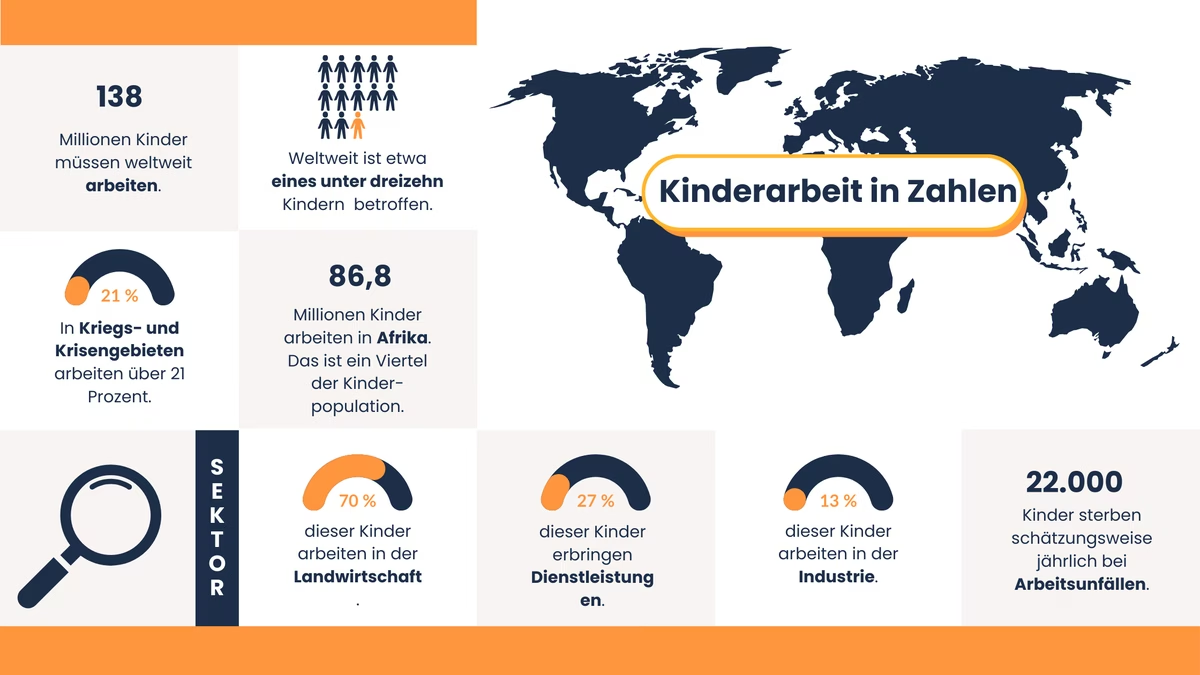
- Around 138 million children work worldwide, almost half of them in hazardous conditions.
- In which sectors does child labor occur?
- Mainly in agriculture (approx. 61%), but also in mining, the textile industry and private households.
- What are the main causes?
- Poverty, lack of access to education, economic crises and weak social systems.
- What are the consequences of child labor?
- Damage to health, chronic exhaustion, educational deficits and long-term poverty.
- What can companies do?
- Comply with due diligence obligations, check supply chains and give preference to products with recognized seals such as Fairtrade.
Abstract - Child labor at a glance
Child labor usually arises where poverty and a lack of social security put families under pressure, especially in crises when incomes collapse. Another key driver is a lack of access to good education: Where schools are lacking, too far away or of poor quality, children slip into work more quickly. Social norms and discrimination also play a role, especially at the expense of marginalized groups.
Child labor is still widespread around the world, especially in very poor regions and crisis areas. International standards such as the UN Convention on the Rights of the Child and ILO Conventions 138 and 182 set clear rules on the minimum age and prohibit the worst forms of child labor.
For companies, the LkSG and CSDDD make the topic a concrete compliance task: risks in supply chains must be identified, reduced and addressed transparently - with risk analyses, effective complaint channels, clear supplier requirements and measures to remedy the situation. Technology can support this, for example through supply chain transparency and whistleblower systems.
What is child labor?
Child labor does not refer to any form of assistance in everyday life, such as household work, but to activities that deprive children of their childhood, impair their development or prevent them from attending school. The decisive factor here is not only age, but above all the question of whether work prevents education, endangers health or exploits children.
International definition of the International Labor Organization (ILO):
Child labor occurs in particular when children are too young, have to work too long or perform activities that are dangerous for them.
While light, age-appropriate tasks, for example within a limited framework and without disadvantages at school, can be legally tolerated in many countries, child labor begins where work becomes a duty and the child's rights to protection, education and safe development are violated.
What counts as "dangerous work"?
Hazardous child labor is defined as work that overtaxes children physically or mentally, damages their health or exposes them to a high risk of accidents, violence and abuse. This includes, for example, working on dangerous machines, carrying heavy loads or working with dust, chemicals or pesticides, for example on plantations, in mines or in quarries.
The type of working hours can also be dangerous: Night work, very long shifts or isolated activities without protection and supervision. Because children are often less able to defend themselves and do not know their rights, this form of work is a particular focus of international laws and due diligence obligations in supply chains.
Causes of child labor
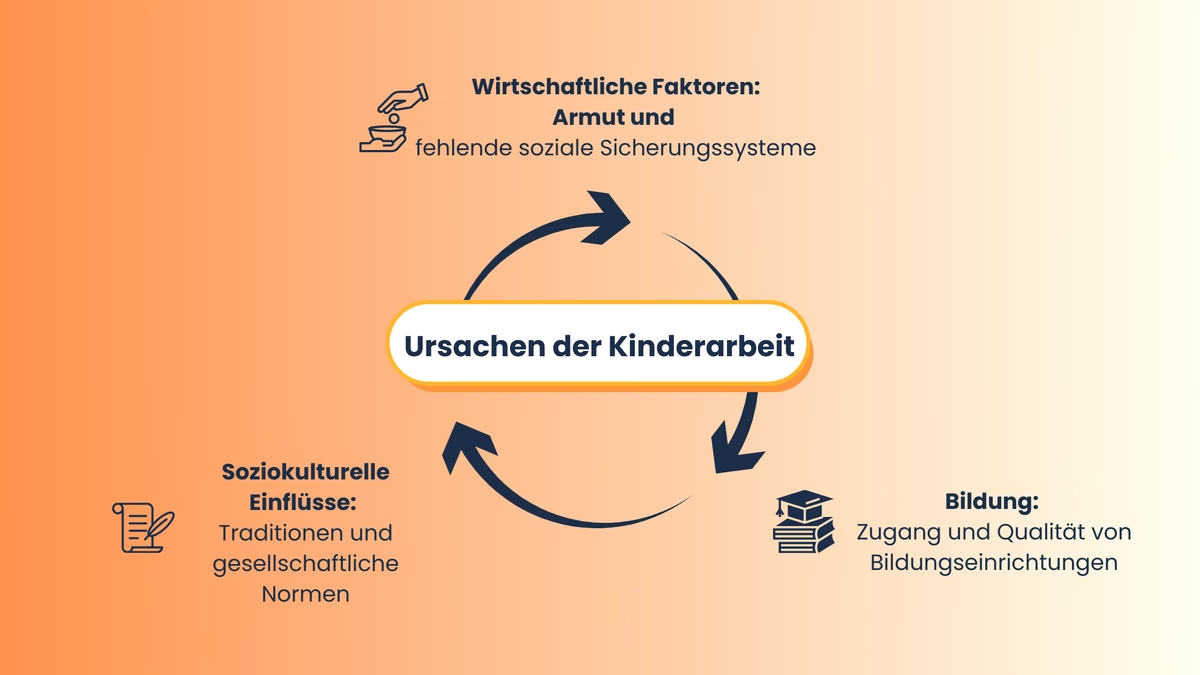
Poverty is one of the most important drivers of child labor. If the income of adults is not sufficient for basic needs and there are no social security systems, the pressure on families to earn extra money increases, often through the work of children.
In crises, the problem becomes greater: economic slumps, natural disasters or conflicts deprive families of their livelihoods. Child labor then usually arises out of necessity, not out of choice.
In addition, children are considered "cheap" and easily exploitable labor in many areas, especially in the informal sector without contracts and controls. Climate change is also exacerbating the situation: droughts, floods and crop failures affect agricultural families in particular and increase the risk of children having to work.
An important factor is access to education and whether school is even realistically attainable for families. Many children do not go to school because schools are too far away, there are costs for fees, uniforms or materials, or because the financial pressure in the family is too great. If education does not offer any real prospects, work quickly takes priority.
Even where schools do exist, the quality is often poor: overcrowded classes, a lack of equipment and too few qualified teachers. Discrimination and violence, for example against girls or minorities, further exacerbate the situation. This often results in children dropping out of school, which increases the risk that they will end up working permanently.
In addition to poverty and education, social norms also play a role. In some regions, child labor is considered normal, for example in family businesses or agriculture. It becomes critical when it becomes permanent work, displaces school or when children are deliberately used as cheap, easily controllable labor. Exploitation then often remains invisible or goes unreported.
Discrimination exacerbates this further: children from marginalized groups, refugee families or ethnic minorities are more at risk because protection, school and rights are often more difficult to access. In refugee and conflict situations, the risk increases in particular because families are under massive pressure and often lack protective structures.
The causes of child labor are usually closely linked. When families are poor, children drop out of school more often. And without education, poverty often persists, sometimes for generations. In addition, there are social norms that make child labor appear "normal" in some areas.
This is precisely why individual measures are of little use. It will only be truly effective if several things are improved at the same time: stable incomes and social security, good and accessible schools and clear protection mechanisms against exploitation, especially where the risk in regions and supply chains is particularly high.
Where does child labor take place?
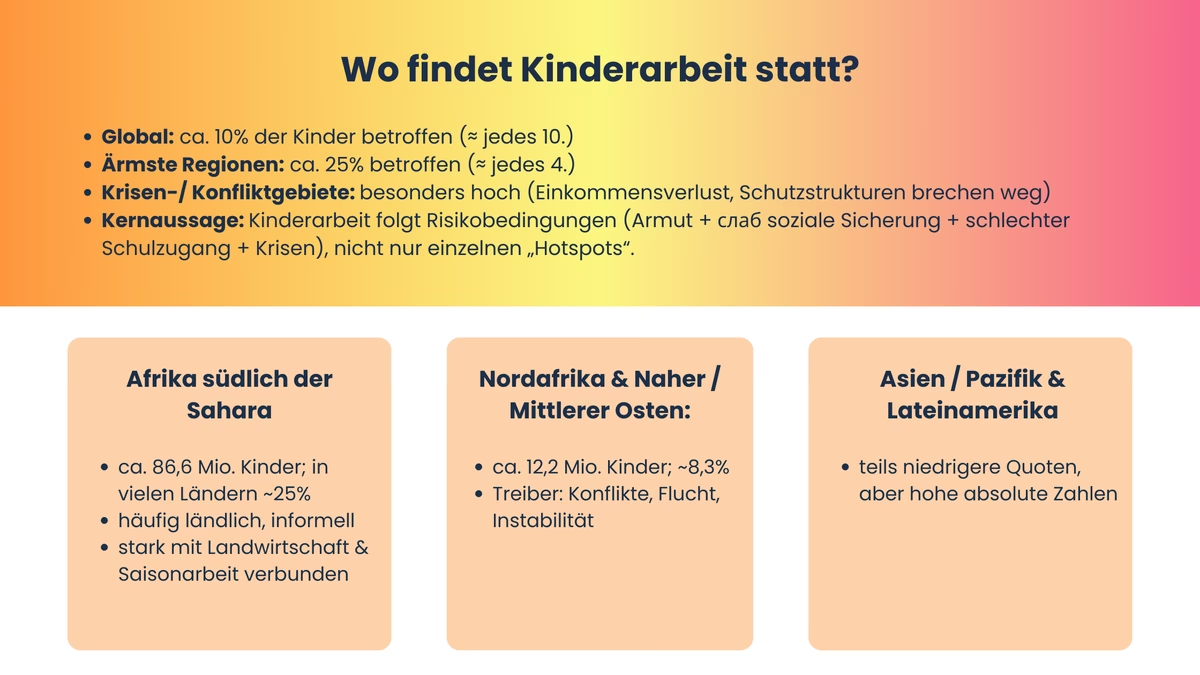
Child labor is a global problem: around one in ten children worldwide is affected. The rate is significantly higher in the poorest regions, where around one in four children work. The situation is particularly dramatic in war and crisis zones, as incomes collapse and protective structures are lacking.
Child labor is most widespread in sub-Saharan Africa. Conflicts, instability and climatic stresses increase the pressure on families even further. It is estimated that around 86.6 million children are affected there, in many countries around a quarter of all children, often in the informal sector, especially in rural regions and agriculture.
However, child labor does not only exist in Africa: millions of children also work in North Africa and the Middle East (approx. 12.2 million, around 8.3%). Asia/Pacific and parts of Latin America are also affected, in some cases with lower rates but high absolute figures.
The bottom line is that child labor is less a result of individual hotspots than of specific conditions: Poverty, weak social systems, poor access to schools and crises significantly increase the risk.
Child labor in Germany
Child labor is generally prohibited in Germany: Children under the age of 15 may not be employed.(§ 5 Para. JArbSchG (Youth Employment Protection Act)). There are only exceptions within narrow limits, such as school internships or light, child-friendly work from the age of 13 with parental consent. This work must not interfere with school, health or development and is clearly limited in time.
Nevertheless, reports show that there are also problematic cases in this country, especially where work takes place informally or is linked to exploitation. The BKA Federal Situation Report 2022 lists 171 cases involving underage victims. In addition, studies such as the Child Labor Report 2024 by Terre des Hommes point to a number of unreported cases because many risky side jobs go unnoticed and young people are often unaware of their rights.
In addition, there are gray areas that are only partially covered by youth employment protection: for example, commercial activities in social media, "self-employed" jobs or even burdensome family responsibilities such as those of young carers. The bottom line is that we not only need clear laws, but also better implementation, more education and a realistic view of new forms of work.
In Germany, children under the age of 15 are not allowed to work. From the age of 13, children may only work with their parents' consent.
Child labor by sector
Child labor is particularly common where raw materials are mined or cultivated, i.e. in areas where a lot of manual labor is required, work is seasonal and much of it is informal. A typical risk material is mica. This mineral is found in many everyday products, for example in cosmetics, electronic devices and also in parts for the automotive industry. In some mining areas, children work under dangerous conditions. This endangers their health, keeps them out of school and deprives them of the chance of a better future in the long term.
The dynamics in agriculture are similar: in cotton fields, for example, children are directly involved in the harvest in some regions. The cotton is then processed globally and ends up in the products of major brands. For the children concerned, this often means long working days, physical strain and a childhood that increasingly revolves around work rather than education.
The risk is also higher for very common agricultural commodities such as cocoa, coffee and oranges. The work is physically demanding, time-critical and heavily dependent on seasonal harvests. These are factors that encourage child labor when families are under financial pressure. In many cases, children do not work in formal employment, but within the family: they help with the harvest, carry heavy loads, sort or resell products, often to an extent that is incompatible with school attendance and child-friendly development.
A significant proportion of child labor takes place in the informal sector, i.e. outside of clear employment contracts, controls and protection mechanisms. Many girls and boys work alongside their parents, organize activities themselves or take on tasks that are crucial for the family's income. These include tending livestock, working in the fields, fetching water, selling small goods at street markets or looking after younger siblings. These activities often appear to the outside world as "helping out", but can quickly become a permanent burden, especially if they are regular, time-consuming or dangerous and take the place of education.
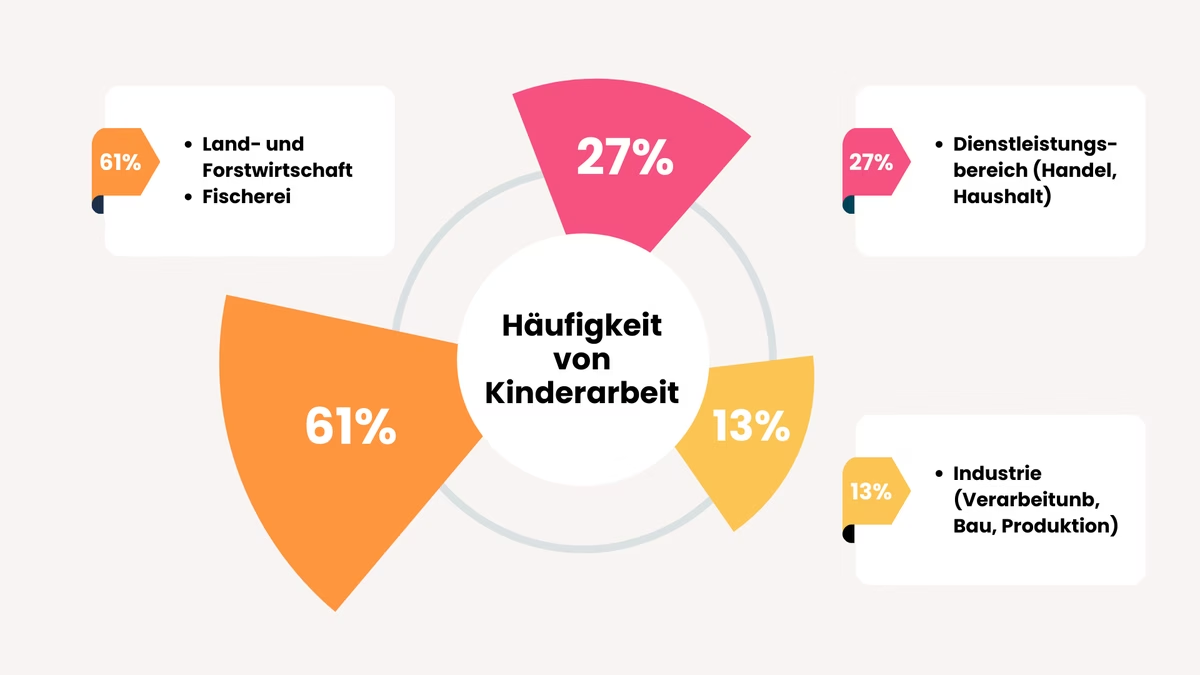
Child labor is not evenly distributed across all sectors. According to ILO estimates
- Around 61% of the children affected work in agriculture, forestry and fishing,
- around 27 % in the service sector (e.g. informal trade, household activities),
- and around 13 % in industry (e.g. processing, construction, production).
This distribution makes it clear why child labor so often occurs "at the beginning" of global supply chains: Where raw materials and agricultural products are extracted and the work is difficult to control, the risk is particularly high. This is a crucial point for companies: if you want to combat child labor effectively, you need to look not only at the final production, but above all at the early stages of the supply chain, i.e. raw materials, preliminary products and informal supplier structures.
Effects of child labor
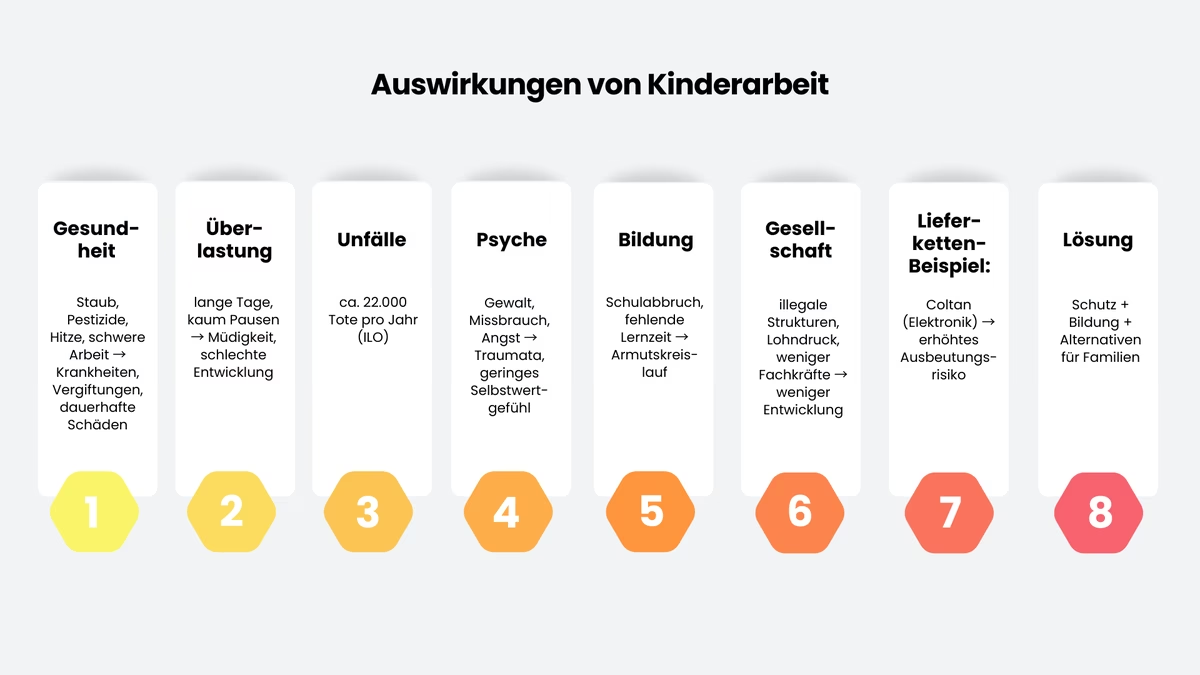
Child labor is much more than "helping out too early". It endangers children physically and mentally - and deprives them of long-term opportunities. In quarries, mines or on plantations, they are often exposed to dust, pesticides, extreme heat and hard work. This can cause illness, poisoning and permanent damage. Added to this are long working days, hardly any breaks and chronic exhaustion.
According to the ILO, around 22,000 children die every year as a result of accidents at work.
The psychological consequences are also serious: many children experience fear, violence, abuse or humiliation. At the same time, education suffers massively - those who have to work often attend school irregularly or drop out completely. Without a school-leaving certificate, prospects diminish and the cycle of poverty and exploitation continues.
Child labour also has an impact on entire societies: it stabilizes informal and illegal structures, depresses wages and slows down development due to a lack of training and skilled workers. This is particularly visible in supply chains for conflict-ridden raw materials such as coltan. Child labor can only be effectively combated with protection, good education and real economic alternatives for families.
Legal framework
International agreements and conventions
Legally, child labor is actually unambiguous: it is prohibited in most countries. The International Labor Organization (ILO) defines this as work that is dangerous for children, involves too many hours or is carried out by children who are simply too young. The issue also plays a role in Germany via the Supply Chain Act (LkSG). At EU level, the CSDDD goes even further: it focuses not only on child labor, but also on other children's rights, such as health, education, decent living conditions and protection from exploitation, sexual abuse, abduction and child trafficking.
The UN Convention on the Rights of the Child (CRC) was adopted by the UN General Assembly on November 20, 1989 and entered into force on September 2, 1990, thirty days after ratification by the twentieth member state. The Convention on the Rights of the Child has been ratified by 196 states, making it the most widely signed UN convention. The signatory states include not only all UN member states, with the exception of the USA, but also non-UN members such as the Cook Islands, Niue, Palestine and the Vatican City State. It defines child labor as any employment of persons under the age of 18 that is harmful to their health or interferes with their access to school (Article 32: Protection against economic exploitation).
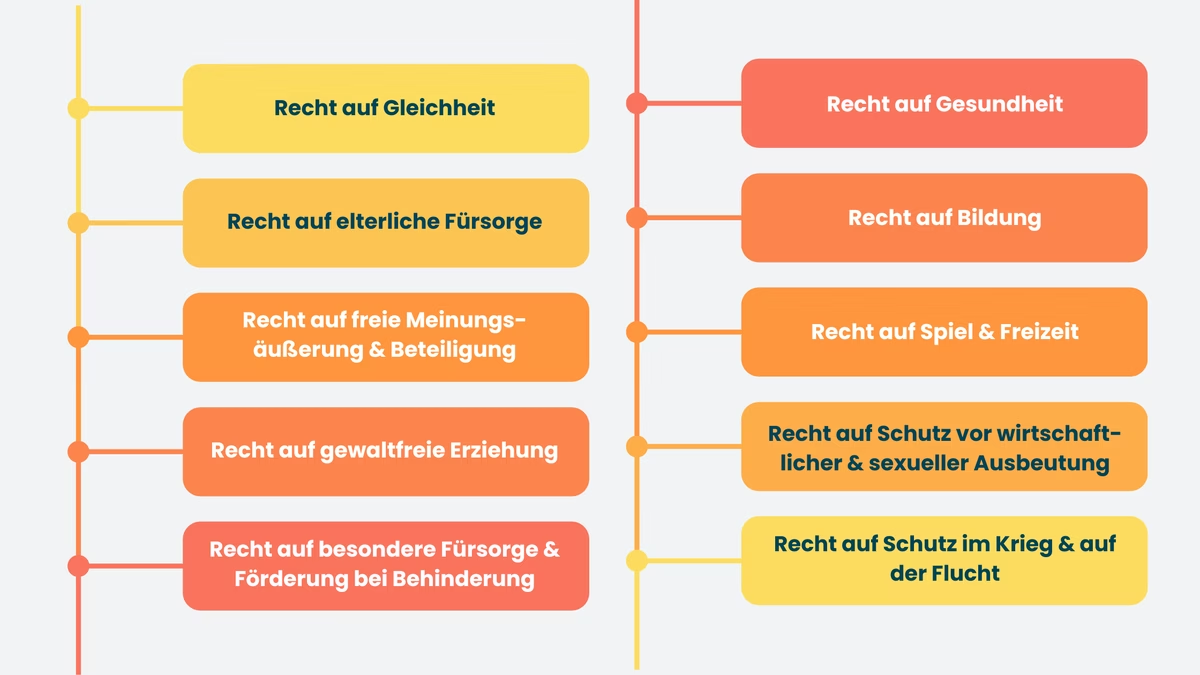
The most important children's rights include
All children have the same rights, regardless of their place of residence, origin, skin color, religion, language, gender, disability or economic status (Art. 2).
Children may not be separated against the will of their parents unless a judicially reviewable decision by the competent authorities establishes that such separation is necessary in the best interests of the child. States should support parents, for example by providing childcare (Art. 9 & 18).
Children may express their views on matters affecting them, which should be taken into account according to their age and maturity (Art. 13).
Children have the right to protection from all forms of violence (Art. 19).
Children with disabilities have the right to special care and support. All other children's rights also apply to them without restriction (Art. 23).
Children have an undeniable right to the best possible health and adequate medical care. States are obliged to ensure, among other things, the provision of sufficient, high-quality food and access to clean drinking water. In doing so, they must take into account the potential dangers and risks of environmental pollution. Furthermore, states have a responsibility to provide adequate support and care to mothers both before and after childbirth (Art. 24).
Children have a right to education. Elementary school should be free and secondary education institutions should be accessible according to ability (Art. 28).
Children have the right to rest, leisure, play, age-appropriate recreation and cultural and artistic participation (Art. 31).
Children have the right to protection from all forms of exploitation (Art. 32, 34, 35 & 36).
Children have the right to protection in war and refugee children are entitled to special protection and assistance (Art. 22, 38).
International standards for the protection of children are already enshrined in the core labor standards of the International Labor Organization (ILO). In particular, ILO Convention No. 138 from 1973 and ILO Convention No. 182 from 1999 set out clear regulations aimed at protecting children from exploitative work and guaranteeing their right to education.
The Minimum Age Convention No. 138, which has been ratified by 176 countries, defines a permissible starting age for employment as 15 years. Nevertheless, under certain circumstances, it also allows children to engage in non-hazardous work outside of school in order to pass on knowledge over generations and contribute to food security.
ILO Convention No. 182 defines exploitative child labor as the prohibition of slavery, forced labor, child prostitution and child pornography. Hazardous work that could affect the health or safety of children is also precisely defined. Particularly critical forms such as child soldiers or hazardous work under extreme conditions are also named.
The worst forms of child labor, as defined in Article 3 of ILO Convention No. 182, include
- Slavery and practices similar to slavery: These include the sale of children, child trafficking, debt bondage and serfdom as well as forced or compulsory labor. In particular, the use of children as soldiers falls into this category.
- Child prostitution and pornography: These practices are not only illegal, but also extremely harmful to the physical and mental health of the children concerned.
- Illegal activities: These include drug trafficking, for example, in which children are often used as middlemen or in dangerous positions.
- Endangering health and safety: Any type of work that endangers the health, safety or moral well-being of children is classified as exploitative child labor and should be urgently combated.
Work that endangers the health, safety or morals of a child is clearly defined in Article 3 of ILO Recommendation 190. This definition includes the following aspects:
a) Physical, psychological or sexual abuse: Any form of work that exposes children to such risks.
b) Work in extreme environments: This includes activities underground, under water, at dangerous heights or in confined spaces.
c) Use of dangerous machinery: Work with the potential for risk, whether through the use of dangerous machinery, equipment or tools and the carrying of heavy loads.
d) Working conditions that are hazardous to health: Activities that expose children to hazardous substances, high temperatures, excessive noise or vibrations.
e) Particularly difficult working conditions: These include long working hours, night work or isolated activities where the child is unjustifiably forced to remain on the employer's premises.
As part of the 2030 Agenda(Sustainable Development Goals, SDGS), the global community has committed to eliminating all forms of child labor by 2025 (Goal 8.7); however, this challenge remains and has increased in some regions.
Against child labor with LkSG, CSDDD and FLR
In recent years, the regulatory framework against human rights violations in supply chains has become much stricter. Three sets of regulations are particularly relevant for companies: the Supply Chain Due Diligence Act (LkSG ) in Germany, the EU CSDDD Directive and the Forced Labour Regulation (FLR) Regulation (EU) 2024/3015. Together, they increase the pressure not only to identify child labour along the supply chain, but also to effectively prevent it and to react consistently in the event of suspected cases.
The LkSG (since January 1, 2023) obliges companies to implement structured risk management: identify risks, implement preventive and remedial measures, enable complaint channels and report transparently. The CSDDD follows the same basic idea at EU level and aims to harmonize due diligence obligations more strongly and anchor them more broadly. In addition, the EU Forced Labor Regulation addresses the market: products associated with forced labor are to be kept off the EU market - and thus also constellations in which children work under exploitative forced labor conditions.
The bottom line is that companies must systematically manage child labor as a supply chain risk, with clear responsibilities, robust processes and effective remediation, rather than mere "paper compliance".
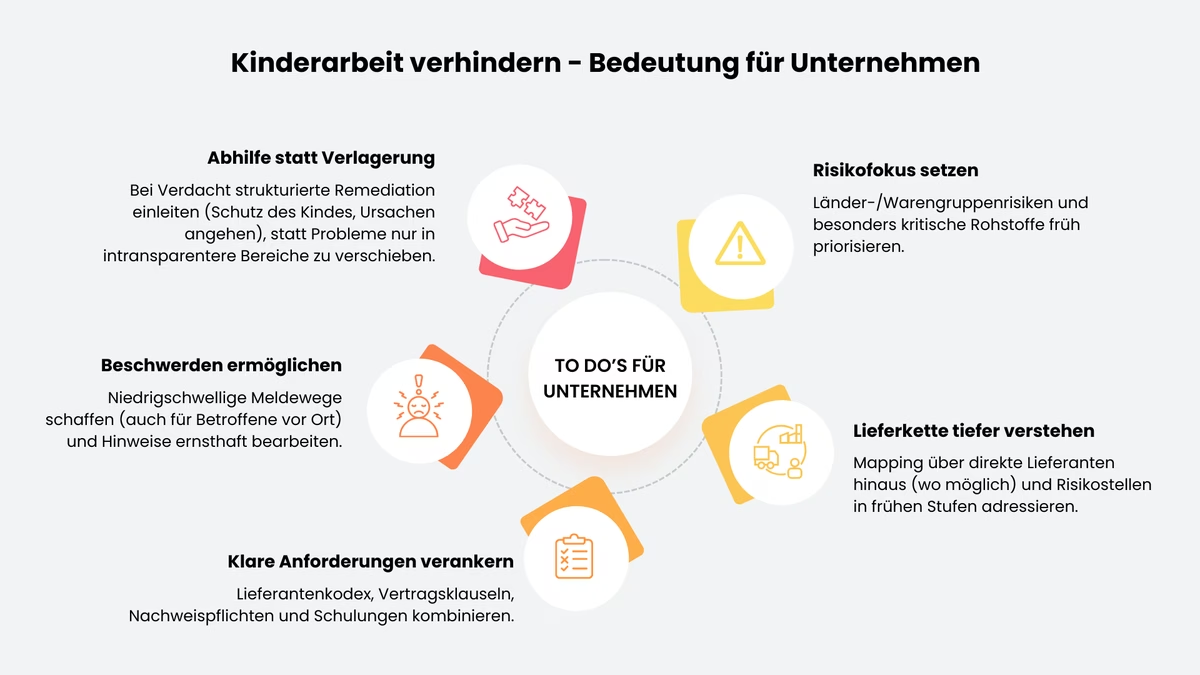
What does this mean in concrete terms for companies?
- Set risk focus: Prioritize country/ commodity group risks and particularly critical raw materials at an early stage.
- Understand the supply chain more deeply: Mapping beyond direct suppliers (where possible) and addressing risk points at early stages.
- Establish clear requirements: combine supplier code of conduct, contractual clauses, verification obligations and training.
- Enable complaints: Create low-threshold reporting channels (also for those affected locally) and treat reports seriously.
- Remedy instead of relocation: Initiate structured remediation in the event of suspicion (protect the child, address the causes) instead of simply shifting problems to less transparent areas.
Significance of the LkSG in combating child labor
Risk management is a central component of the LkSG. Companies must identify and assess potential risks of child labor within their supply chains (§ 2 para. 2 no. 2 LkSG). This is done through regular risk analyses and assessments, whereby child labor is considered one of the main human rights violations.
Based on the risk assessments, companies are obliged to take appropriate measures to reduce the likelihood and impact of child labor. This includes the development and implementation of prevention programs, the training of suppliers and the introduction of control mechanisms.
The LkSG also requires companies to set up complaints channels. Affected people, including children or their representatives, should be able to report violations without having to fear any disadvantages. This is the only way to make child labor visible and demand concrete remedial action.
Best practices for companies
A report by Save the Children shows why child labor in supply chains often remains undetected for a long time despite audits and codes of conduct. Companies often find out about incidents too late or not at all - partly because suppliers can prepare inspections in a targeted manner and conceal problems. At the same time, complaint mechanisms are often ineffective in practice: affected children are often dependent on income, are afraid of consequences or see no safe way to report grievances. Even if there are indications following inspections, the response is often too slow or too superficial.
Another risk is short-term "reputation solutions": If companies want to act quickly, the pressure along the chain is often only shifted - to even more non-transparent stages, instead of addressing the causes. Sustainable improvements also often fail due to a lack of resources and the fact that remedial action is not consistently child rights-oriented.
This is precisely why child labor is not only a moral issue for companies, but also a clear compliance issue. If you really want to manage your supply chain responsibly, you need solid risk analyses, functioning reporting channels and measures that not only sound good, but actually protect children and improve the situation on the ground.
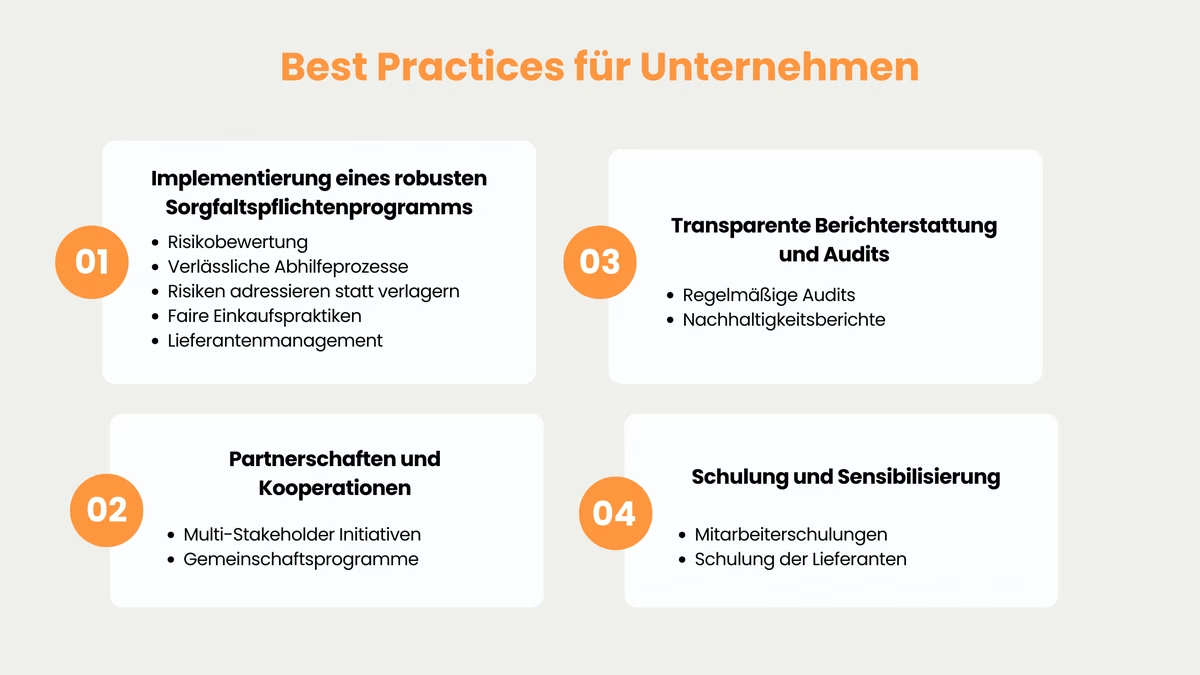
Implementation of a robust due diligence program
An effective due diligence program is a key lever in the fight against child labor. It is crucial that companies not only document risks, but also consistently manage them and enable remedial action. Key measures include
- Risk assessment: systematically analyse supply chains and prioritize high-risk areas, e.g. using indicators such as poverty and enrolment rates as well as commodity group and country risks.
- Reliable remedial processes: Establish clear mechanisms that take effect quickly in suspected cases and enable local solutions - with a focus on protection, school access and sustainable improvements.
- Addressing risks instead of shifting them: Where supply chains cannot be changed in the short term, targeted measures are needed to reduce risks instead of shifting them to less transparent areas.
- Fair purchasing practices: Supporting living wages and fair prices, shortening payment terms and reducing financial bottlenecks for producers - because poverty is a key driver of child labor.
- Supplier management & partnerships: Establish clear contractual requirements for the employment of minors and promote long-term relationships so that suppliers can invest in prevention (e.g. mentoring, school programs, training).
Partnerships and cooperations
Cooperation with relevant partners is essential. Companies should actively cooperate with NGOs, government agencies and other organizations to combat child labour:
- Multi-stakeholder initiatives: Participation in initiatives that bring together different stakeholders to develop strategies to end child labor.
- Community programs: Invest in programs to strengthen the economic resilience of communities and improve educational opportunities for children.
Transparent reporting and audits
Regular and transparent reporting is essential:
- Regular audits: Independent audits of the entire supply chain to ensure compliance with child labor regulations.
- Sustainability reports: Documentation and public provision of progress and challenges in the fight against child labor.
Training and sensitization
Raising the awareness of all those involved can raise awareness of the problem of child labor:
- Employee training: Regular information events for employees and management on the topic of child labor.
- Supplier training: Programs for suppliers to strengthen their awareness and commitment against child labor.
Child labor can only be effectively combated if companies take a holistic approach to the issue: with clear due diligence obligations, cooperation with suitable partners, transparent reporting and regular training. This not only strengthens social responsibility, but also makes the supply chain more stable and resilient in the long term. Responsible action pays off twice over: It protects human rights and creates trust and credibility, which are crucial for long-term success.
Digital tools create more transparency and make it easier to track.
The role of technology in the fight against child labor
Supply chain management software helps companies to understand where materials come from and how they are processed. This provides insights into individual stages of the supply chain that would otherwise often remain hidden. When data is automatically evaluated and reported in real time, risks can be identified earlier and measures can be initiated before a problem becomes more serious. Such tools also help companies to implement requirements from regulations such as the Supply Chain Duty of Care Act and to better safeguard human rights and environmental standards.
Whistleblower systems are another important building block for identifying grievances at an early stage - both internally and externally. Employees can use platforms such as the Hintbox (part of our software) to report violations of labor rights, including child labor, anonymously. This strengthens an open corporate culture and creates trust because whistleblowers are protected and do not have to fear reprisals. The easier and safer it is to report, the sooner information comes to light and companies can react more quickly and take preventive action.
Technology not only helps to uncover abuses - it can also tackle the causes of child labor, for example the lack of access to education. Digital learning opportunities and educational platforms can make it easier for children in remote or disadvantaged regions to access education. E-learning and online courses also give children a chance to learn who would otherwise have little access to school or lessons. In the long term, this can reduce child labor because education creates real alternatives and opens up new prospects for the future.
Technology can help combat child labor on several levels. With software for more transparency in the supply chain and good whistleblowing systems, companies can identify risks earlier and act more quickly. At the same time, digital education can help to ensure that more children have access to learning and thus to a real alternative to work.
Conclusion
Child labor is not an isolated problem. It is part of many global supply chains, especially where raw materials are mined and agricultural products are grown. Poverty, a lack of social security, poor educational opportunities and discrimination are often intertwined and keep the system running.
For companies, this is no longer just a question of attitude, but also a clear compliance task. With the LkSG, CSDDD and the Forced Labor Regulation, expectations are rising: Risks must be identified, effectively reduced and suspected cases properly investigated. It is crucial that these measures are not just on paper, especially in the early stages of the supply chain.
Companies that work transparently, buy fairly, work with suppliers over the long term and take remedial action seriously protect children's rights. At the same time, they strengthen their own supply chain and trust in the company.
Frequently asked questions
Child labor is a complex problem caused by economic, educational and socio-cultural factors. The main causes include poverty and a lack of social security systems, a lack of access to education and educational facilities as well as social norms and traditions.
Poverty forces families to rely on their children's income, as adults often have insufficient income and no access to social security systems. In crisis situations, such as during the COVID-19 pandemic or after natural disasters, this emergency situation is exacerbated.
Lack of access to education and poor quality of education increase the likelihood of child labor. In many regions, there is a lack of financial resources for school fees and learning materials. Class sizes are often overcrowded and teaching staff are inadequately trained.
Traditions and social norms can push children to work, especially in cultures where children are seen as cheap labor. Discrimination makes access to education and basic rights more difficult, which increases child labor.
Child labor occurs worldwide. Poor regions and crisis areas, such as sub-Saharan Africa and parts of the Middle East, are particularly affected. The rate is also high in unstable states and among refugees.
In Germany, the employment of children is comprehensively regulated and largely prohibited under the Youth Employment Protection Act. However, there are worrying individual cases of exploitative work, particularly in the context of human trafficking and illegal employment conditions.
Agriculture, forestry and fishing are the sectors most affected. However, the fashion industry, the extraction of raw materials such as mica and the production of consumer goods such as coffee and cocoa are also affected.
Child labor endangers the health and safety of the children concerned, impairs their education and perpetuates the cycle of poverty. It also harms the economic development of countries, as it restricts qualified future workers in education and development.
The UN Convention on the Rights of the Child and the conventions of the International Labor Organization (ILO) represent international standards that regulate the protection of children and the prohibition of exploitative work. They are crucial in the fight against child labor.
The Minimum Age Convention No. 138, ratified by 176 countries, stipulates that the minimum permissible age for employment is 15 years. Under certain conditions, however, it allows children to carry out non-hazardous work outside of school hours in order to pass on knowledge and ensure food security.
ILO Convention No. 182 prohibits exploitative child labor, including slavery, forced labor, child prostitution, child pornography and hazardous work that endangers the health or safety of children.
Hazardous working conditions include activities involving physical, mental or sexual abuse, work in extreme environments, the use of dangerous machinery, working conditions that are harmful to health and difficult working conditions such as long working hours or night work.
As part of the 2030 Agenda, the global community committed to eliminating all forms of child labor by 2025. The 2030 Agenda is a global action plan for sustainable development.
Since January 1, 2023, the LkSG has required companies in Germany to comply with human rights and environmental due diligence obligations along their entire supply chain. This includes the identification and minimization of human rights and environmental risks, including child labor.
Grievance mechanisms give affected persons, including children, the opportunity to report violations and demand remedial action. This plays a crucial role in combating child labor.
Companies should conduct risk assessments, implement reliable mechanisms, offer fair wages and enter into partnerships to combat child labor. They should also consider transparent reporting and supplier training.
Technologies provide transparency in the supply chain, enable the detection of abuses through whistleblower systems and promote access to education for children in disadvantaged regions through digital platforms.

Larissa Ragg
LinkedInMarketing Managerin · lawcode GmbH
Larissa Ragg verantwortet die Content-Strategie bei lawcode und erstellt Fachbeiträge zu den Themen EUDR, ESG-Compliance, HinSchG, Supply Chain und CSRD. Ihre Beiträge auf dem lawcode Blog machen komplexe regulatorische Anforderungen verständlich und liefern Unternehmen praxisnahe Orientierung.