 DE
DE

Important facts
- What is the Ecocide Directive?
- An EU-wide regulation to combat serious environmental crime, which classifies certain environmental offenses as criminal offenses.
- What is the aim of the directive?
- The objectives are to effectively punish environmental destruction, to strengthen the protection of ecosystems, people and biodiversity and to hold companies and those responsible accountable.
- When does the directive apply?
- Final adoption at EU level in 2024. Implementation into national law is mandatory within two years.
- Who is affected by the directive?
- Companies, managers, individuals and legal entities can be prosecuted.
- What are the penalties?
- Penalties can include fines, prison sentences for responsible persons, reputational damage and possible exclusion from award procedures.
- Are there any special features?
- Ecocide is considered a criminal offense for the first time - this is intended to put environmental crimes on a par with serious human rights violations.
Abstract
The new Environmental Crime Directive is a ground-breaking proposal that redefines international law in the field of environmental protection. It aims to classify environmental crimes, including ecocide, as serious offenses that can have not only national, but also European and international consequences.
The legal framework provided by the directive creates a mechanism that enables member states to take concrete measures against environmental crime. This means that environmental crimes could no longer go unpunished in future. This is a goal that environmentalists and legal scholars have been calling for for years.
The directive is also particularly relevant for companies: It creates clear responsibilities and makes it clear that economic interests can no longer be enforced at the expense of the environment without risking legal consequences. Overall, with the Ecocide Directive, the EU is aiming to strengthen environmental protection and promote the legal responsibility of companies and individuals for environmentally destructive actions.
What is ecocide?
Ecocide refers to the deliberate, massive destruction of ecosystems through human activity, for example through environmental pollution, deforestation or the exploitation of natural resources. The consequences are far-reaching and affect not only nature, but also society and the economy.
An internationally recognized definition was formulated in 2021 by a group of 12 lawyers on behalf of Stop Ecocide International:
Definition according to Stop Ecocide International:
"Unlawful or intentional acts committed in the knowledge that there is a substantial likelihood of causing serious and either widespread or long-term environmental damage."
The consequences of ecocide are manifold:
- Ecological: loss of biodiversity, destruction of habitats
- Climatic: Acceleration of climate change
- Social: violation of human rights, threat to livelihoods
- Economic: Long-term damage for affected regions and future generations
Ecocide has not yet been enshrined in international law. However, there are growing efforts to punish environmental crimes more strictly at a global level and to hold companies and governments accountable.
History of the term "ecocide"
The term "ecocide" has a history of over 50 years, from its first mention to today's EU legislation. The most important milestones at a glance:
- 1970s: The biologist Arthur Galston coined the term and was the first to propose an international agreement on the protection of ecosystems. It was triggered by the use of Agent Orange in the Vietnam War.
- 1972: At the UN Stockholm Conference, ecocide is discussed in the context of the Vietnam War as a crime against humanity and the environment.
- 1987-1996: The International Law Commission repeatedly examines the inclusion of ecocide as an international crime. Environmental damage in times of war is finally enshrined in the Rome Statute, but not as a separate ecocide offense.
- 2010: British lawyer Polly Higgins submits an application to the UN to recognize ecocide as a fifth international crime.
- 2021: A panel of 12 lawyers presents an official legal definition on behalf of the Stop Ecocide Foundation.
- 2023-2024: The European Parliament's Legal Affairs Committee votes unanimously in favor of condemning ecocide under EU law. On March 26, 2024, the EU Council adopts the Directive on the protection of the environment through criminal law.
💡 Did you know?
Germany was the only country to vote against the directive on the protection of the environment under criminal law in the EU Council decision of March 26, 2024.
Who is affected?
The consequences of ecocide do not affect all countries equally. The countries of the Global South are particularly hard hit, even though they contribute only marginally to global emissions and environmental degradation. Transnational corporations and actors from the Global North cause considerable damage in these regions through resource extraction and environmental destruction, while the communities living there bear the ecological and social costs.
Specifically, these regions are threatened by three developments in particular:
- Deforestation: Large-scale deforestation, for example in the Amazon region or in Southeast Asia, not only destroys habitats, but also threatens the livelihoods of indigenous communities.
- Extraction of raw materials: The intensive extraction of mineral resources destroys soils, pollutes water sources and destroys the biodiversity of entire regions.
- Rising sea levels: Coastal regions and island states such as the Maldives and Vanuatu are under existential threat from rising sea levels, one of the most direct consequences of climate change.
The countries of the Global South contribute only marginally to global emissions and yet are the main victims.
The destruction of ecosystems exacerbates not only ecological but also social problems: Poverty, inequality and social conflicts are noticeably increasing in affected regions. This is why the fight against ecocide is closely linked to the pursuit of climate and social justice. It is not a purely ecological issue, but also a deeply political one.
Countries such as Vanuatu and the Maldives are responding to this threat by actively campaigning for ecocide to be recognized as an international crime before the International Criminal Court. These initiatives show: The pressure for a stronger legal anchoring of the concept of ecocide comes primarily from those who feel the consequences most keenly.
Examples of ecocide
Ecocide is not an abstract concept, as it has already left concrete, devastating traces. The following examples show how diverse the causes can be: industrial failure, deforestation, climate change and war.
Examples at a glance
After the tanker accident off Alaska, millions of liters of oil leaked into the sea, with devastating consequences for the flora and fauna of the entire region.
A chemical plant released a toxic gas cloud that cost thousands of lives and caused long-term health damage to the population.
The large-scale clearing of the rainforest not only destroys habitats, but also destroys biodiversity on a massive scale, with global consequences for the climate.
Around 138,000 people died and millions were left homeless. The disaster was significantly exacerbated by the deforestation of mangroves - natural protective barriers - and man-made climate change.
Targeted blasting destroyed the dam, flooded entire villages and released around 600 tons of crude oil. Soil, water and ecosystems are still heavily polluted today - an impressive example of how war is also an ecological disaster.
These cases make it clear that ecocide knows no borders, neither geographical nor temporal. This makes an international legal framework that holds polluters accountable all the more urgent.
In view of this situation, it is clear that the issue of environmental destruction must be placed on the international agenda. The restoration and protection of natural resources must go hand in hand with humanitarian aid in order to combat the ecological horror of war.
These examples illustrate the devastating consequences of ecocides and show how important it is to take action to protect our environment. Companies and governments must take responsibility and promote sustainable practices to prevent future disasters. Only through joint efforts can we ensure a future worth living for generations to come.
The Environmental Crime Directive
Environmental crime is not a marginal phenomenon. It is also widespread in Europe and for a long time had hardly any legal consequences. In its report, the European Environmental Bureau documents cases such as the illegal fishing of bluefin tuna, agro-industrial pollution of protected areas, illegal hunting practices and fraud on the carbon market. Many of these crimes have so far gone unpunished because the old directive simply did not cover them - a gap that is now being closed.
The most important key data of the new Environmental Crime Directive at a glance:
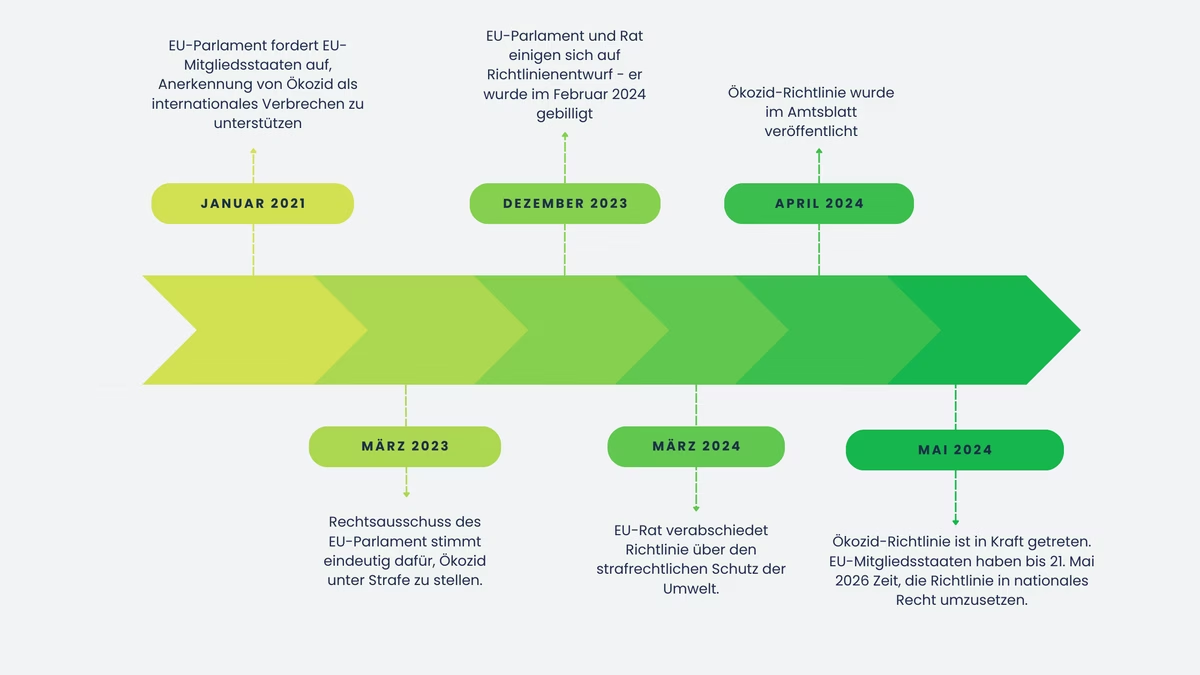
- December 07, 2023: EU Parliament and Council agree on a joint draft directive
- February 27, 2024: The EU Parliament approves the draft directive on the criminal law protection of the environment (Ecocide Directive / Environmental Crime Directive)
- March 26, 2024: The EU Council adopts the directive by a large majority - 499 votes in favour, 100 against and 23 abstentions
- April 30, 2024: The directive is officially published in the Official Journal of the EU
- May 20, 2024: The directive comes into force and replaces the previous regulations 2008/99/EC and 2009/123/EC
- May 21, 2026: Deadline for all member states to transpose the directive into national law
The new directive replaces the previous EU regulations from 2008 and 2009 and goes significantly further than its predecessors. For the first time, environmental offenses that cause significant damage to nature are explicitly included in national criminal law, comparable to what is internationally referred to as "ecocide". The EU is thus creating a binding framework that obliges all member states to enact corresponding national laws and actively prosecute violations.
However, the significance of this directive goes beyond mere legislation. It sends a clear political message:
Environmental crimes are not trivial offenses, but serious crimes with real consequences for people and nature. The directive could therefore not only act as a turning point in environmental protection within Europe, but also serve as a catalyst for similar initiatives at international level and increase the pressure to finally recognize ecocide as a global crime.
Legal aspects
In the debate on environmental protection and responsibility for environmental damage, the issue of environmental degradation is increasingly coming to the fore.
Recognition as a crime in its own right
The central question in the current debate is: should ecocide be recognized as an international crime in its own right, on a par with war crimes or crimes against humanity? Many experts say yes. Because only with a clear legal basis can perpetrators be consistently held accountable.
An overview of the key arguments in favor:
- Legally binding: An independent definition creates a uniform international basis and closes existing protection gaps
- Deterrent effect: Criminal consequences provide clear incentives for companies and governments to avoid environmental destruction
- Accountability: polluters, whether corporations or states, could be prosecuted specifically and across borders
The biggest open question remains the threshold: at what point is environmental damage so serious that it should be prosecuted? This definition is crucial and at the same time one of the most controversial points in the international debate.
Ecocide - the fifth international crime alongside genocide, war crimes, crimes against humanity and aggression
Implementing supply chain law step-by-step in the company
The Rome Statute
The Rome Statute of the International Criminal Court already contains a provision on the protection of the environment, but only in the context of war crimes. Art. 8 para. 2 lit. b (iv) makes it a punishable offense to launch an attack that knowingly causes extensive, long-term and serious damage to the environment that is disproportionate to the military advantage.
The crucial catch is that this regulation only applies in times of war. Environmental destruction by companies or states in peacetime is therefore still excluded.
Two important attempts to change this:
- 2010 - Polly Higgins: The British lawyer proposed adding a separate ecocide offense to the statute - explicitly also for damage caused by companies and individuals. The proposal was rejected by the International Law Commission.
- 2019 - Vanuatu & Maldives: At the Conference of the Parties, both states again called for consideration of the inclusion of ecocide as an international crime in the Statute.
The Rome Statute thus shows both the progress and the limits of existing law: the will is recognizable, but the legal gap has not yet been closed.
Ecocide in the context of climate change
We are living in a time in which humans are changing the earth more than ever before. Through industrialization and the massive emission of greenhouse gases, humans have played a major role in causing climate change. Experts warn that the ruthless exploitation of nature - driven by economic interests - is not just an ecological problem, but has long been a global environmental crime.
Food for thought: the ruthless exploitation of nature is not just an ecological problem, it has long been a global environmental crime.
Ecocide as a war crime
Although there is no international law on ecocide, in 1977 the United Nations adopted the Convention on the Prohibition of Military or Any Other Hostile Use of Environmental Modification Techniques in War. This prohibits the use of such techniques to destroy other states. However, there is no precise definition of "widespread, protracted or severe". In addition, Article III emphasizes that peaceful environmental change must not be impeded. In July 2019, a group of scientists called for ecocide in conflict zones to be treated as a war crime, even if indirectly linked to the conflict.
📋 Did you know?
As early as 1977, the United Nations adopted a convention banning the use of environmental modification techniques in war - and yet to this day there is still no binding definition of "far-reaching, long-lasting or serious".
Liability of individuals
In cases of environmental degradation, it is often difficult to identify the individuals responsible. This is because environmental damage is often the result of a variety of actors, including government agencies, criminal organizations and companies with different national backgrounds. Criminal prosecution of such acts can take various forms, such as indirect perpetration, complicity, incitement and aiding and abetting. This is a response to complex networks in which several parties can potentially be responsible for environmental crime.
⚠️ Relevant for companies:
Environmental damage is rarely caused by a single person. Complicity, instigation or aiding and abetting can be sufficient to be held criminally liable - even without direct action.
Attribution of damages
The attribution of damages resulting from breaches of preventive protection obligations to avoid environmental damage is a complex legal and ethical issue. Fundamental to such attribution is the requirement that both the damage caused and its extent are considered foreseeable in advance. This means that companies and organizations must take proactive measures to identify and prevent potential environmental damage. If this does not happen and damage nevertheless occurs, questions of responsibility and liability arise.
The criminal prosecution of environmental crimes
The prosecution of environmental crimes under the Ecocide Directive is an important step in the fight against environmental crime and pollution. Clear rules ensure that perpetrators are held accountable for their actions. Both national and international bodies play a crucial role in this. The EU Commission and the Member States are working together to protect the environment from further damage.
Businesses need to be aware that breaches of environmental laws can have serious consequences. The Environmental Crime Directive sends a clear signal to stop environmentally harmful practices and highlights the need for a sustainable approach to our environment. Only through consistent measures and criminal prosecution can positive change be achieved in the long term.
The Directive contains 20 different offenses, which are listed in Article 3(2) of the Directive. Both known and new offenses are covered. The focus is on offenses where the result of the offense is death, serious injury to persons or significant damage to an ecosystem, animals or plants. This may have been caused by acts that have already been committed or by conduct that is likely to cause such damage.
📋 Good to know:
The Environmental Crime Directive comprises 20 criminal offenses - including offenses that cause death, serious injury or significant damage to ecosystems, animals and plants.
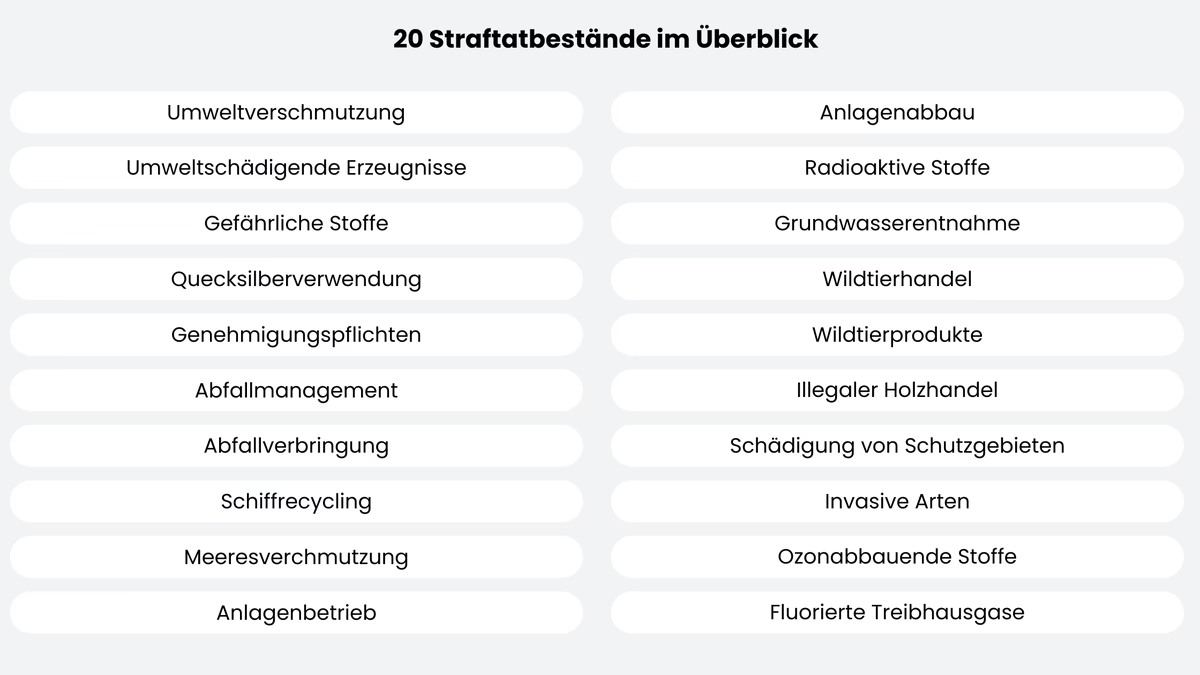
The 20 criminal offenses
- a) Pollution of air, soil and water
- b) The placing on the market of environmentally harmful products
- c) The manufacture, placing on the market, making available on the market, export or use of dangerous substances
- (d) the manufacture, use, storage, import or export of mercury
- e) The implementation of projects without authorization
- f) The collection, transportation and treatment of waste, as well as the operational monitoring of these processes and aftercare
- g) The shipment of not insignificant quantities of waste
- h) The illegal recycling of environmentally harmful ship parts
- i) Pollution of the oceans by ships
- j) The operation or closure of a facility where hazardous activities are carried out, stored or used
- k) The construction, operation and dismantling of environmentally harmful installations
- l) The improper handling of radioactive material or radioactive substances, from production to disposal
- m) Groundwater abstraction
- n) The trade in, killing, destruction, taking or possession of protected wild animal or plant species
- (o) the trade and importation of one or more specimens of wild animals or plants, or parts or derivatives thereof
- p) The placing on the market of illegally harvested timber and relevant products and products from deforestation (see also EUDR)
- q) Significant damage to or disturbance of protected areas
- r) The introduction of invasive species
- (s) the production, placing on the market, import, export, use or release of ozone-depleting substances
- (t) the production, placing on the market, import, export, use or release of fluorinated greenhouse gases
In the trilogue, an aggravated penalty was agreed for serious environmental offenses in order to assess damage to the environment that destroys or irreversibly and significantly damages important ecosystems, habitats in protected areas or the quality of air, soil or water. The minimum maximum sentence is 8 years. This approach replaces the previously discussed general clause due to compatibility problems with the list approach of the directive. In many cases, criminal liability for environmental crimes is also to be introduced for gross negligence.
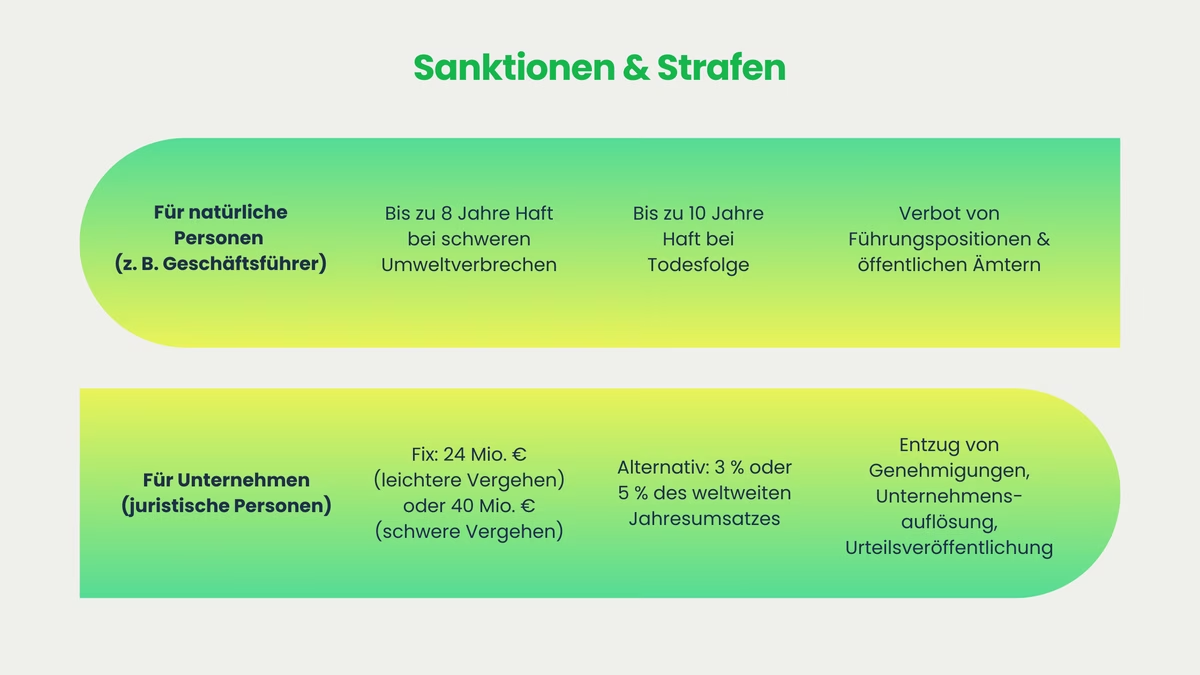
This range of penalties is to be expected
For the first time, the directive sets out binding penalties. Different sanction mechanisms apply depending on the severity of the offence and the type of person or organization involved.
Custodial sentences for natural persons
For natural persons such as managing directors or board members, the directive provides for specific penalties of three, five, eight or ten years' imprisonment, depending on the severity of the offense:
- Up to 8 years imprisonment for serious environmental crimes
- Up to 10 years imprisonment in the event of death
- Additionally possible: ban on management positions in companies, exclusion from public office and the obligation to restore the original environmental status
For Germany, this means a need for adaptation: the existing system of German criminal law with penalties of one, two, three, five and ten years does not fully cover the new requirements and must be revised accordingly.
High fines for companies
For legal entities, i.e. companies, the financial consequences are considerable and go far beyond the previous German maximum amount of 10 million euros. Member states can choose between two sanction models:
- Fixed minimum fines of 24 or 40 million euros, or
- Turnover-related sanctions of 3% or 5% of annual global turnover
However, companies have the opportunity to claim mitigating circumstances, for example through active cooperation in investigations or quick and effective damage limitation measures. The prerequisite is that suspected cases are investigated internally without delay.
Further sanctions
In addition to custodial sentences and fines, the directive provides for a number of other consequences, both for individuals and for companies:
For natural persons:
- Prohibition from holding management positions or public office
- Obligations to pay damages to affected parties
For legal entities:
- Exclusion from public financing and subsidies
- Withdrawal of operating licenses
- Placement under judicial supervision
- Obligation to set up environmental compliance systems
- Business activity bans or court-ordered company liquidations
- Partial or complete publication of judgments - significant reputational damage
Public participation
Article 15 of the Directive stipulates that not only directly affected parties but also environmental associations can be involved in the proceedings. However, this point was watered down in the legislative process: in the final version, individuals and associations only receive as many procedural rights as are provided for in the respective national codes of criminal procedure.
Special feature for Germany: end of the licensing protection gap
In German environmental criminal law, a central principle applied until now: anyone who had a valid official permit was protected from criminal prosecution - regardless of whether the content of this permit was correct. This loophole has now been closed by the new directive. In future, permits that clearly violate legal requirements will no longer protect against prosecution. For Germany, this means a considerable need to adapt environmental criminal law.
Anyone who had a permit in Germany was previously on the safe side - this is now changing.
Initiatives and existing laws
Preserving our environment has become increasingly urgent in recent decades. One initiative that plays an important role in this is Stop Ecocide International (SEI). This movement campaigns for the recognition of ecocide as an international crime.
Twelve countries have codified ecocide as a crime in peacetime, including Armenia, Belarus, Ecuador, Georgia, Kazakhstan, Kyrgyzstan, Moldova, Russia, Tajikistan, Ukraine, Uzbekistan and Vietnam. The definition is based on Article 26 of the draft of the International Law Commission (ILC). Although none of these countries have introduced procedures to measure intent, the effectiveness of these laws depends on various factors, such as the availability of enforcement procedures and the independence of the judiciary.
Last year, the first ecocide bills were passed in Belgium, the Netherlands, Italy and Spain, among others. Draft legislation has also been introduced in Peru this year.
Here are some countries that have recognized the crime in recent years and have passed corresponding laws:
The Climate Change and Resilience Act (Loi climat et résilience) was passed in August 2021, which includes up to 10-year prison sentences for ecocide crimes (L'article 231-3) and the government's obligation to report on progress towards an international crime of ecocide (L'article 296).
On August 17, a new law, Law 21.595(Ley 21595), was published in Chile. It amends the penal code in relation to economic offenses and includes a new section on "attacks against the environment", which contains several elements of the legal definition of the Stop Ecocide Foundation.
In February 2024, the Belgian federal parliament voted in favour of a new penal code for the country, which for the first time provides for the recognition of the crime of ecocide at both national and international level. At national level, the aim is to prevent and punish the most serious cases of environmental destruction, such as large-scale oil spills, for individuals in the highest positions of decision-making power and for companies.
On March 26, 2024, the European Council approved a new EU environmental directive with stricter sanctions and extended criminal offences. This directive criminalizes cases that are considered "comparable to ecocide". It is known as the Ecocide Directive or the Environmental Crime Directive. The member states now have a 24-month period to adapt national legislation to the newly adopted directive.
Challenges during implementation
The new directive is a milestone. But there is a long way between law and practice. The member states face a number of specific challenges that make successful implementation more difficult.
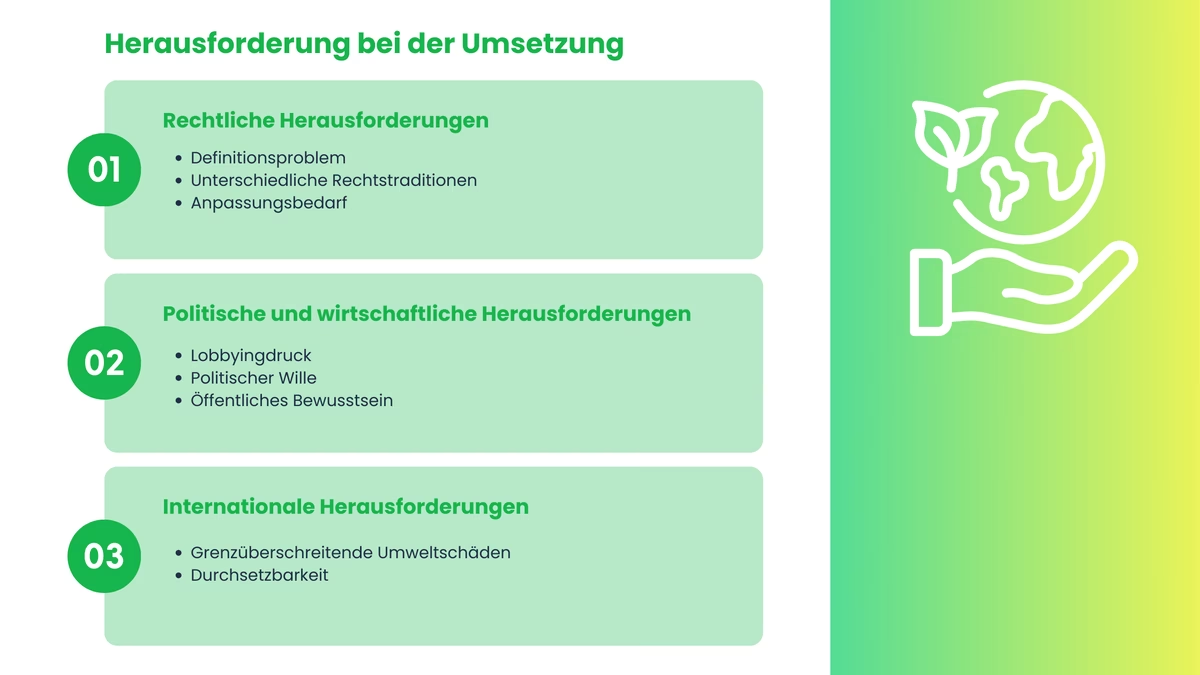
Legal challenges
- Definition problem: The exact definition of ecocide as an independent criminal offense is complex. When is environmental damage considered a criminal offense?
- Different legal traditions: Some of the 27 Member States have very different legal systems, which makes uniform implementation difficult
- Need for adaptation: National laws need to be revised to comply with the new EU standards. This is a complex and time-consuming process
Political and economic challenges
- Lobbying pressure: Economic interests could slow down or weaken progress
- Political will: Consistent implementation requires a clear commitment from national legislators, as not all Member States are moving at the same pace
- Public awareness: Only if the population understands the relevance of the directive will there be sufficient pressure on political decision-makers
International challenges
- Transboundary environmental damage: ecocide does not end at national borders. Close cooperation between member states and international partners is therefore essential
- Enforceability: The effectiveness of the directive depends on how consistently it is applied in practice and coordinated internationally
Conclusion
Despite all the obstacles, consistent implementation remains essential - because only a joint, coordinated approach can effectively stop environmental crime in the long term.
Potential and opportunities of the Ecocide Directive
The Environmental Crime Directive is more than just a legal instrument, it is an opportunity to fundamentally redefine how environmental crime is dealt with. Its potential goes far beyond mere legislation.
Legal effect: For the first time, the directive creates a binding European framework that:
- holds individuals and companies accountable for negligent or intentional environmental damage
- Acts as a deterrent and deters potential offenders from harmful activities
- Can serve as a model for international standards, far beyond Europe
Social impact: When civil society and organizations are given concrete legal tools to take action against environmental violations, a broader mobilization for environmental justice emerges - a sense of collective responsibility for our common resources.
The directive has the potential to promote more than just individual responsibility. It can create a strong social awareness of the urgency of environmental protection.
Kulturelle Impulse: Ecocide on stage: did you know that? In 2020, director Andres Veiel staged a play about ecocide and posed an uncomfortable question: who is legally and morally responsible for the destruction of our livelihoods?
The play impressively demonstrates how art can contribute to making complex legal and social issues accessible to a broad audience and encourages reflection on responsibility and necessary action.
Long-term perspective: The integration of the directive into national legal systems is just the beginning. In the long term, it could:
- Setting new standards in international environmental law
- Securing a firm place for the principles of environmental protection in the European legal framework
- Promoting a harmonious coexistence between economic activity and ecological responsibility
What does ecocide have to do with companies?
Ecocide is not an issue that only concerns governments or activists, as it has long since arrived in the corporate world. Economic activities are inextricably linked to the environment, and business decisions can have far-reaching consequences for ecosystems. Four dimensions make it clear why the topic is relevant for every company:
Importance of ecocide for companies
The new Environmental Crime Directive makes it clear: environmental violations are no longer trivial offenses. Companies that violate environmental regulations or fail to implement adequate protective measures risk being prosecuted:
- Fines of up to 40 million euros or 5% of annual global turnover
- The withdrawal of operating licenses
- Business activity bans or court-ordered company liquidations
- Public publication of judgments - with considerable reputational damage
Consumers are attaching increasing importance to sustainability and ethical behavior. Those who ignore ecological responsibility not only risk legal consequences, but also a massive loss of trust - among customers, partners and the public.
Sustainability has long been a decisive investment criterion. Investors are increasingly examining how companies deal with environmental and sustainability risks. Two concepts play a central role here:
- CSRD reporting: Mandatory sustainability reporting makes environmental impacts transparent for investors and the public
- ESG (Environmental, Social, Governance): ESG makes environmental and sustainability risks measurable and controllable - via clear criteria, KPIs, responsibilities and traceable processes
Companies that act proactively and establish sustainable practices not only safeguard their reputation - they also create a real competitive advantage. Environmental risks should therefore be seen as an integral part of any strategic corporate planning.
The question is no longer whether companies have to assume environmental responsibility - but how quickly they do it.
Conclusion
The Environmental Crime Directive is more than just another law, it is a clear signal: environmental crimes will no longer be tolerated. With binding penalties, clear responsibilities and a uniform legal framework across Europe, it could become a turning point in global environmental protection.
But laws alone are not enough. Companies, governments and society must act together, because the clock is ticking. The member states have until May 2026 to implement the directive. What happens after that will show whether Europe puts its money where its mouth is.
Everything you need to know about the Ecocide Directive
Frequently asked questions
Recognizing ecocide as an international crime would bring about several important changes:
- Accountability: Companies and individuals could be held accountable for environmentally destructive practices.
- Preventive measures: A legal framework would help to prevent harmful activities in advance.
- International cooperation: A common understanding and legal consensus could strengthen global cooperation in environmental protection.
The EU has committed itself to a high level of environmental protection - legally enshrined in Article 191 of the Treaty on the Functioning of the European Union (TFEU). The aim is to protect all natural resources such as air, water, soil and ecosystems, while at the same time taking into account the regional circumstances of the Member States. This is based on three key principles: the precautionary principle (identify potential risks at an early stage and take action), the preventive principle (proactively prevent damage before it occurs) and the polluter pays principle (those who cause damage also bear the costs).
Environmental crime is a growing threat - from illegal waste disposal to violations of environmental regulations. As these crimes often cross borders, coordinated European cooperation is essential. The EU is responding with targeted measures that not only protect the environment, but also safeguard citizens' fundamental rights - because everyone has a right to a clean and healthy environment.
Article 1 of the Directive lays down minimum rules concerning the definition of criminal offenses and sanctions in order to ensure more effective environmental protection. It also lays down measures to prevent and combat environmental crime and to ensure the effective enforcement of Union environmental law.
The criminal offenses that are relevant in the context of this Directive are listed in detail in Article 3. This article forms the basis for understanding the various environmental offenses that are considered punishable and can therefore have consequences. In total, the relevant catalog includes a large number of 20 specific environmental crimes.
The careful listing of these environmental crimes in the Directive is essential to create a clear legal framework that obliges both states and companies to adopt and maintain environmentally responsible practices. Such regulations not only help to protect the environment, but also promote responsible behavior within society.
It is therefore of the utmost importance that companies and organizations take a close look at the contents of Article 3 of the Directive. In this way, they can not only avoid potential legal consequences, but also actively contribute to the preservation and improvement of the environment. A sound knowledge of the specific environmental offenses makes it possible to implement appropriate preventive measures and to promote an awareness of sustainability within operations and corporate culture.
Article 3(3) defines a qualifying offense as an act that either
a) destroys an ecosystem of significant size or ecological value, a habitat within a protected area or the quality of air, soil or water; or
b) either irreversibly or permanently causes extensive and substantial damage.
It is generally accepted that gross negligence always occurs when the due care required in traffic is breached to a particularly serious degree. Under the Directive, gross negligence is punishable in all cases referred to in Article 3(2), with the exception of e and h.
Responsibility for the implementation and interpretation of the Directive lies with the individual Member States of the European Union. Article 3(5) of the Directive also allows Member States to define additional criminal offenses in accordance with their national law. This flexibility allows countries to take into account the specific circumstances and challenges of their respective legal systems.
This regulation is of great importance as it ensures that the legal framework is not only harmonized, but also addresses the specific requirements and circumstances of each individual country. The implementation of such additional criminal offenses can help to implement more effective measures against possible violations and thus strengthen confidence in the rule of law.
In the relevant cases, Article 3(6) of the Directive takes into account the following criteria:
- The initial state of the affected environment,
- The long-term, medium-term or short-term nature of the damage,
- The extent of the damage,
- The possibility of reversibility of the damage.
According to Article 3(7) of the Directive, there are three criteria for assessment:
- The activity is risky or dangerous for the environment or human health and requires an authorization that has not been granted or whose conditions have not been met.
- The harm exceeds the specified level, such as a regulatory threshold, value or other prescribed parameter. These values may be set in accordance with EU regulations, national law or an authorization granted for the action.
- The material or substance has been classified as hazardous or otherwise harmful to the environment or human health.
The relevant cases can be found in Article 3(2)(f)(i) and in points (g), (n), (o) and (p). These are waste and trade in wild animal or plant species, raw materials and products of deforestation.
The assessment shall be carried out in accordance with paragraph 8 on the basis of quantitative consideration. The following criteria are used to determine whether a quantity is to be classified as significant or insignificant:
- The number of items affected
- The extent to which a regulatory threshold, value or other prescribed parameter is exceeded
- The conservation status of the animal and plant species concerned
- The cost of environmental restoration (where a cost assessment is possible).
These acts are punishable by law. It is the responsibility of the Member States to ensure that inciting and aiding and abetting these acts are also prosecuted. In addition, the attempt to commit the aforementioned offenses should also be punishable, provided that the cases referred to in Article 3(2)(a-d), (f), (g), (i-m), (o), (p), (r), (s) or (t) are involved. Therefore, there are only a few criminal offenses for which the attempt is not already punishable.
Article 5 of the Directive is devoted to sanctions, which should be effective, proportionate and dissuasive.
For offenses under paragraph 2 letters a-d, f, j, k, l, r (offenses involving dangerous substances, materials and equipment), a prison sentence of at least ten years shall be imposed if the death of a person was caused by these acts.
Offenses under paragraph 3 (qualified offenses) may be punished with a maximum prison sentence of at least eight years.
Offenses falling under Article 3 paragraph 4 and relating to Article 3 paragraph 2 letters a-d, f, j, k and l may be punishable by terms of imprisonment of at least five years if they cause the death of a person.
The offenses referred to in paragraph 2 letters a-l, p, s, t may be punished with custodial sentences of a maximum of at least five years.
The offenses referred to in paragraph 2 letters m, n, o, q and r (mainly concerning flora and fauna) may be punishable by a maximum term of imprisonment of at least three years.
Member States are obliged under Article 5(3) of the Directive to ensure that the necessary measures against natural persons include the following:
- The obligation to restore the environment to its previous state within a certain period of time (if reversible).
- The payment of compensation for environmental damage if the damage is irreversible or the polluter cannot restore the previous state.
- The imposition of financial penalties and fines that are proportionate to the seriousness of the offense and the individual financial and other circumstances of the natural person concerned. The severity and extent of the damage as well as financial benefits from the offense can be used as further criteria.
- Exclusion from access to public financing.
- The ban on holding a management position of the same kind in legal entities.
- The withdrawal of permits and approvals.
- A temporary ban on running for public office.
- In individual cases, the court decision may be published if it is in the public interest.
Article 6 is dedicated to the liability of legal persons. Legal persons are held liable if the offense was committed for the benefit of the legal person who acted either alone or as part of an organ of the legal person concerned and who holds a leading position within this legal person. This may, for example, be the power of representation.
Legal persons may also be held liable if criminal offenses are committed by subordinates in accordance with the aforementioned articles due to a lack of supervision or control by managers.
It is important to note that the liability of the legal entity does not exclude the possibility that natural persons may also be prosecuted if they are involved as perpetrators, instigators or accomplices in the aforementioned criminal offenses.
Article 7(2) provides for a wide range of sanctions against legal entities that commit environmental offenses. Member States are required to impose measures such as fines, environmental restorations, compensation payments, financing bans and business restrictions on such companies. If necessary, additional sanctions such as supervision by courts or even dissolution can be imposed. Companies that have facilitated criminal acts can be closed down. Companies must also implement systems to ensure compliance with environmental standards. Court decisions regarding environmental offenses may be made public if there is a public interest.
Member States should set appropriate financial penalties for legal persons who commit criminal offenses (paragraph 3). These penalties should be proportionate to the seriousness of the offense and the financial situation of the company. A minimum level of penalties must also be observed.
For the offenses referred to in Article 3(2)(a) to (l), (p), (s) and (t), the Directive provides that legal persons must pay a fine of either 5% of their total worldwide turnover in the corresponding financial year or EUR 40,000,000.
For the remaining offenses under Article 3(2)(m), (n), (o), (q) and (r), fines of either 3% of the company's total worldwide turnover or EUR 24 million may be imposed.
Where it is not possible to calculate the amount of the fine on the basis of turnover, Member States may lay down alternative rules. Furthermore, Member States must ensure that legal persons responsible for qualifying offenses referred to in Article 3(3) may be subject to more severe sanctions than for offenses referred to in Article 3(2).
Article 8 requires Member States to ensure that certain circumstances are taken into account as aggravating circumstances for relevant offenses, provided that they do not constitute constituent elements of those offenses.
Aggravating circumstances include the destruction of ecosystems, participation in criminal organizations, the use of falsified documents, abuse of authority, previous convictions for similar offences and the unlawful obtaining of financial benefits. The destruction of evidence, intimidation of witnesses by the perpetrator and crimes committed in protected areas or areas of Community importance are also considered aggravating circumstances.
Member States have the possibility to consider certain circumstances as mitigating in relation to certain offenses and to take appropriate measures (see Article 9). These include restoring the environment, minimizing damage prior to criminal investigations and providing information to authorities to assist in the prosecution of offenders or the collection of evidence.
Member States shall lay down limitation periods in order to combat criminal offenses effectively. The limitation periods for criminal offenses shall be based on the maximum possible penalty (Article 11(2)):
- At least ten years from commission for offenses with a maximum sentence of at least ten years' imprisonment,
- At least five years from the date of commission with a maximum sentence of at least five years' imprisonment,
- At least three years from the date of commission for maximum sentences of at least three years' imprisonment.
Member States must also set an appropriate limitation period to allow sanctions to be enforced for a reasonable period of time after a final conviction for certain offenses. The limitation periods following final convictions vary according to the seriousness of the offense (Article 11(3)):
- For prison sentences of more than 5 years or for criminal offenses with up to 10 years in prison, the statute of limitations is at least 10 years.
- For prison sentences of more than one year or offenses with a possible prison sentence of at least 5 years, a period of at least 5 years applies.
- For prison sentences of up to one year or for criminal offenses with a maximum prison sentence of at least three years, the limitation period is at least three years.
Article 14 of the Directive refers to the protection of persons who report or assist in the investigation of environmental crimes.
Whistleblower protection refers to the legal framework that protects individuals who report information about illegal or unethical behavior within an organization. These individuals, often referred to as whistleblowers, play an essential role in exposing wrongdoing, fraud or environmental pollution. Protecting these whistleblowers ensures that they do not have to fear negative consequences, such as reprisals or even dismissal, if they point out wrongdoing.
The Ecocide Directive, on the other hand, aims to define serious environmental offenses as criminal offenses and thus create a legal framework that protects nature and the planet. In this context, the role of whistleblowers is of particular importance. After all, in order to prevent ecological damage such as deforestation, water pollution or other environmentally harmful activities, informed employees and citizens must be able to report such incidents without fear of negative consequences.
People who report breaches of Union environmental law make an important contribution to protecting the environment and the common good. These so-called whistleblowers are protected by Directive (EU) 2019/1937, which replaces the previous Directives 2008/99/EC and 2009/123/EC. The protection is intended to ensure that people who report irregularities are protected from retaliation. This is crucial as potential whistleblowers are often reluctant to speak out about their concerns. The Directive ensures balanced and effective protection for these courageous individuals.
Persons outside the reporting system of EU Directive 2019/1937 could also have important information about environmental offenses. This includes active environmentalists or members of affected communities. It is crucial that persons reporting or assisting in the prosecution of environmental crimes receive adequate support during criminal proceedings in order to avoid potential disadvantages and receive support instead. These support measures should be available to those involved in accordance with their national procedural rights and should be at least equivalent to those provided to other parties in criminal proceedings. Persons reporting environmental crimes or participating in criminal proceedings should be protected from prosecution in accordance with their rights. The exact nature of the support and assistance measures shall be determined by the Member States.
Member States must ensure that persons who are or may be subject to certain criminal offenses have adequate procedural rights in the relevant proceedings (Article 15). This also applies to non-governmental organizations that promote environmental protection and meet national requirements. Member States must also ensure that the public is informed about the progress of proceedings.
The Directive does not necessarily require the introduction of new procedural rights for the public concerned. However, if comparable rights exist in a Member State for other criminal offenses, they should also apply in environmental criminal proceedings. It is important to keep the distinction between "members of the public concerned" and "victims" clear. States do not have to apply victims' rights to members of the public and are not obliged to grant these groups the same procedural rights as other persons.

Larissa Ragg
LinkedInMarketing Managerin · lawcode GmbH
Larissa Ragg verantwortet die Content-Strategie bei lawcode und erstellt Fachbeiträge zu den Themen EUDR, ESG-Compliance, HinSchG, Supply Chain und CSRD. Ihre Beiträge auf dem lawcode Blog machen komplexe regulatorische Anforderungen verständlich und liefern Unternehmen praxisnahe Orientierung.