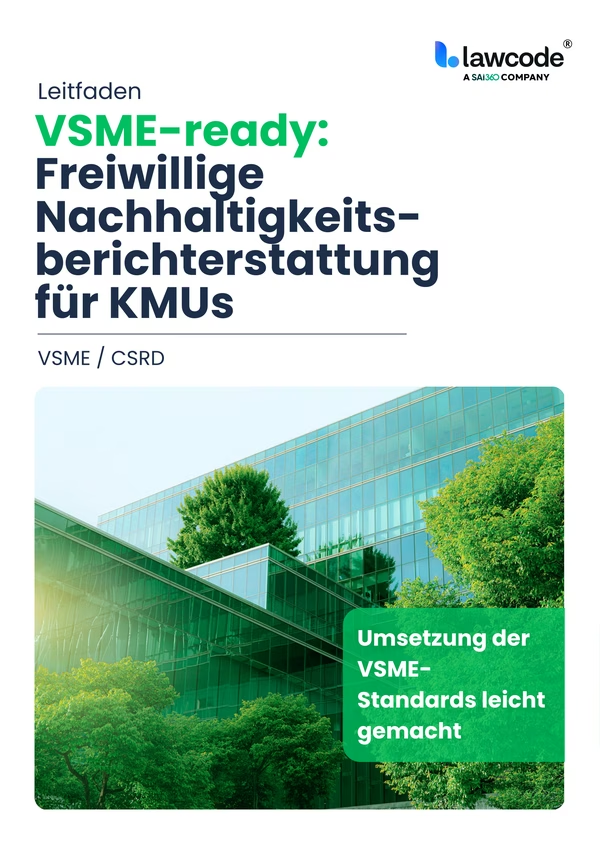
The VSME standard provides small and medium-sized companies with a clear framework for voluntary ESG reporting without excessive effort. Our free guide shows you how to report on your sustainability performance in a structured and credible manner and thus secure strategic competitive advantages.
Including roadmap for VSME implementation in the company.
Fill out the form and receive the guide immediately by e-mail.
Over 1,500 companies already trust lawcode.
Contents of the guide
Compact, practical and directly implementable for SMEs without their own ESG department.
What has changed recently? We explain the latest version of EFRAG's VSME standard, which topics are subject to reporting and what this means for SMEs in practice.
What is VSME and why is it relevant for SMEs? What modules are there? What obligations arise from the supply chain requirements of larger business partners?
What does voluntary mean in practice? When will VSME become standard? What are the consequences of non-reporting to banks and supply chain partners?
From the data basis to materiality analysis and report publication. How to collect and present environmental, social and governance data in a structured way.
VSME as a competitive advantage: How to use voluntary reporting to improve access to finance, convince customers and meet supply chain requirements.
Fill out the form and receive the complete guide immediately by e-mail: free of charge and without obligation.
For whom?
Data points instead of 1,000+
The VSME standard only includes around 75 data points, which is significantly fewer than the more than 1,000 data points required for CSRD reporting.
Two modules: Basic & Comprehensive
Micro-enterprises start with the Basic module. More ambitious SMEs choose the Comprehensive module with more detailed ESG data and strategic orientation.
No obligation to audit, no obligation to publish
The VSME standard does not require an external audit or mandatory publication. You decide when and how you report.
These guides might also interest you.
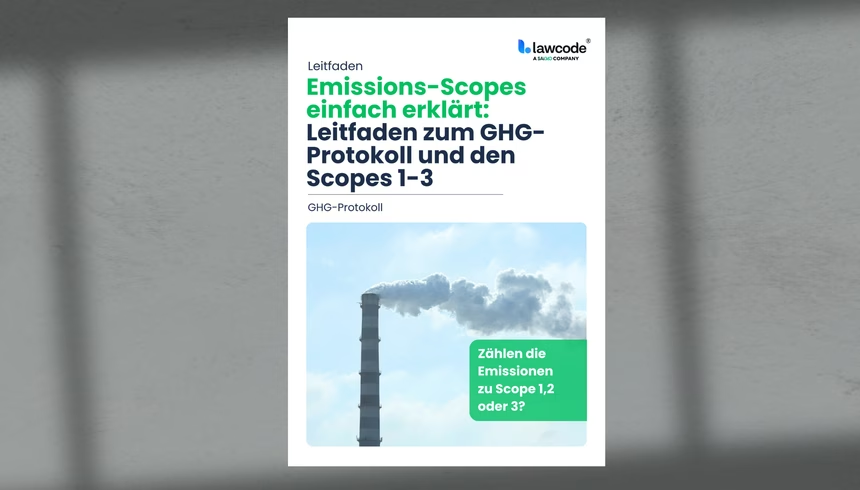
Which emissions in your company belong to Scope 1, 2 or 3 and why is this crucial for your carbon footprint, targets and reporting? This guide provides you with a clear, practical classification according to the GHG Protocol, including typical examples and common pitfalls.
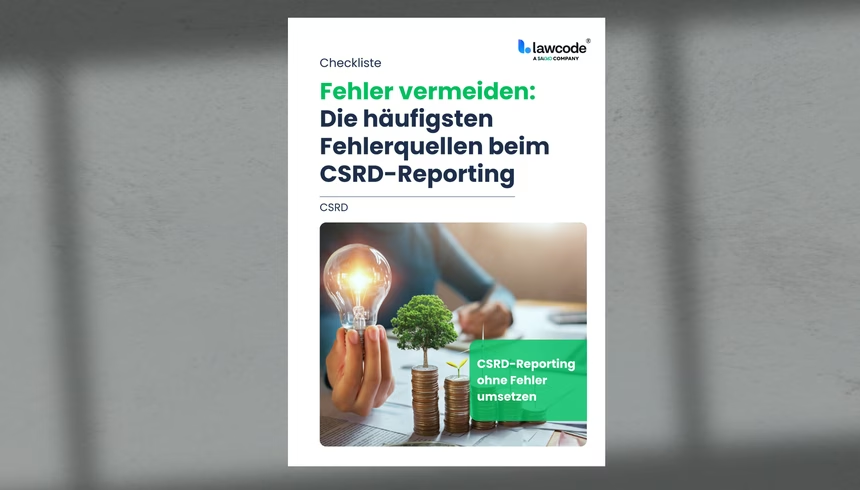
Do you want your next sustainability report to be as error-free as possible? In our checklist, you will find an overview of the most common sources of error that companies have made in CSRD reporting according to the ESG Monitor. Get our checklist now and find out how to avoid these mistakes before you have to submit your first CSRD report.

Are you about to prepare your sustainability report and wondering how it should be structured and what it should contain? Our detailed guide gives you step-by-step instructions, from the materiality analysis to publication.

 DE
DE