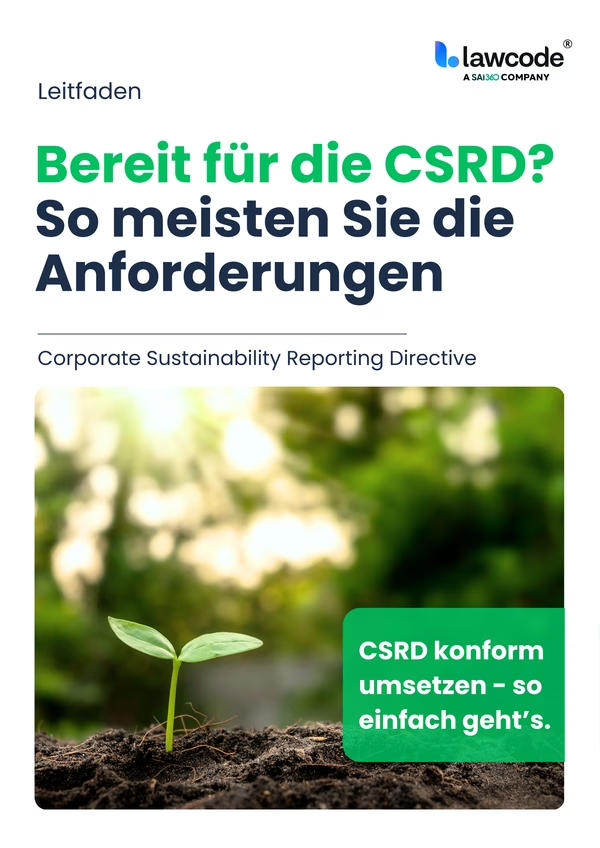
Get all the important information and tools you need to master the new requirements of the Corporate Sustainability Reporting Directive (CSRD) with ease. Use our guide to secure a competitive advantage through transparent and future-proof sustainability reporting.
Fill out the form and receive the guide immediately by e-mail.
Over 1,500 companies already trust lawcode.
Contents of the guide
From the CSRD basis to a future-proof sustainability strategy.
The objectives, obligations and the path to transparent sustainability reporting are presented in an understandable way. You will learn what distinguishes the CSRD from previous rules and why it fundamentally changes reporting.
You will receive an overview of all reporting obligations and the staggered timetable for each company size and type, including exceptions and transitional arrangements.
Environmental, social and governance aspects as well as dual materiality in an understandable way: Which ESRS standards apply, which data points need to be collected and how to carry out the materiality analysis in a structured manner.
Possible sanctions for CSRD violations and how to avoid them, from fines and reputational risks to restrictions on capital market access.
Find out how transparent sustainability reporting creates trust among investors, banks and customers, strengthens competitiveness and positions your company for the long term.
Fill out the form and receive the complete guide immediately by e-mail - free of charge and without obligation.
For whom?
Large capital market-oriented companies
Companies with more than 500 employees that were already subject to the NFRD are reporting for the first time for the 2024 financial year.
All large companies
Large companies with 250 or more employees, € 40 million in sales or € 20 million in total assets report for the first time for the 2025 financial year.
Listed SMEs
Capital market-oriented SMEs and small and non-complex credit institutions report for the first time for the 2026 financial year.
These guides might also interest you.
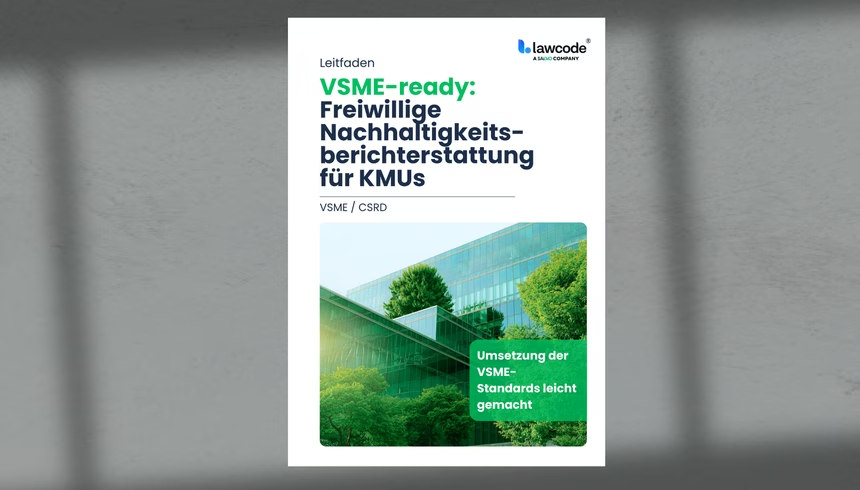
The VSME standard provides small and medium-sized companies with a clear framework for voluntary ESG reporting without excessive effort. Our free guide shows you how to report on your sustainability performance in a structured and credible manner and thus secure strategic competitive advantages.
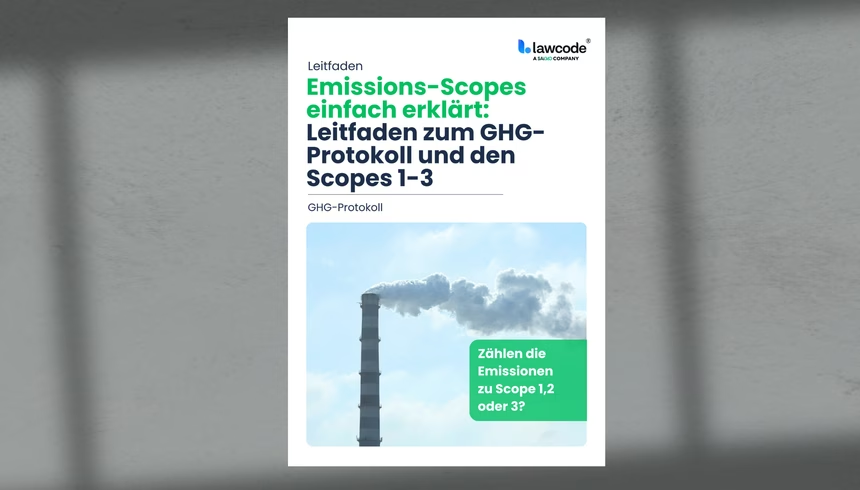
Which emissions in your company belong to Scope 1, 2 or 3 and why is this crucial for your carbon footprint, targets and reporting? This guide provides you with a clear, practical classification according to the GHG Protocol, including typical examples and common pitfalls.
Do you want your next sustainability report to be as error-free as possible? In our checklist, you will find an overview of the most common sources of error that companies have made in CSRD reporting according to the ESG Monitor. Get our checklist now and find out how to avoid these mistakes before you have to submit your first CSRD report.

 DE
DE