
 DE
DE

Important facts
- What is SCM Supply Chain Management?
- The definition of supply chain management refers to the strategic planning, control and optimization of all processes along the supply chain.
- What is the goal of SCM?
- The aim is to provide products at the right time, in the right place and in the right quantity in order to reduce costs, increase efficiency and maximize customer satisfaction.
- What phases does SCM comprise?
- SCM consists of six phases: Procurement, production, storage, distribution, sales and return (e.g. through recycling). Each phase contributes to the overall efficiency and sustainability of the supply chain.
- What role does technology play in SCM?
- Modern information systems such as ERP or IoT help to make processes more transparent, identify supply bottlenecks at an early stage and react quickly to disruptions.
- What significance does sustainability have in SCM?
- Sustainability is becoming increasingly important. Supply chain laws require companies to comply with environmental and social standards along the supply chain.
- What are the benefits of good SCM?
- Efficient SCM reduces risks, improves competitiveness and strengthens relationships with customers, partners and suppliers.
Abstract
Supply chain management (SCM) controls all steps in the supply chain, from procurement to delivery, with the aim of making products available at the right place at the right time. This avoids bottlenecks, reduces inventories and costs and increases customer satisfaction. The key levers are good warehouse and logistics management, the use of modern IT for transparency and faster decisions as well as effective risk management to minimize disruptions.
Sustainability is becoming increasingly important: sustainable SCM (SSCM) integrates environmental and social aspects into all phases, for example through lower-emission transportation, reduced greenhouse gases and compliance with labour standards. Regulatory requirements such as the Supply Chain Duty of Care Act increase the pressure to act. Overall, efficient and sustainable SCM strengthens competitiveness, improves processes and can have a positive impact on image and profitability.
Recommendations for action at a glance
→ Transparency: Make the supply chain and KPIs visible end-to-end.
→ Risk management: Identify risks early and hedge them with scenarios or alternatives.
→ Optimization: Standardize planning, inventories and logistics and focus on costs vs. service level.
→ Sustainability/compliance: Manage targets measurably and actively develop suppliers.
Never miss a supply chain update again.
New specialist articles, regulatory updates and practical tips, straight to your inbox. Once a week, no spam.
Basics of supply chain management
Definition and objectives
Supply chain management (SCM), also known as supply chain management, is relevant for companies in order to organize all steps of the supply chain as efficiently as possible. SCM refers to all processes from the procurement of raw materials to production and shipping to customers. It also takes into account all parties involved, such as suppliers, manufacturers, logistics service providers and retailers.
The aim is to ensure that the right products are available in the right place at the right time. In this way, bottlenecks can be avoided, costs reduced and customer satisfaction maximized at the same time. Efficient warehouse management plays a crucial role here. It enables companies to organize and monitor the inventory of goods across the entire value chain.
Transportation and logistics are closely linked and complement each other. The two sectors are crucial for transporting goods quickly and efficiently to where they are needed. Companies can improve these processes and procedures by using information technologies and modern software solutions. They receive information about orders for their products in real time. This enables them to respond more quickly to customer needs.
Risk management is another important task in SCM. Companies need to identify potential problems in their supply chain as early as possible in order to implement appropriate solutions. This can minimize disruptions and delays in the supply chain. Sustainable supply chain management is also becoming increasingly important, as environmentally friendly measures are having an ever greater impact on a company's success.
Companies that use well thought-out and efficient supply chain management can therefore benefit from a number of advantages: smooth shipping of goods, effective cost management and increased customer satisfaction are just a few examples.
SCM should therefore be seen as an important and forward-looking task, as companies can only remain fit for the future by continuously looking for ways to improve their value chain.
Importance of supply chain management for companies
Supply chain management (SCM) is a key success factor: it reduces costs, shortens delivery times and strengthens competitiveness because companies respond more quickly and reliably to customer needs. At the same time, SCM supports more environmentally friendly processes, for example through targeted supplier selection and optimized transport routes, and increases customer satisfaction and loyalty through punctual, high-quality deliveries.
Regulatory pressure is also growing: since 1 January 2024, the Supply Chain Due Diligence Act has required companies with 1,000 or more employees to minimize human rights and environmental risks in the supply chain. Overall, effective SCM makes companies more adaptable and more successful in the long term.
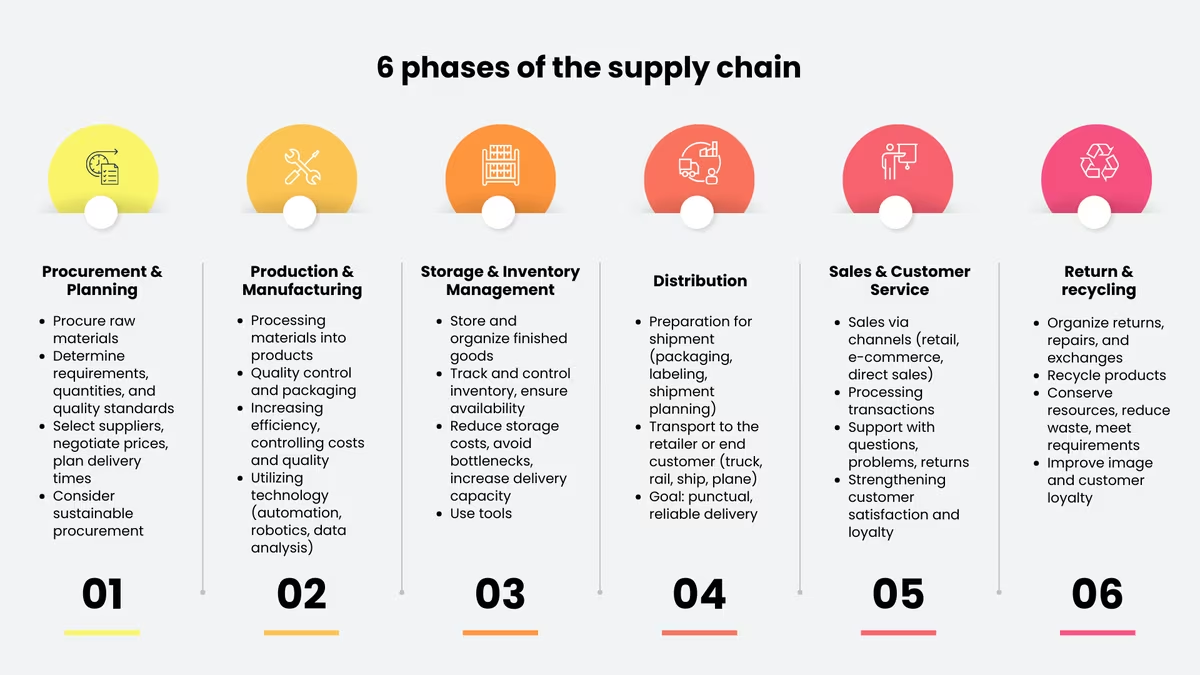
The end-to-end processes of a supply chain consist of six phases.
The different phases of the supply chain
In the initial phase of a supply chain, the focus is on procurement. Companies acquire the necessary raw materials, materials and components to manufacture their products. This process starts with the identification of the required materials and the determination of quantities and quality standards. In procurement planning, suppliers are then evaluated, prices and contract terms are negotiated and delivery deadlines are set. An effective and now also sustainable procurement strategy is crucial here. This is the only way to ensure that companies receive the materials they need on time and at competitive prices.
Once the materials are available, production and manufacturing follow. This is where the various products are manufactured using the raw materials and components. Production and manufacturing consist of various steps such as assembly, production, processing, packaging and quality control. It is important that the individual production steps are carried out as efficiently as possible. This enables production targets to be achieved, product quality to be assured and costs to be controlled. The more efficient the production process, the better the overall performance of the supply chain. Technological advances such as automation, robotics and data analysis can optimize manufacturing processes and increase productivity.
The third phase of a supply chain involves storage and inventory management. This is where the finished products are temporarily stored before they are shipped to customers or retailers. Warehouse management involves the storage, organization, tracking and control of stock. In particular, inventory control is crucial to ensure that products are available at the right time. Good inventory management is important for companies to reduce storage costs, avoid bottlenecks and improve delivery capability. Modern technologies such as warehouse management systems (WMS) and automated warehouse robotics can help to make warehouse operations more efficient and accurate.
The distribution process is the process by which goods are transported from the warehouse or distribution center to the end consumer or retailer. This phase includes various logistical activities such as packaging, labeling, dispatch planning and transport. The choice of suitable means of transportation depends on the type of products, distance and time constraints. Common means of transportation are trucks, trains, ships and airplanes. Timely and reliable delivery of products to customers depends on efficient distribution. Delays or problems in this step can lead to customer dissatisfaction.
After the products have been delivered to the customers, the sales and customer service phase follows. In this phase, the products are sold and all associated transactions are processed. This includes sales via various distribution channels such as retail stores, e-commerce platforms or directly from the manufacturer. Customer service also plays an important role as it provides support for questions, problems or returns. Effective customer service can increase customer satisfaction and strengthen customer loyalty.
The final step along the value chain deals with the return and recycling of goods. This includes the repair or replacement of defective products, the return of unwanted goods or the recycling of packaging materials. Return and recycling measures are primarily used when companies want to conserve resources, reduce waste and comply with environmental regulations. From an environmental point of view, recycling can offer a number of advantages. It can even improve a company's image and strengthen customer loyalty.
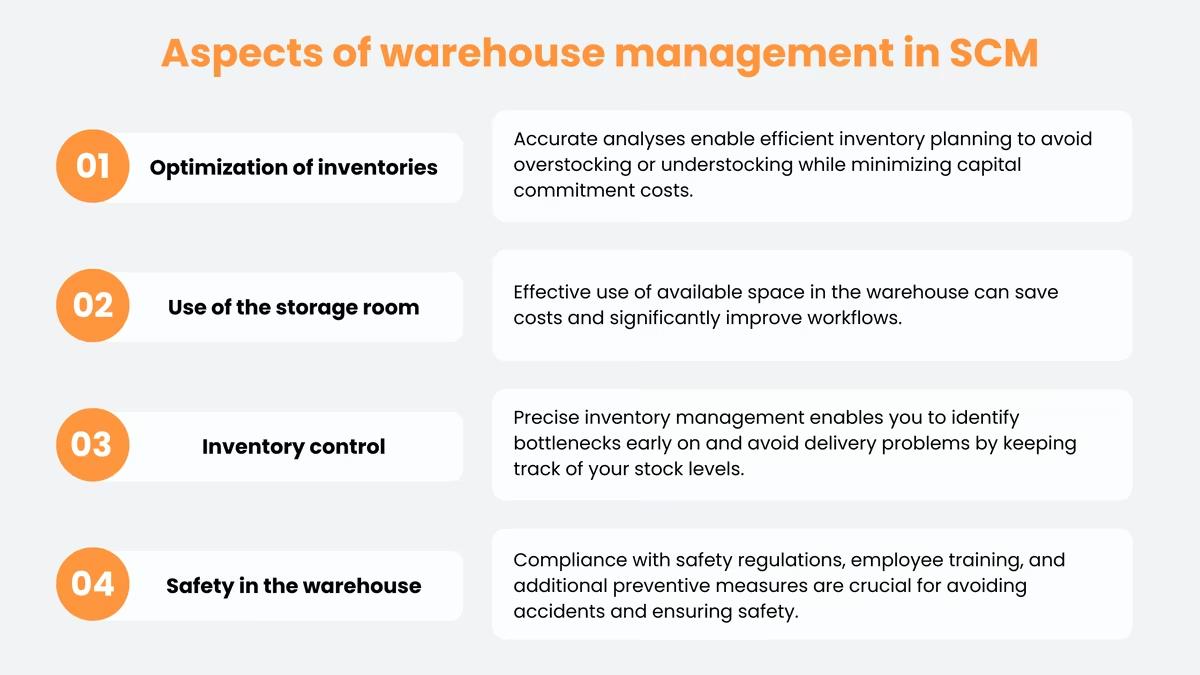
Aspects of warehouse management
Warehouse management plays a crucial role and contributes to the smooth running of the entire supply chain. There are various factors that need to be considered to ensure the efficiency and effectiveness of the entire process.
Optimization of inventories
A key element for success in the supply chain is efficient inventory management, which ensures that stock levels are optimally planned and monitored. Precise demand forecasts enable companies to manage their stock levels in such a way that neither excess stock nor bottlenecks occur. This not only minimizes storage costs, but also ensures a smooth production and delivery process. Modern warehouse management systems support this by providing real-time data and triggering automatic reorders when stocks fall below a set threshold.
Efficient use of storage space as part of inventory management
The effective use of available storage space also plays a decisive role in cost-efficient warehouse management and logistics management. An intelligent arrangement of shelves and the use of lifting equipment help to make optimum use of the available space. This enables companies to reduce storage costs and increase the efficiency of work processes along the entire value chain. A well thought-out warehouse layout, combined with an integrated inventory management system, enables quick access to goods and significantly improves the flow of goods.
Stock control as the core of inventory management
Precise stock control is essential to avoid bottlenecks and ensure smooth delivery. Regular stock checks make it possible to have a complete overview of which products are in stock and which need to be reordered at all times. This control not only helps to optimize the supply chain, but also prevents costly delivery delays or production stoppages.
Safety in the warehouse
Another important aspect of warehouse management is safety in the warehouse. In order to prevent accidents and ensure the safety of employees, clear safety regulations should be adhered to and regular training should be provided. In addition, preventative measures against fires and theft are essential to ensure the integrity of the stock. These measures contribute significantly to the stability of the supply chain.
A well-organized warehouse is crucial for a smooth supply chain. Companies can optimize their delivery processes by carefully planning their stock levels. They should use the available space efficiently and ensure security in the warehouse. In this way, smooth processes can be ensured.
Transportation and logistics as part of supply chain management
Smooth cooperation between transportation and logistics is of great importance for the management of a supply chain. This is the only way to guarantee an efficient process, save costs and ensure customer satisfaction. Effective coordination of production, storage and distribution of goods enables a fast and smooth process.
Logistics and supply chain managers are responsible for the organization and control of all transport and warehousing activities. They ensure that different means of transportation such as trucks, trains or planes work together smoothly and that goods are stored properly. They also make sure that the goods reach the customer on time. If problems arise, they are solved directly.
Sustainability in the supply chain is becoming increasingly important today. Companies are focusing more on environmentally friendly alternatives such as electric cars and renewable energies in order to act sustainably. In addition, modern technologies and computer programs are helping to optimize internal organization and ensure an accurate overview of the supply chain.
Risk management now also plays an important role in responding appropriately to unforeseen events such as natural disasters or political crises. Events such as these can affect transportation and the entire supply chain and, in the worst case, even completely disrupt it. Strong risk management prevents this.
Information technology in the supply chain
Today, a company can no longer work without computers and various software. New technologies help to further increase efficiency in order to be even faster and more flexible. Companies can also optimize all processes in supply chain management by using the latest technologies and monitor and control everything from production to delivery with the utmost precision.
A prime example of the integration of information technology into the supply chain is the use of warehouse management systems (WMS) or enterprise resource planning (ERP) systems. With these tools, companies can control their inventory, track orders and plan deliveries. In this way, products can be delivered to customers on time. At the same time, fewer difficulties and problems arise.
Modern IT tools such as a warehouse management system allow companies to gain immediate insight into their supply chain. Using specialized devices such as sensors, they can closely monitor the location of their products, the environmental conditions and the condition of the goods. This information can prove useful when it comes to assessing supply chain performance and responding quickly to problems. The use of computers in the supply chain also helps to work in a more environmentally friendly way.
The use of IT tools brings further benefits: companies can reduce their energy consumption, cut their production of waste and find alternative transportation methods. According to a study, 94% of companies believe that such technologies help them to gain a better overview of their supply chain.
Management software in supply chain management is crucial for modern supply chains
Systems and technologies that revolutionize your supply chain management
Enterprise Resource Planning of Supply Chain (ERP) refers to the integration of cross-business processes in an organization using a single software solution. In the context of supply chain management, ERP refers to how companies can efficiently use their resources such as materials, labor and financial resources to optimize the supply chain.
As part of SCM, ERP provides a central platform on which all relevant information about the supply chain can be collected, analyzed and managed. The ERP system can link different business areas such as procurement, production, warehousing, sales and finance. This enables companies to plan their inventories better, shorten delivery times, avoid bottlenecks and increase efficiency along the entire supply chain.
With ERP systems, companies can use real-time data to make decisions and respond quickly to changes in demand or other external factors. By integrating ERP into SCM, companies can streamline their business processes, reduce costs and improve their competitiveness.
Warehouse Management Systems (WMS) are software solutions designed specifically for the efficient management of warehouses and distribution centers. They offer a range of functions, including inventory management, placement of goods, picking, packing, shipping and inventory management.
A WMS enables precise tracking of stock levels in real time. This leads to improved warehouse accuracy, reduced stock levels and efficient use of available warehouse space. By automating warehouse processes and integrating with other systems such as ERP and TMS, a WMS helps to optimize the entire chain and supply chain operations.
Transportation Management Systems (TMS) are software solutions that help companies plan, execute and monitor their transportation activities. A TMS offers functions such as route planning, freight cost optimization, shipment tracking, load consolidation and supplier management. By integrating real-time data on transportation capacity, freight rates and traffic conditions, a TMS enables efficient and cost-effective control of the transportation network. This leads to faster delivery times, lower transportation costs and improved customer satisfaction.
Supplier Relationship Management (SRM) encompasses the strategies, processes and technologies that companies use to manage and improve their relationships with suppliers. An SRM system enables companies to centralize supplier information, evaluate supplier performance, manage contracts, minimize supplier risks and identify collaboration opportunities. Through an effective supplier relationship, companies can improve the quality and reliability of their suppliers, reduce costs and promote innovation.
Demand planning software helps companies to forecast demand and orders. This enables them to optimize their inventory planning and avoid bottlenecks. This software analyzes historical sales data, market trends, seasonal patterns and other relevant factors to generate accurate demand forecasts.
By integrating with other systems such as ERP and WMS, the demand planning software enables seamless communication between the procurement, sales and production departments. This helps companies to have the right quantities of products in the right places at the right time. This is the only way to maximize customer satisfaction and optimize inventory levels.
Supply chain visibility tools provide companies with real-time insights into all aspects of their supply chain. This includes inventory movements, transportation status, supplier performance and customer demand. These tools use advanced technologies such as IoT sensors, RFID tags and big data analytics to collect, analyze and visualize data across the entire supply chain. By providing visibility and analytics, supply chain visibility tools help companies identify bottlenecks and issues early, minimize supply chain risks and improve responsiveness to changes in the market.
Logistics management in the operational supply chain
Logistics management is one of the central pillars of supply chain management and comprises the planning, implementation and control of the physical flow of goods, services and information along the supply chain. This includes not only transportation and warehousing, but also the material and information flows required for the smooth running of logistics processes.
Effective logistics management makes a significant contribution to reducing costs and throughput times by making optimum use of resources and minimizing stock levels. It aims to guarantee security of supply by ensuring that the right product is in the right place at the right time. At the same time, risks such as delays in transportation or supply bottlenecks are reduced, which improves responsiveness to market changes.
Technological solutions such as warehouse management systems (WMS), transportation management systems (TMS) and real-time tracking technologies play a central role in modern logistics management. As already mentioned, these systems enable logistics processes to be monitored in real time, delivery times to be optimized and bottlenecks to be identified at an early stage. Automation solutions, such as drones for warehousing or autonomous vehicles in transport, are currently revolutionizing the logistics industry and making supply chains more efficient and flexible.
The topic of sustainability is also becoming increasingly important in logistics management. Companies are increasingly relying on environmentally friendly transport methods, optimizing their route planning and reducing CO2 emissions through more efficient warehousing and transport processes.
Well-functioning logistics management is therefore not only crucial for the smooth running of the supply chain, but also for the long-term competitiveness of a company.
Risk management in SCM
Risk management in SCM is extremely important so that companies can manage their supply chains securely and efficiently. In today's networked world, companies are part of complex supply chains that extend from production to delivery to the customer. Various risks such as production stoppages, delivery delays or quality defects can occur time and again in supply chains.
To avoid problems in the supply chain, careful planning and control as well as close monitoring is required. Consideration should be given in advance to what difficulties could arise and how these can be resolved. It is important not to be dependent on just one supplier. By working with several different suppliers, the risk of disruptions and breakdowns can be minimized.
To manage risks in the supply chain, it is helpful to have access to computers and various software. This provides companies with up-to-date information about their supply chains so that they can react quickly to potential problems. If bottlenecks and delays are detected early, it is possible to react much faster and minimize the potential impact.
Sustainability is also becoming increasingly important when it comes to risk management in the supply chain. Companies that pay attention to environmental friendliness and fair working conditions tend to have fewer problems to contend with. Paying attention to sustainability has further advantages for companies: they become safer and at the same time more attractive to customers. Both have a positive effect on the company and are seen as a competitive advantage.
In supply chain management, it is important to minimize risks as they arise in order to ensure that everything runs smoothly. If computer programs and software systems are used synonymously for planning and monitoring, a company can reap many benefits. If sustainability aspects are also taken into account, this can have a positive impact on the company's image and success.
Sustainable Supply Chain Management
Sustainability of Supply Chain Management (SSCM) refers to the integration of environmental, social and economic aspects into all stages of the supply chain, including procurement, production, transportation, storage and disposal. The aim of SSCM is to minimize environmental impact, promote social responsibility and ensure long-term economic sustainability.
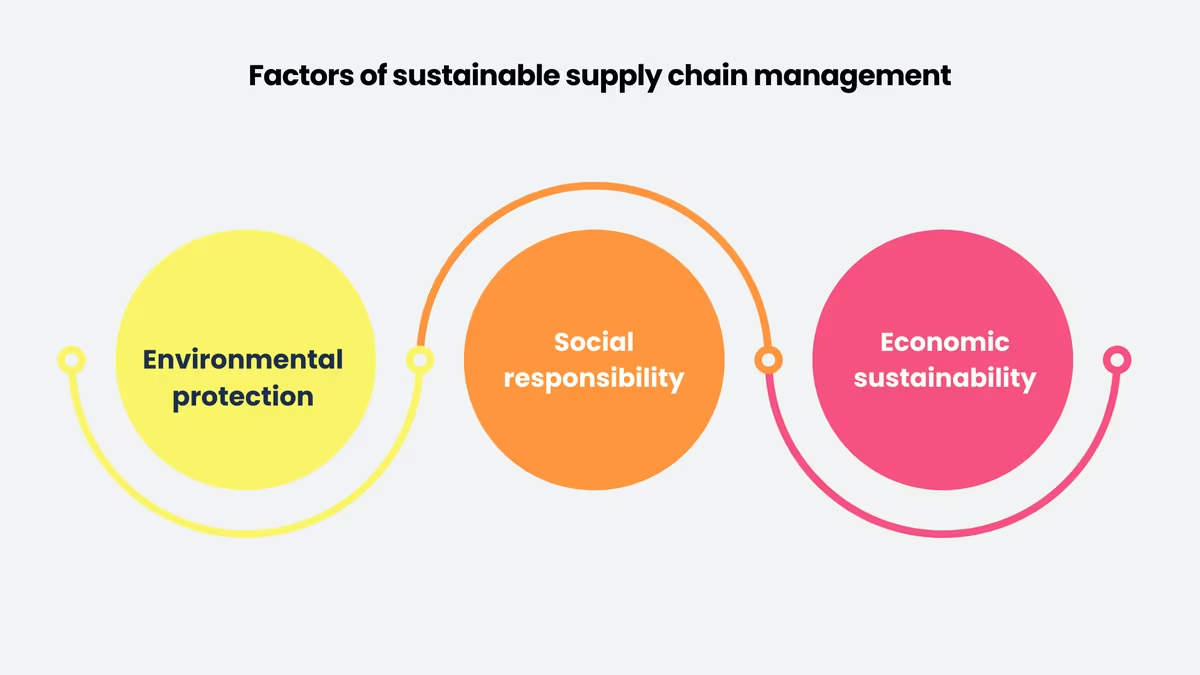
Factors of sustainable supply chain management
- Environmental protection: Environmental protection includes various measures such as reducing greenhouse gases, energy consumption, waste and pollution along the supply chain. To improve environmental protection, companies can, for example, switch to renewable energies, use more efficient means of transportation and introduce sustainable packaging solutions.
- Social responsibility: Social responsibility includes compliance with labor and human rights standards, fair working conditions, equal opportunities and respect for the rights of the communities in which companies operate. By promoting ethics and fairness in the supply chain, companies can achieve positive social impacts and strengthen stakeholder trust.
- Economic sustainability: Economic sustainability aims to ensure long-term value creation and competitiveness. This can be achieved by reducing risks, increasing efficiency and cutting costs. By making better use of resources, improving processes and procedures and promoting innovation, companies become economically stable in the long term.
Sustainability will play an increasingly important role, especially for companies that manufacture and supply products. Large corporations and multinational companies in particular must ensure that their operations are both environmentally and socially responsible. This means that they must pay attention to where and how their products are manufactured and how many emissions they produce in the process. One way to achieve this goal is to make supply routes and transport more efficient in order to minimize environmental impact - in line with sustainable supply chain management.
Switching to a sustainable supply chain not only offers environmental benefits, but can also lead to cost savings and improve the company's image. More and more customers prefer companies that are committed to environmental protection and social responsibility. 66% of consumers are even prepared to spend more money on sustainable products.
For sustainability to be successfully implemented in the supply chain, a holistic approach is required. This means that everyone involved in the supply chain - from manufacturers and suppliers to logistics companies - must work closely together.
Those who are responsible for management play a particularly important role. They ensure the cooperation of all parties involved and integrate sustainable practices into the supply chain processes. Supply chain managers or logistics managers must have the relevant know-how on how to make supply chains environmentally friendly and socially responsible. However, they must also undergo continuous further training in order to keep up to date with the latest legislation.
Implement LkSG compliant
We have summarized all the information about the German Supply Chain Act and its implementation in our guide.
In order to comply with the legal responsibilities for a sustainable supply chain, companies are obliged to fulfill nine due diligence obligations in accordance with Section 3 of the German Supply Chain Act(to the Act). It is therefore of great importance that companies consider sustainability to be a central component of their supply chain management and take appropriate measures.
Conclusion
An efficient supply chain is a key success factor: it improves processes, reduces costs, shortens delivery times and increases flexibility in the event of disruptions or market changes. Modern technologies create transparency regarding material, information and cash flows, so that risks can be identified earlier and processes can be controlled in a more targeted manner. The just-in-time principle helps to reduce inventories and use resources efficiently. Those who also align the supply chain sustainably strengthen competitiveness and customer confidence - and at the same time make a measurable contribution to the environment and society.
Frequently asked questions
Typical signals are frequent express deliveries, high stock levels despite delivery bottlenecks, many manual reconciliations, fluctuating on-time delivery and recurring quality problems.
OTIF/on-time delivery, lead time, inventory range/inventory turns, forecast accuracy and costs per order are a solid set because they cover service, speed and capital commitment.
Start with a supplier and material flow map for the most important products, standardize master data and build a small KPI dashboard, only then is the large system expansion worthwhile.
Better planning (S&OP/IBP routine), ABC/XYZ classification and clear replenishment rules reduce excess stocks, while safety stocks are only kept for critical parts.
JIT only works with stable suppliers, short lead times and defined buffers; for critical parts, dual sourcing or strategic safety stocks are the balance.
Prioritize risks (impact x probability), identify critical nodes (single sourcing, regions, capacities) and define concrete action plans, including responsible parties and test runs.
Not just "checking", but improving together: clear requirements, training, action plans, regular reviews and measurable progress (quality, deadlines, compliance, CO₂).
ERP for integrated planning/processes, WMS for warehouse processes, TMS for transportation and costs, SRM for supplier management, together they provide transparency and less manual work.
With key figures such as CO₂ per shipment/product, proportion of sustainable transportation, energy consumption in the warehouse, audit & action rate at suppliers and recycling/return rate.
The LkSG requires a systematic approach (identify risks, implement measures, provide evidence), SCM provides the processes, data and supplier management to ensure compliance on a day-to-day basis.

Karim Boukaouche
LinkedInESG compliance expert - lawcode GmbH
Karim Boukaouche advises companies on the implementation of the EU Deforestation Regulation (EUDR) and supports the implementation of digital solutions for legally compliant supply chains. His specialist articles on the lawcode blog combine regulatory depth with practical recommendations for action.