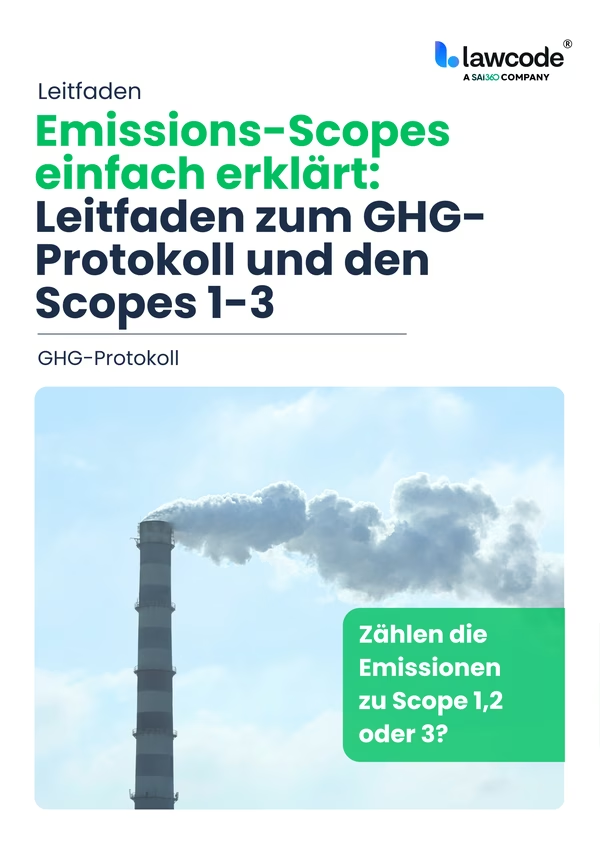
Which emissions in your company belong to Scope 1, 2 or 3 and why is this crucial for your carbon footprint, targets and reporting? This guide provides you with a clear, practical classification according to the GHG Protocol, including typical examples and common pitfalls.
Including: Scopes classification & Scope 3 examples as well as current practical requirements for reporting and supply chain.
Fill out the form and receive the guide immediately by e-mail.
Over 1,500 companies already trust lawcode.
Contents of the guide
You can find out more about this and everything to do with the GHG protocol in the guide
They understand what the GHG Protocol stands for, how it is structured and why it is the standard for a reliable greenhouse gas balance.
You will learn how to define a carbon footprint in a meaningful way (organization, locations, activities) so that results remain comparable and comprehensible.
You are given a clear logic for identifying and clearly categorizing relevant sources of emissions within the company and along the value chain.
You will learn which data is typically required, how calculations work in principle and how to deal pragmatically with data gaps.
You will receive practical tips on responsibilities, processes and documentation as a basis for internal controlling, customer inquiries and reporting.
Fill out the form and receive the complete guide immediately by e-mail - free of charge and without obligation.
For whom?
Data & delimitation
Update data sources, confirm balance sheet framework and clarify responsibilities.
Calculation & plausibility
emissions, check outliers and clearly document assumptions.
Measures & goals
Derive hotspots, prioritize reduction measures and sharpen targets.
Reporting & audit readiness
Report results, bundle evidence and finalize preparation for audits.
These guides might also interest you.
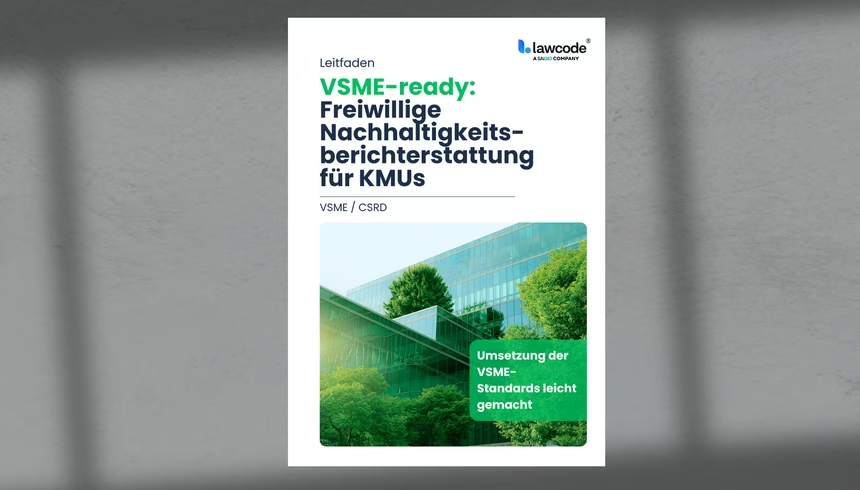
The VSME standard provides small and medium-sized companies with a clear framework for voluntary ESG reporting without excessive effort. Our free guide shows you how to report on your sustainability performance in a structured and credible manner and thus secure strategic competitive advantages.
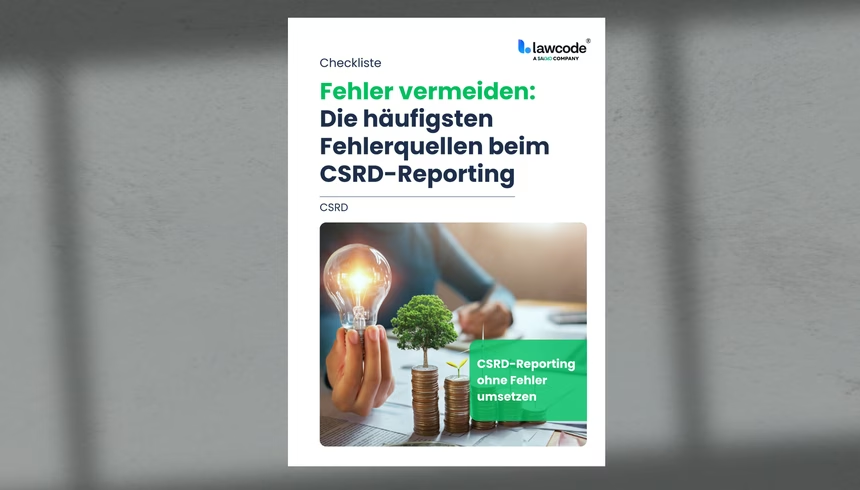
Do you want your next sustainability report to be as error-free as possible? In our checklist, you will find an overview of the most common sources of error that companies have made in CSRD reporting according to the ESG Monitor. Get our checklist now and find out how to avoid these mistakes before you have to submit your first CSRD report.

Are you about to prepare your sustainability report and wondering how it should be structured and what it should contain? Our detailed guide gives you step-by-step instructions, from the materiality analysis to publication.

 DE
DE